Description
A Dreamlike Vision of Organic Growth and Atmospheric Colour
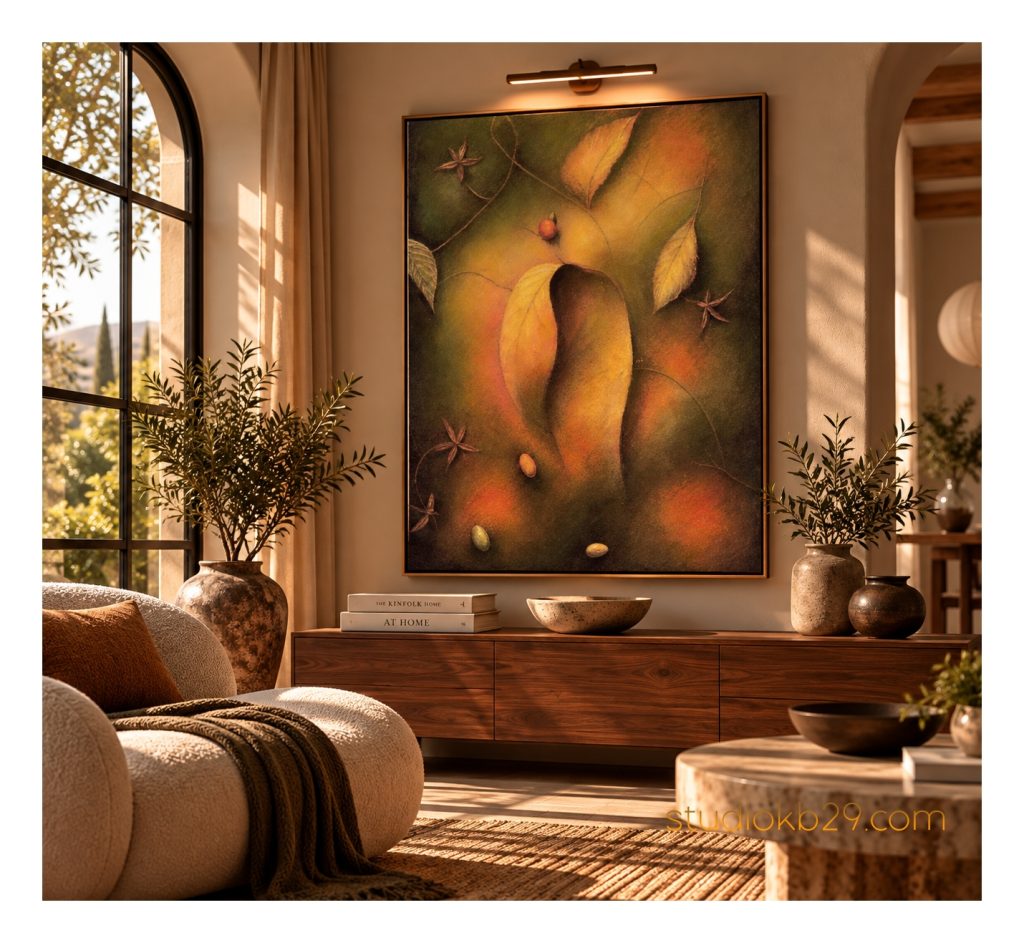
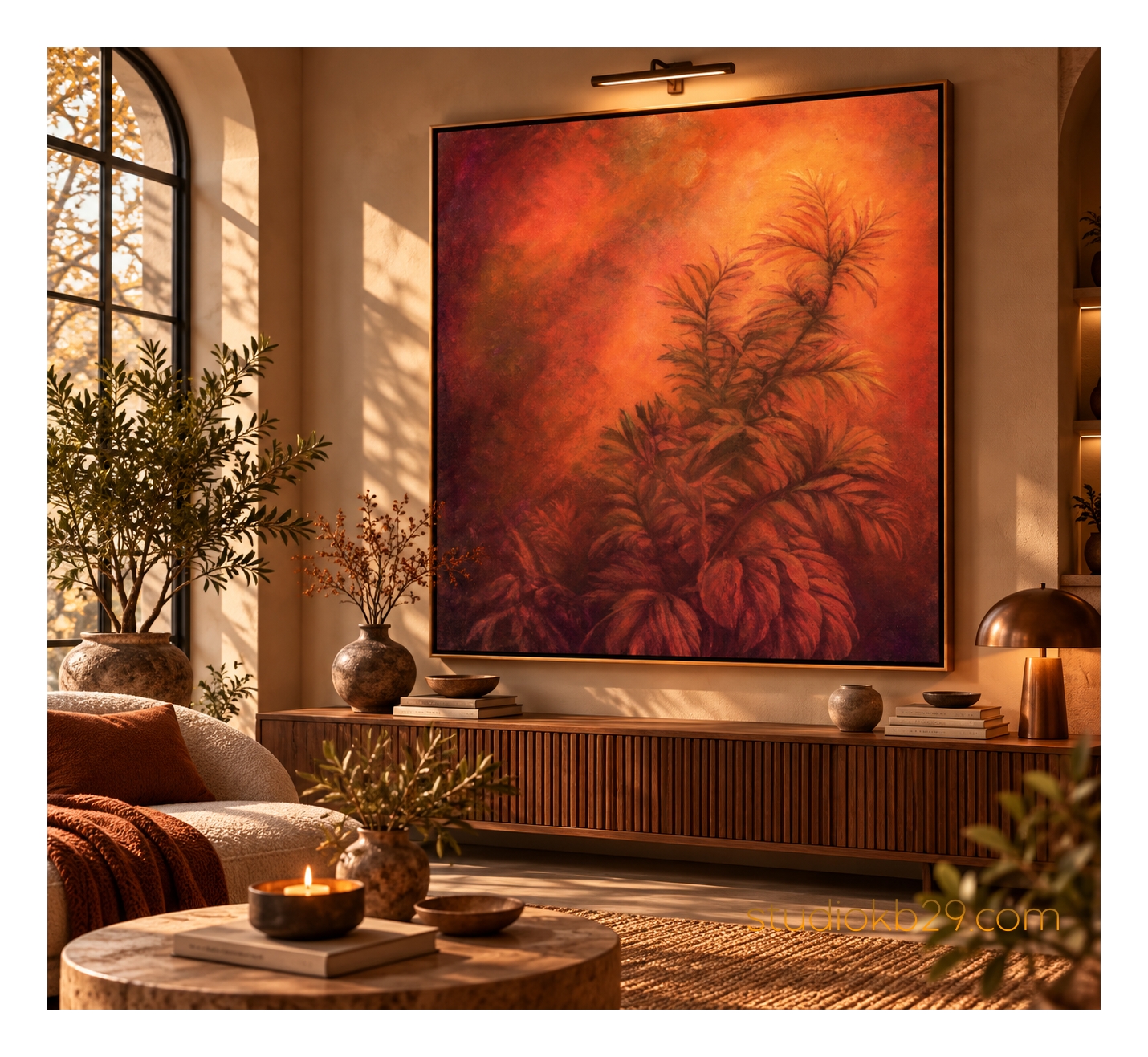
A mysterious botanical world unfolds in a haze of amber, burnt orange, muted terracotta and deep earthy red. Delicate, fern-like structures rise from a dense arrangement of imagined foliage, their slender leaves extending in intricate, sweeping patterns towards a luminous field of warm light. The forms appear to grow, branch and unfurl organically, creating the impression of a secluded garden suspended between the natural world and the realm of dreams.
At first glance, the composition evokes the richness of unfamiliar vegetation. Yet the plants remain suggestive rather than strictly botanical. Their contours dissolve into the surrounding atmosphere, and their layered silhouettes seem to emerge gradually from shadow. The result is an imaginary landscape in which familiar organic rhythms are transformed into something more enigmatic and expressive.
A glowing expanse of golden amber and soft orange illuminates the upper right of the composition, creating a gentle focal point. Moving outward, the colours deepen into rust, reddish brown and muted burgundy, with darker passages gathering along the left edge and lower portion of the image. These gradual transitions create a remarkable sense of depth, as though the foliage extends far beyond what can be seen.
The delicate upper branches introduce an upward movement, while the broad, overlapping forms below provide visual weight and structure. This contrast between fine, feathery detail and dense, rounded foliage gives the composition a distinctive rhythm, balancing intricacy with calm.
Rather than depicting a recognisable botanical specimen or a conventional garden, the artwork suggests an imagined ecosystem shaped by light, colour and the expressive possibilities of organic form.
The Amber Garden
At the heart of The Amber Garden lies an exploration of growth as an imaginative process.
The central vegetation appears to unfold in successive layers, with slender branches extending upwards and outwards from a dense, almost sculptural foundation. The fine, feather-like leaves create intricate patterns against the glowing background, while the larger forms beneath them establish a sense of depth and quiet abundance.
The plants seem to belong to a world governed by its own organic logic. Some silhouettes evoke ferns or delicate fronds, while others appear broader, softer and more ambiguous. Their shapes overlap and merge, making it difficult to distinguish where one imagined structure ends and another begins.
This uncertainty is essential to the artwork’s surreal character. Nature provides a visual point of departure, but the composition moves beyond literal representation into a more personal and atmospheric interpretation of growth.
The garden becomes a place of possibility rather than a specific location: an imagined environment where unfamiliar forms emerge from shadow and gather around a field of warm, diffused light.
A Landscape of Warmth and Shadow
Colour is the defining force of the composition.
Amber, burnt orange and soft golden tones illuminate the upper portion of the image, creating a warm, almost incandescent atmosphere. These luminous hues gradually transition into terracotta, earthy red and deep burgundy, lending the darker regions a sense of richness and enclosure.
The transitions remain soft and atmospheric. Rather than relying on sharp outlines or strong divisions, the colours blend into one another, creating the impression of an environment suspended in warm mist.
Against this background, the foliage appears in subdued shades of reddish brown, muted rust and dark earthy tones. Its delicate contours become more visible where the light catches the upper leaves, while the lower forms recede into shadow.
This interplay between illumination and darkness creates both depth and intimacy. The brighter region seems to open the composition towards an unseen space, while the darker foliage establishes a sense of density and quiet mystery.
The palette is warm and expressive without becoming visually overwhelming. Its tonal relationships allow the intricate plant-like forms to remain the focus while creating an enveloping atmosphere.
Organic Structures Between Nature and Imagination
The vegetation in The Amber Garden occupies an intriguing space between botanical suggestion and abstraction.
The slender, branching forms recall the delicate geometry of fern fronds, while the broader leaves below introduce a softer, more sculptural quality. Yet these references never resolve into a straightforward naturalistic depiction.
Instead, the plants seem to have evolved according to an imagined visual language. Their shapes repeat, expand and intertwine, creating a composition that feels organic without being tied to any identifiable species or landscape.
The upward-reaching structures provide a sense of aspiration and movement, while the dense foliage below introduces stability and visual grounding. Together, they suggest an environment in which growth is continuous and forms remain in a state of quiet transformation.
This balance between familiarity and ambiguity gives the artwork its lasting appeal. The viewer can recognise the underlying language of nature while remaining free to imagine an entirely different world within it.
An Atmospheric Statement for Contemporary Interiors
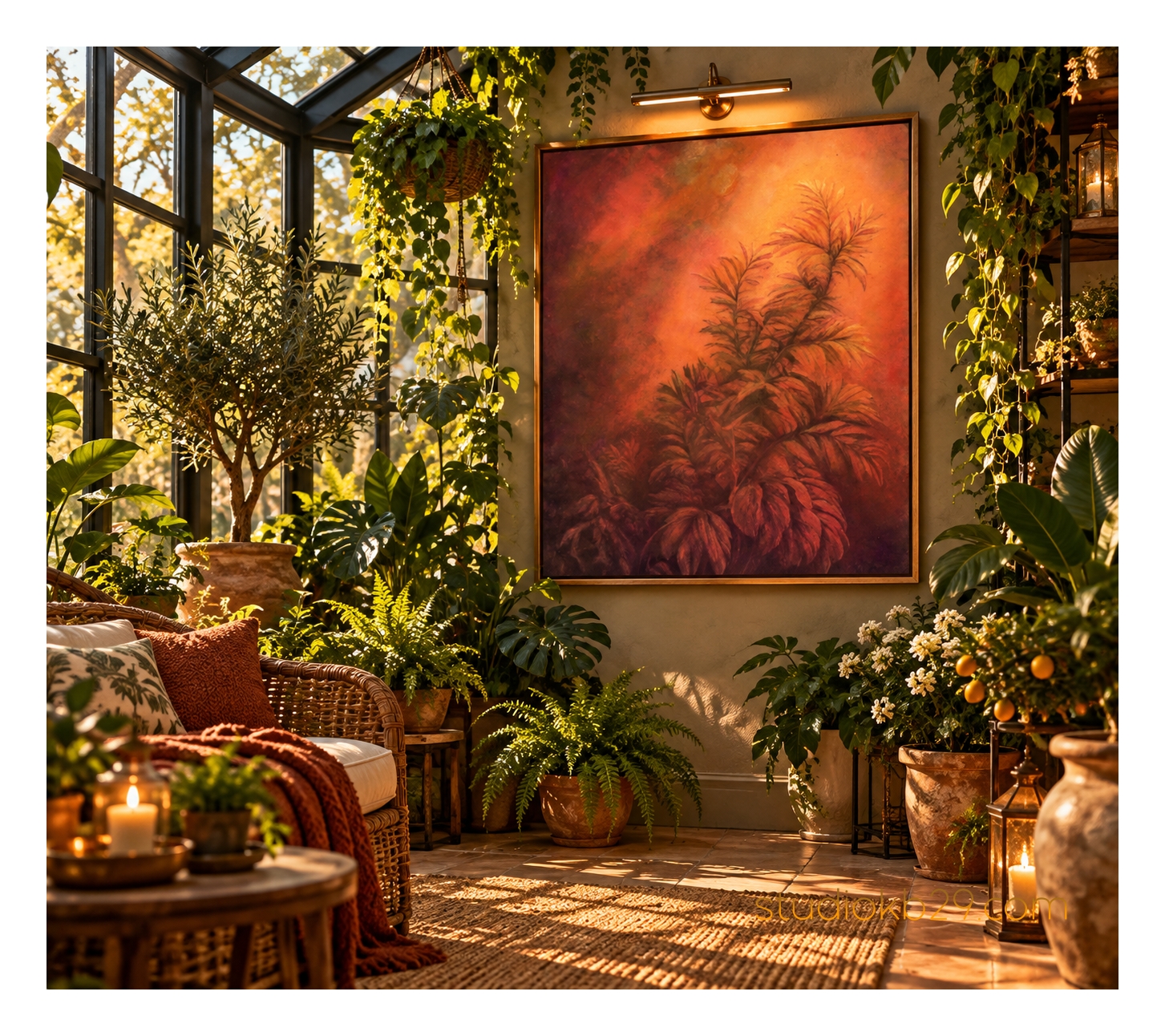
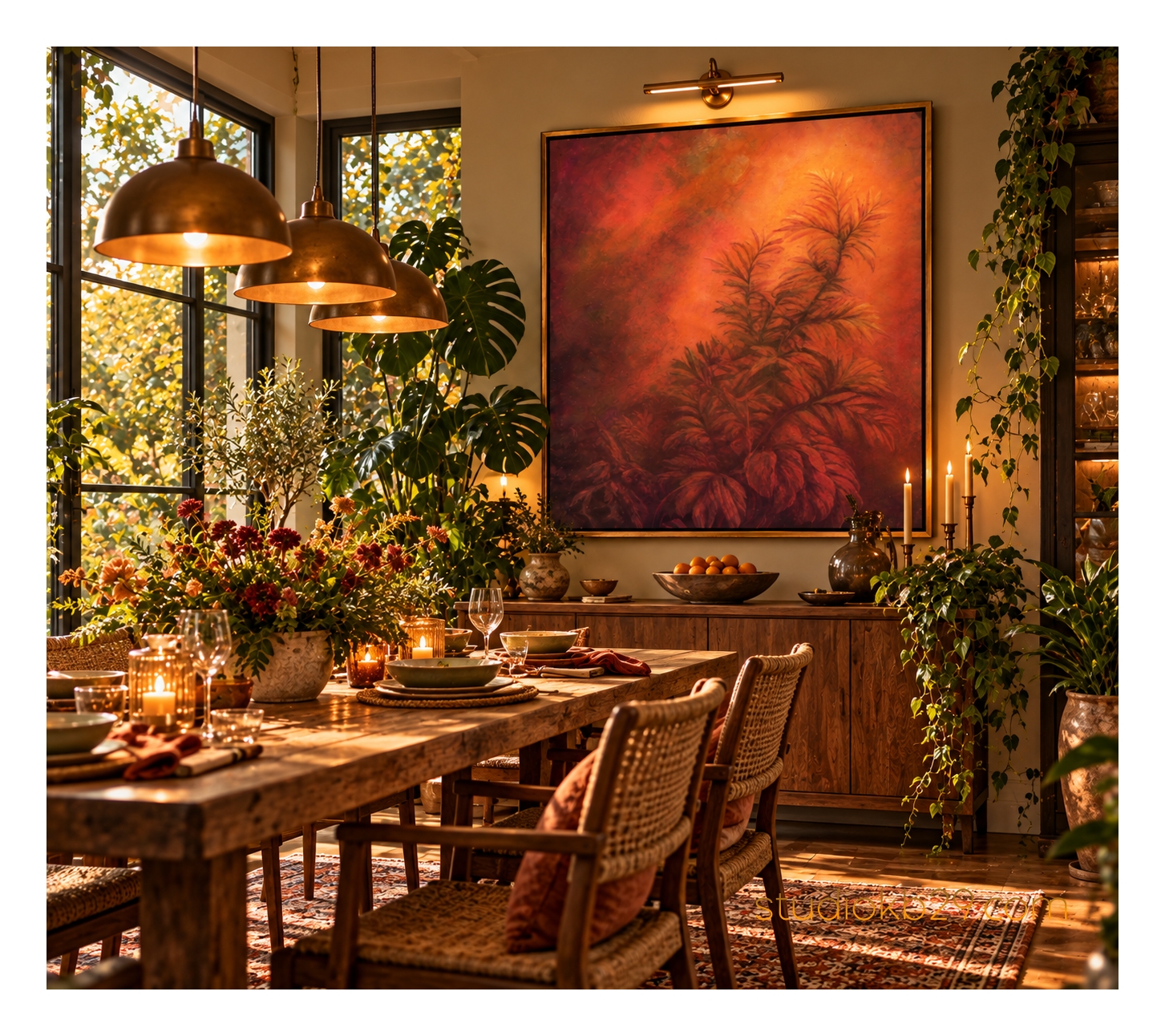
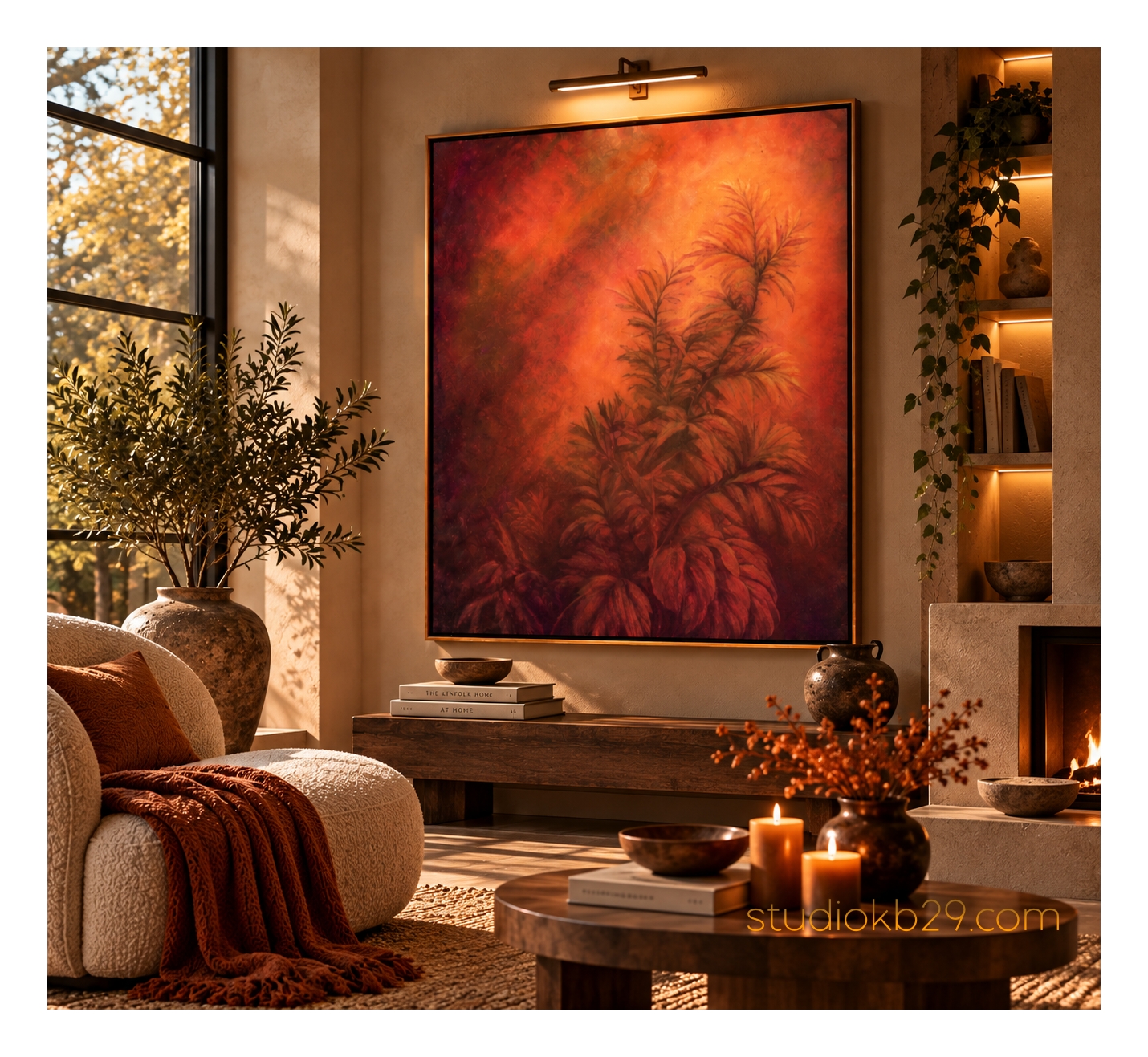
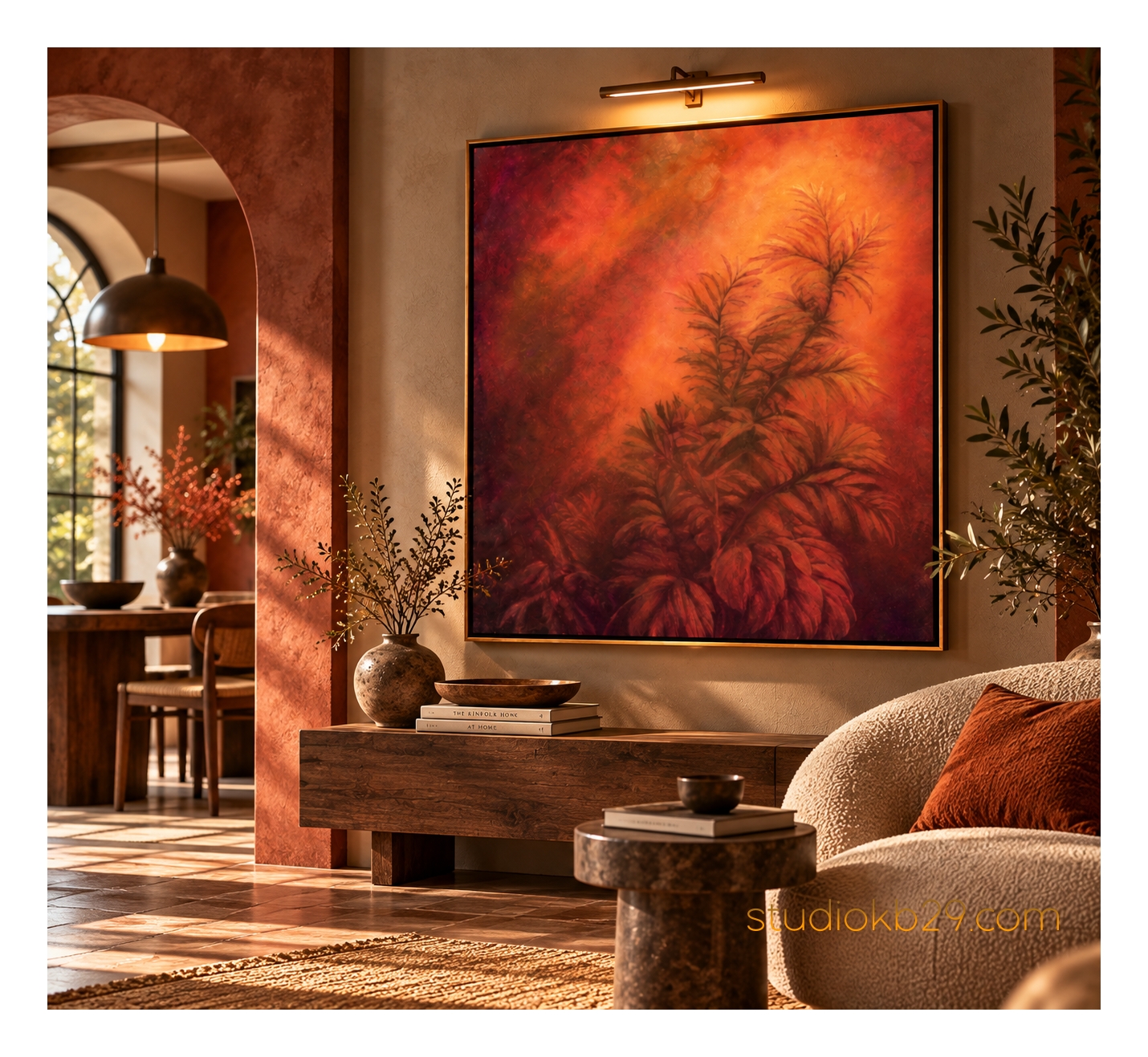
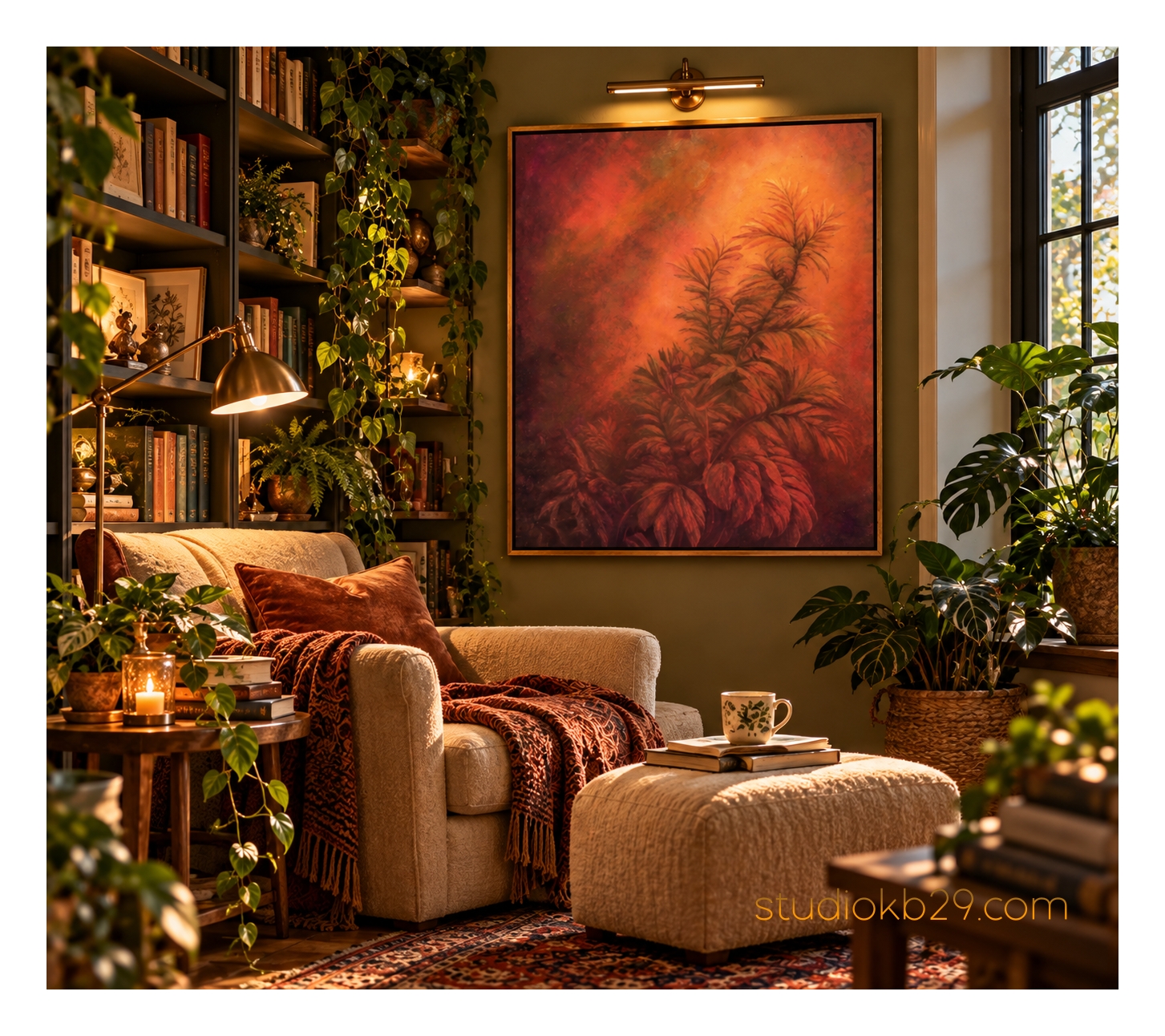
With its rich earthy palette, layered foliage and luminous background, The Amber Garden offers a distinctive artistic presence for carefully curated interiors.
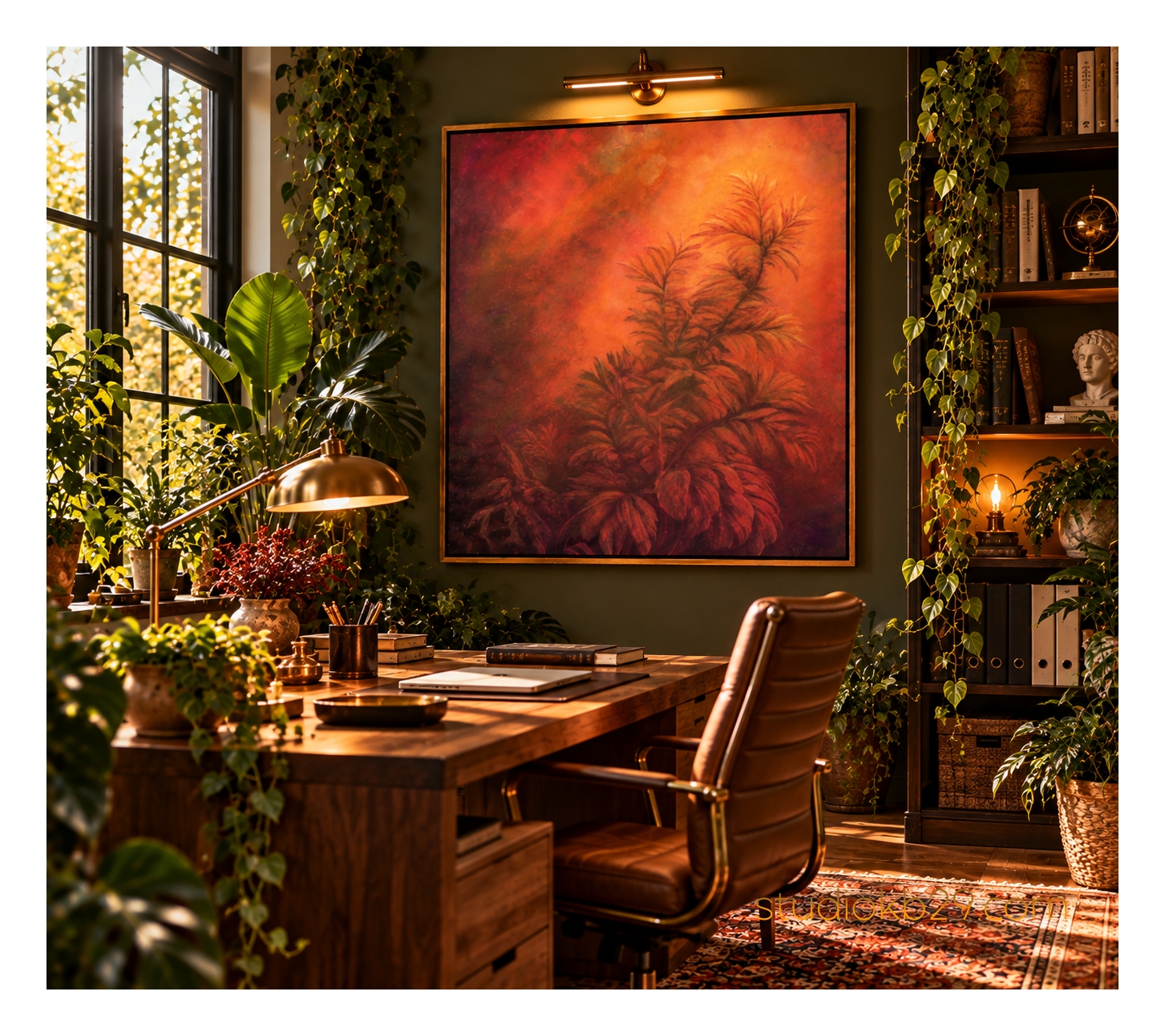
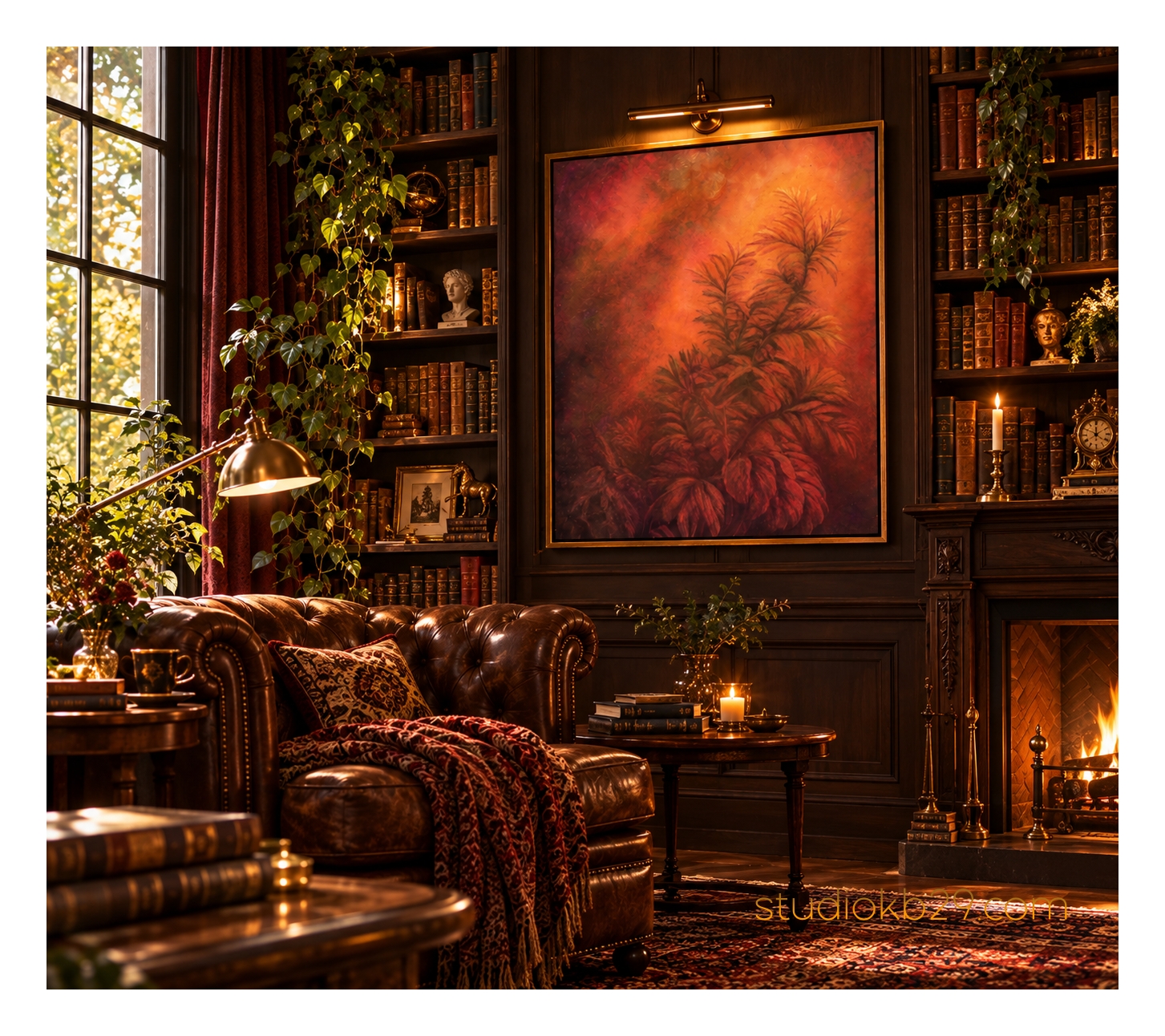
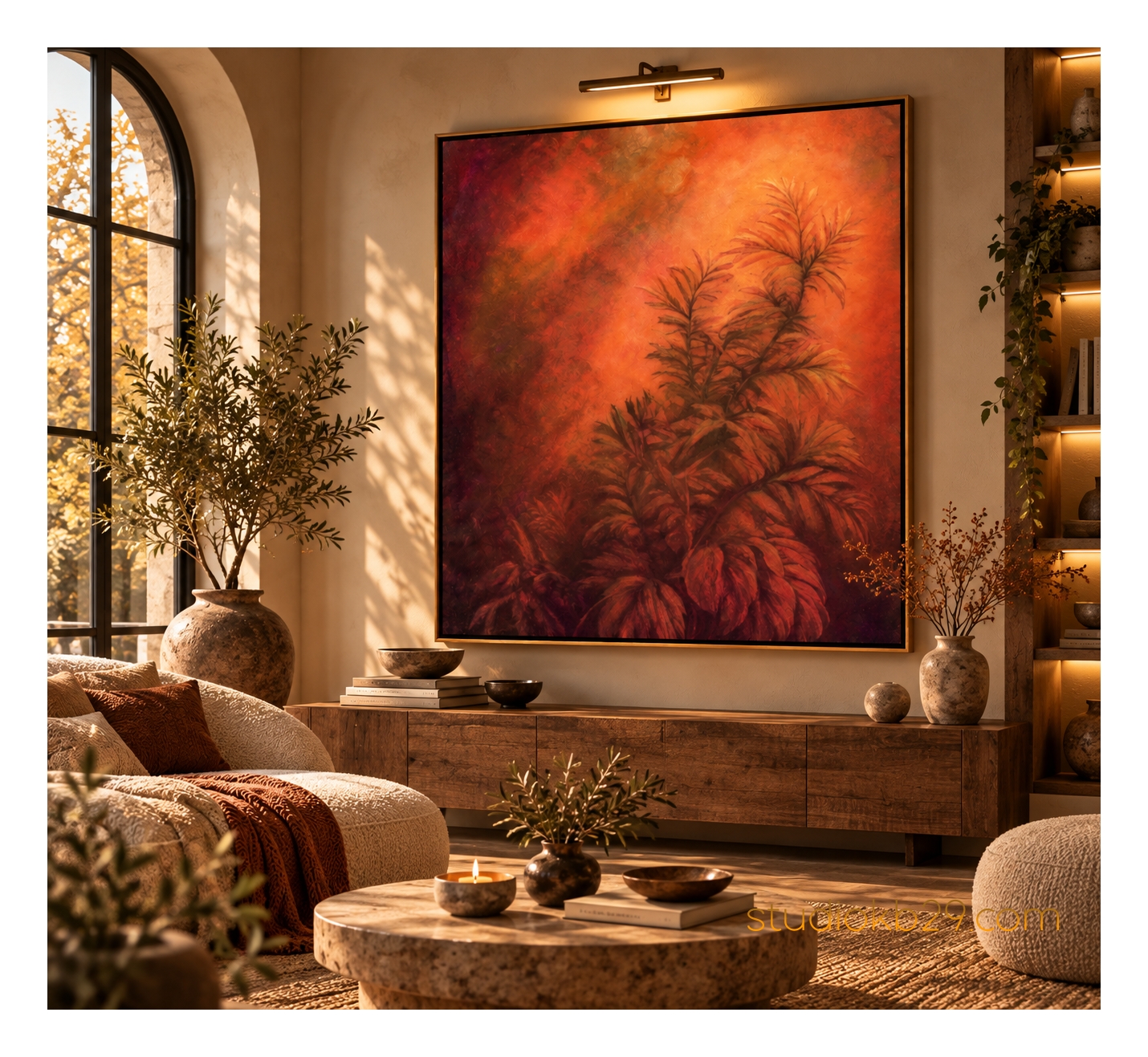
Its warm colour transitions can complement natural timber, terracotta finishes, textured plaster, warm neutrals and tactile fabrics. The deeper reddish-brown tones also work well with darker woods and subdued burgundy accents, while the glowing amber area can introduce warmth into more restrained interior schemes.
The artwork’s vertical plant-like structures create a natural sense of movement, making it particularly effective as a focal point in spaces where visual height and atmosphere are important.
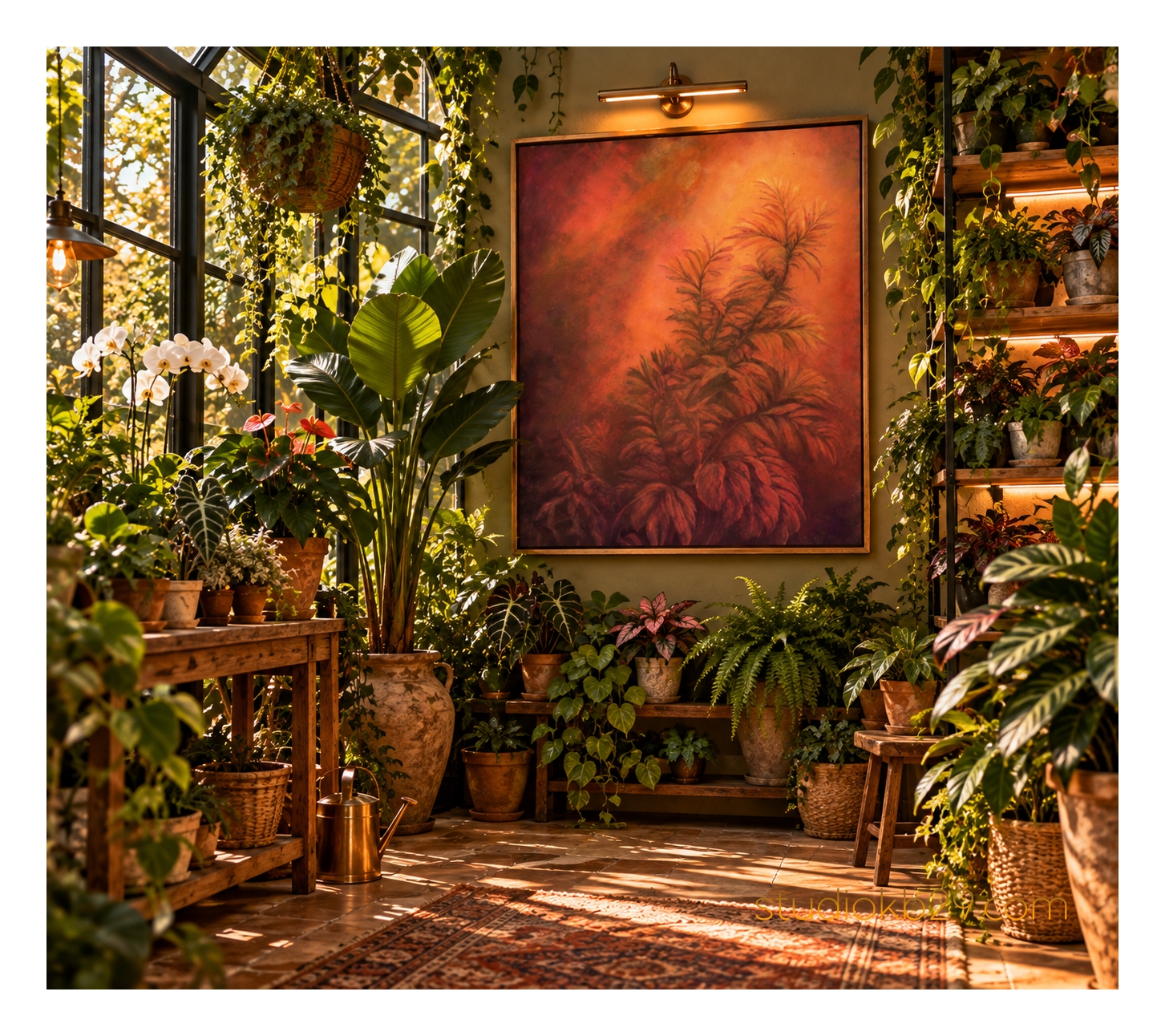
In contemporary residential settings, it can introduce a poetic, organic element without relying on conventional botanical imagery. In boutique hospitality environments, private lounges and design-led commercial spaces, it offers a more imaginative interpretation of nature, combining warmth with a sense of mystery.
Ideal for:
- Contemporary residential interiors and statement walls
- Boutique hotels and design-led hospitality projects
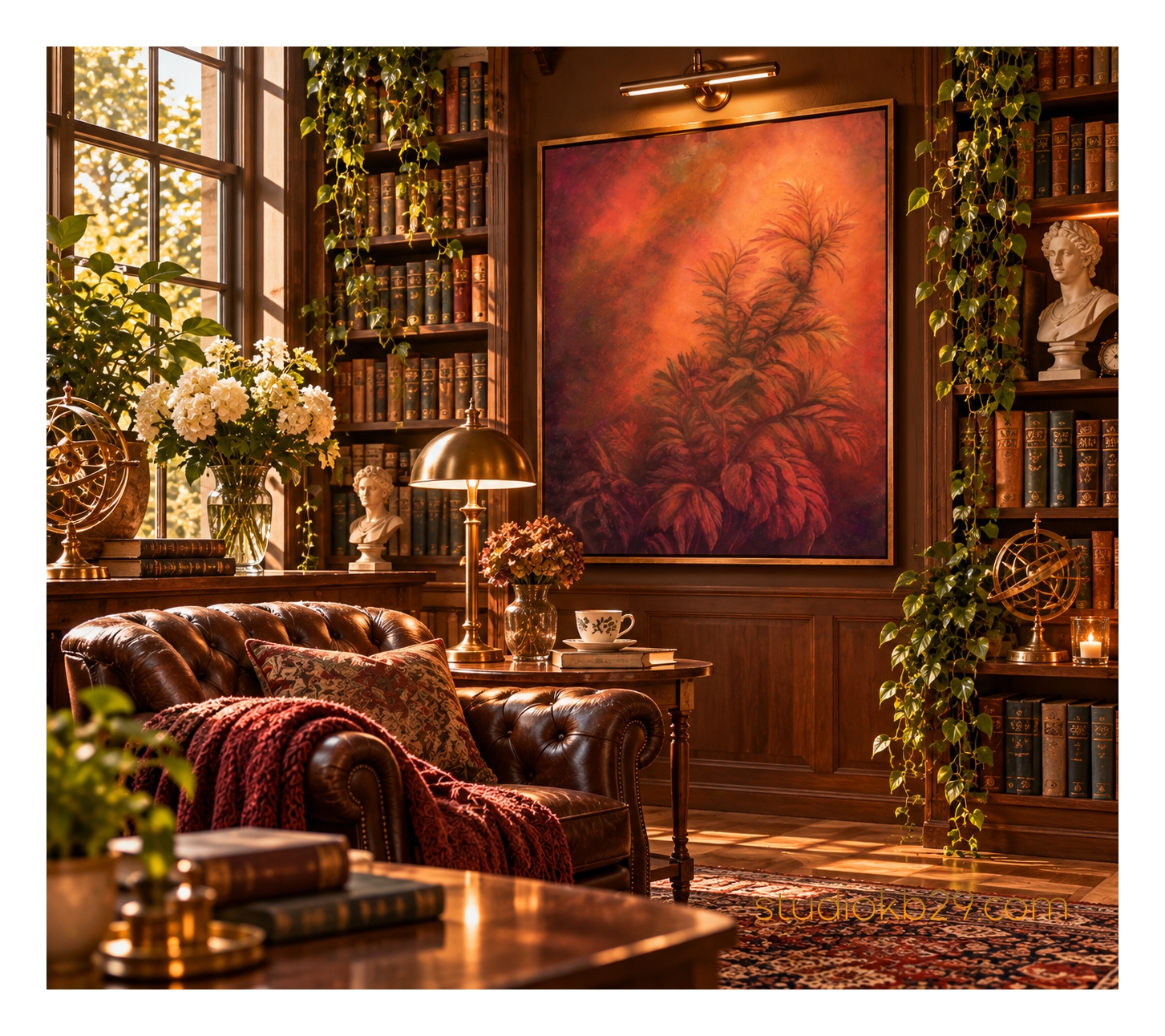
- Private lounges, libraries and intimate living spaces
- Creative studios and curated commercial environments
- Interiors inspired by organic modernism and earthy colour palettes
- Art collections exploring surreal abstraction and imagined nature
Whether displayed individually or incorporated into a larger art collection, the composition offers visual richness while maintaining a quiet, contemplative character.
Styling and Interior Design Applications
The artwork’s palette lends itself to a range of sophisticated interior concepts.
Warm oak, walnut and other natural wood finishes can echo the earthy foliage, while terracotta, rust and muted red accents reinforce the warmer passages. Cream, sand and soft beige can provide a lighter counterpoint, allowing the amber background to become a focal element.
For a more dramatic approach, deep brown, burgundy and muted plum can complement the darker edges of the image. Textured textiles, sculptural furniture and softly diffused lighting can further enhance its atmospheric quality.
In interiors with restrained furnishings, the artwork introduces intricate organic detail and expressive colour. In more layered environments, it can contribute to a cohesive palette of earthy materials and warm, tonal contrasts.
Its botanical associations make it easy to integrate into nature-inspired design concepts, while its surreal character distinguishes it from conventional floral or landscape artwork.
Available Print Materials
The Amber Garden can be presented on a selection of print materials to suit different interior requirements and aesthetic preferences.
Canvas
A painterly presentation that complements the atmospheric colour transitions and layered organic forms.
Metal
A contemporary option for modern interiors and architectural settings where a clean, distinctive presentation is desired.
Wood
A natural material choice that can complement the earthy colour palette and reinforce the artwork’s organic visual language.
Acrylic
A sleek, contemporary finish suited to modern interiors and carefully coordinated material schemes.
Paper
A classic art-print format offering flexibility through a choice of framing styles, suitable for residential, hospitality and commercial projects.
Material availability and finishes may vary by selected format.
Framing Options to Complement Your Interior
The frame can help establish the relationship between the artwork and its surroundings.
Natural wood frames can reinforce the organic character of the composition, while darker wood or black frames can emphasise the contrast between the luminous background and the shadowed foliage. A lighter, understated frame can create a more contemporary presentation, allowing the warm colours to remain the primary focus.
A choice of framing options and frame styles makes it possible to coordinate the finished print with the wider interior concept, whether the setting calls for natural warmth, understated elegance or a more dramatic visual statement.
Ready to Hang
Each selected print is delivered ready to hang, helping simplify installation and the final stages of interior styling.
The availability of different print materials and framing options offers flexibility for interior designers, architects and project specifiers seeking artwork that integrates naturally into a wider design scheme.
Whether placed above a console, incorporated into a hospitality setting or used as part of a curated residential collection, The Amber Garden brings together expressive colour, imagined botanical forms and an atmosphere of quiet mystery.
The Amber Garden – An Imagined Botanical World
The Amber Garden presents a surreal vision of organic growth, where delicate, fern-like structures emerge from dense layers of imagined foliage and reach towards a luminous amber sky.
Burnt orange, terracotta, reddish brown and deep burgundy create a richly atmospheric palette, balancing warmth and shadow with subtle tonal transitions. The plant-like forms evoke the rhythms of nature without depicting a specific species or recognisable landscape.
The result is an evocative work of surreal abstract art that transforms botanical suggestion into an imagined world of depth, movement and quiet contemplation.
An atmospheric vision of unfamiliar growth, where imagined foliage unfolds in the glow of an amber dream.