Description
An Imaginary World of Organic Forms
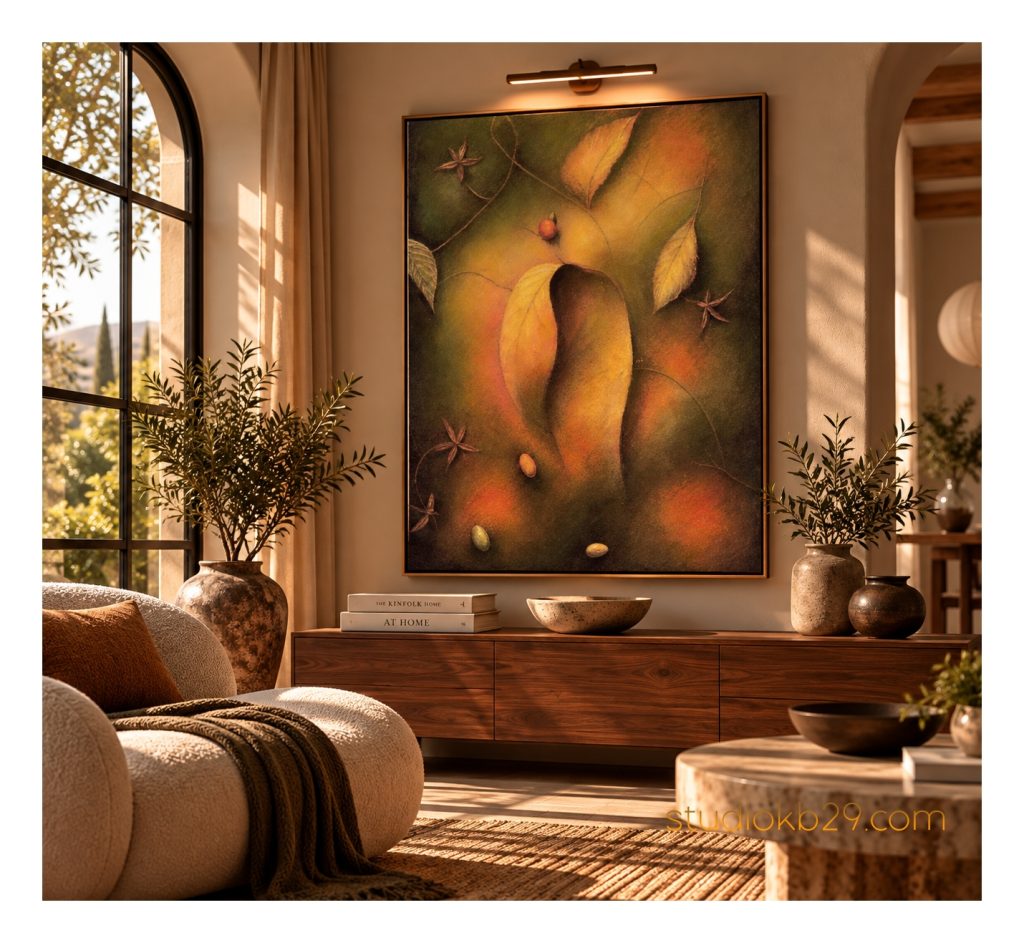
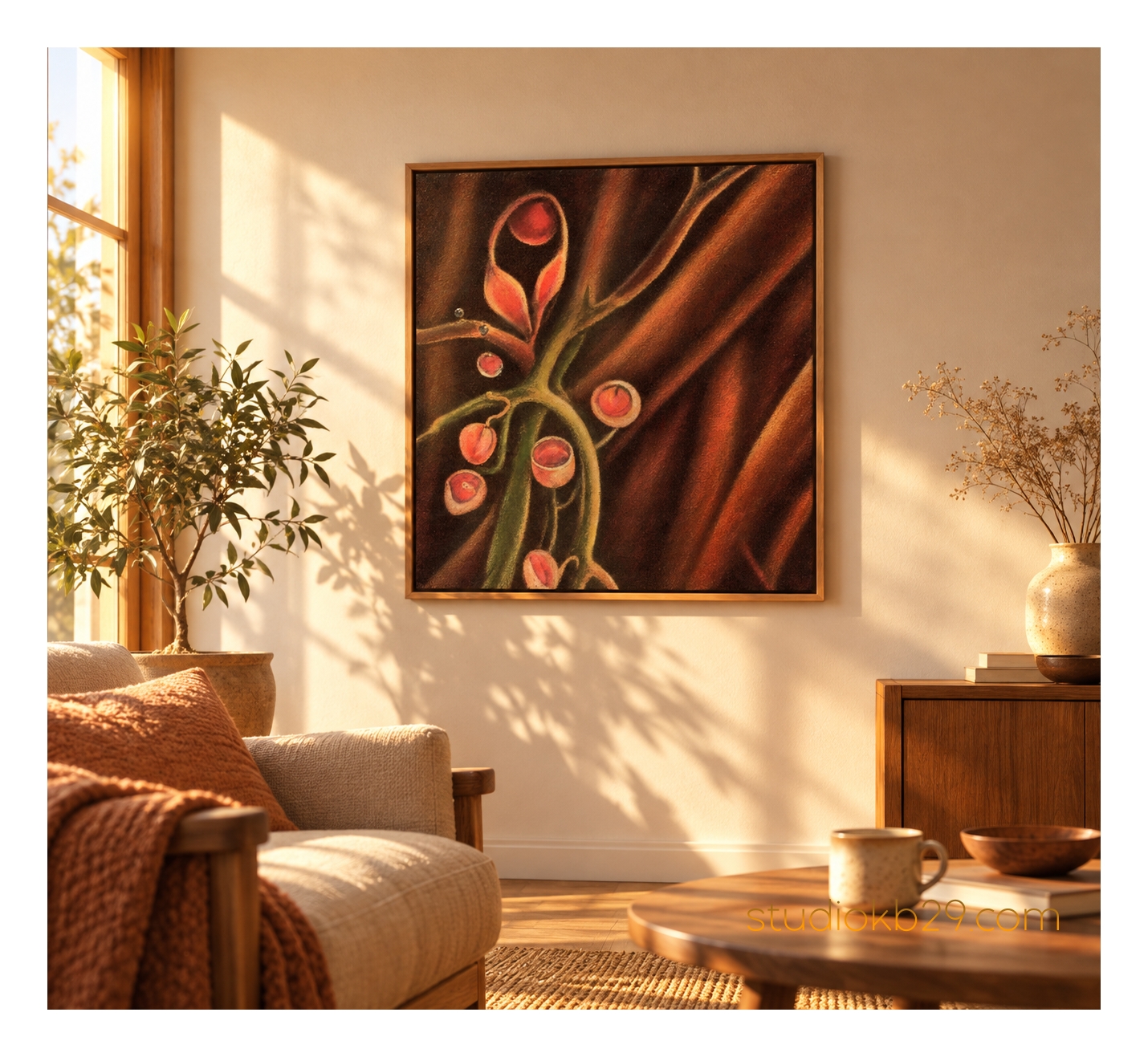
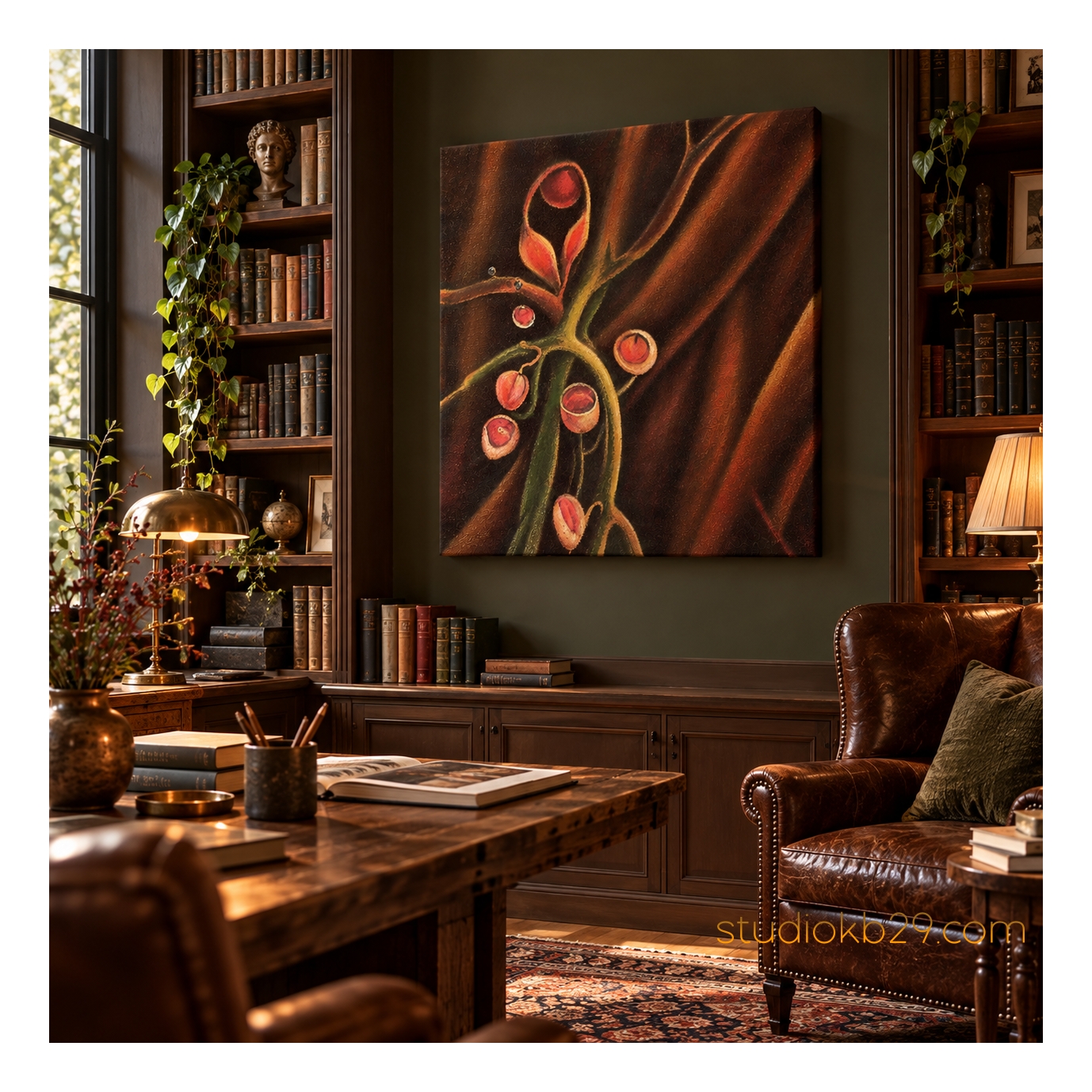
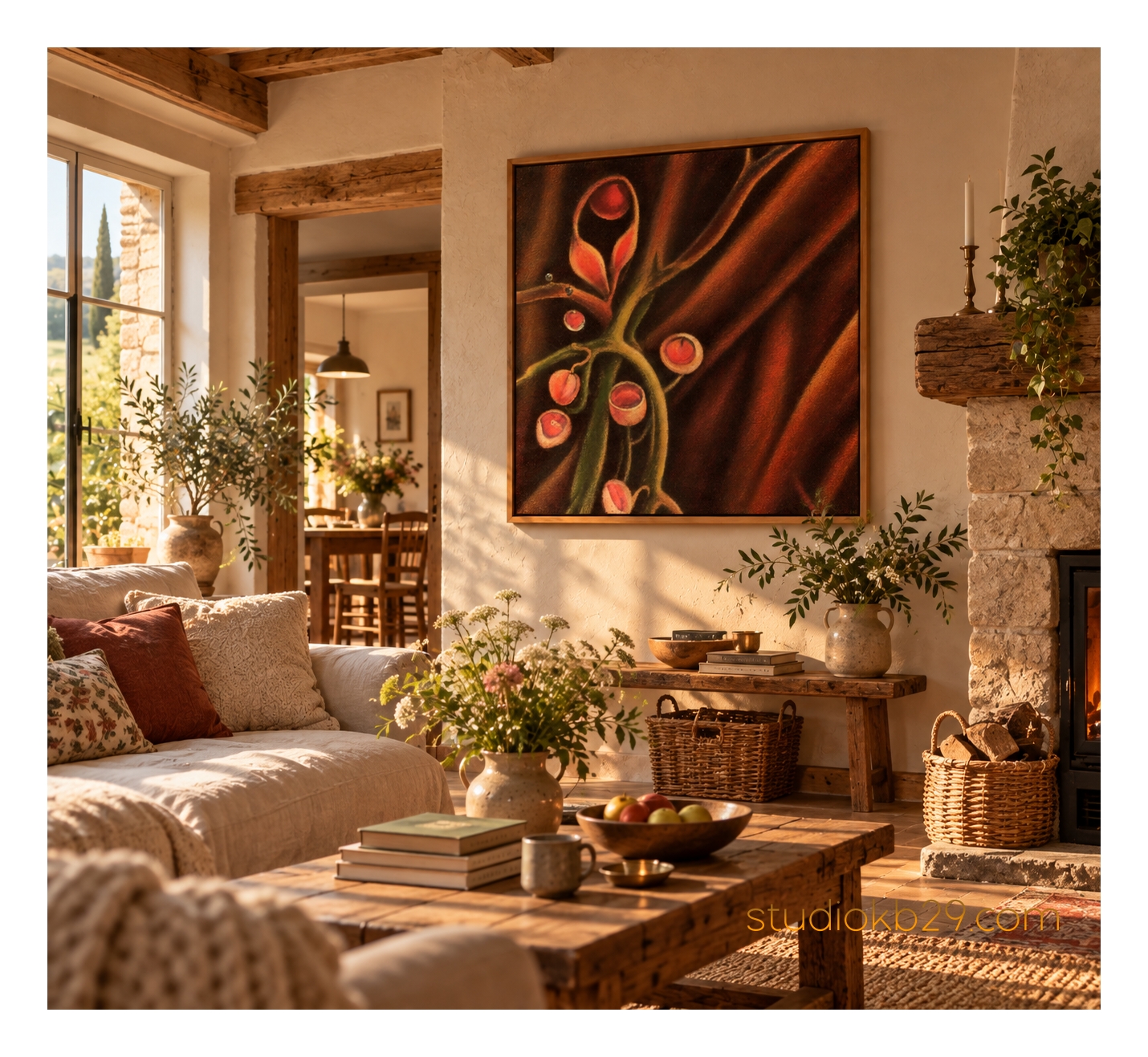
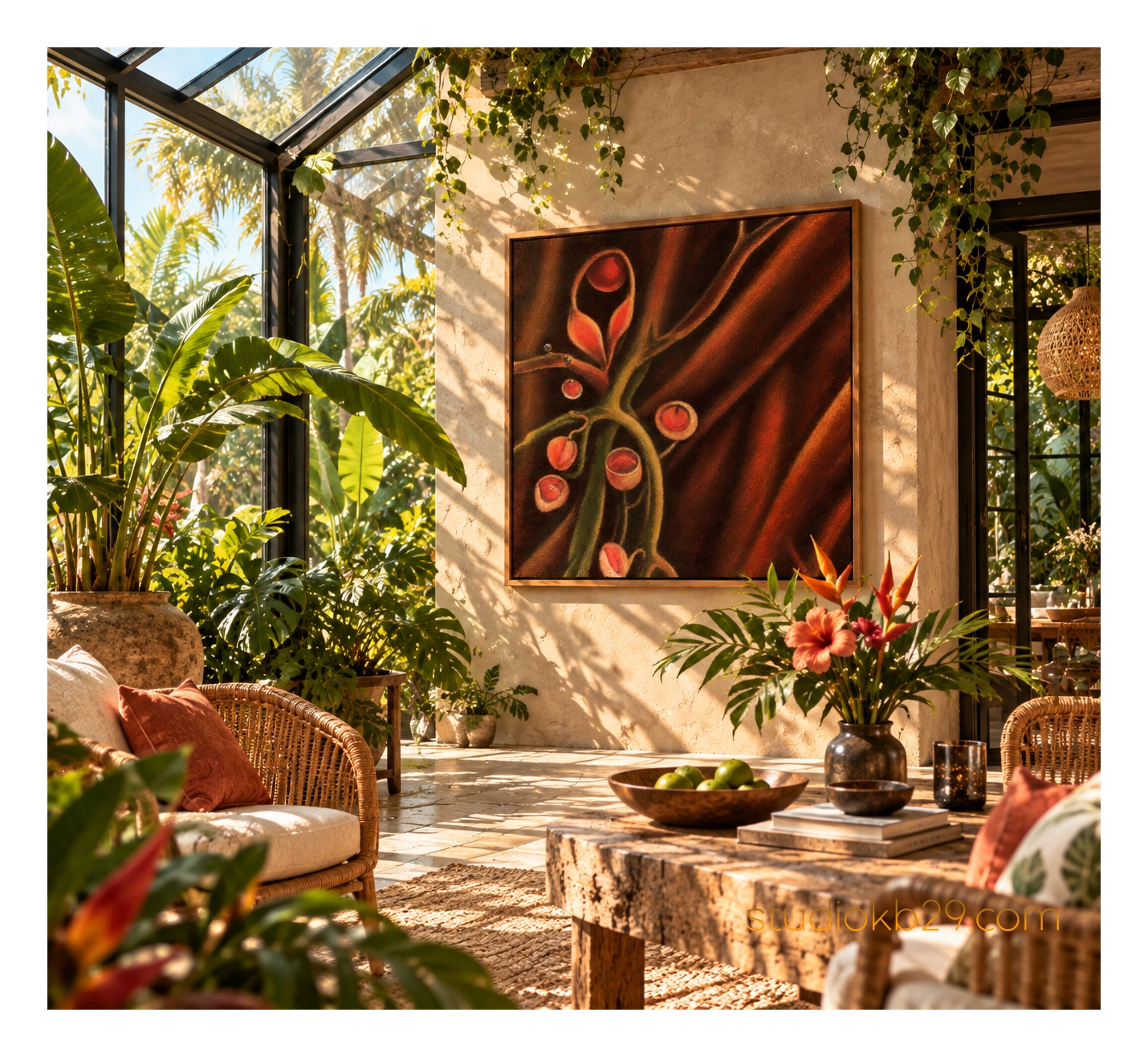
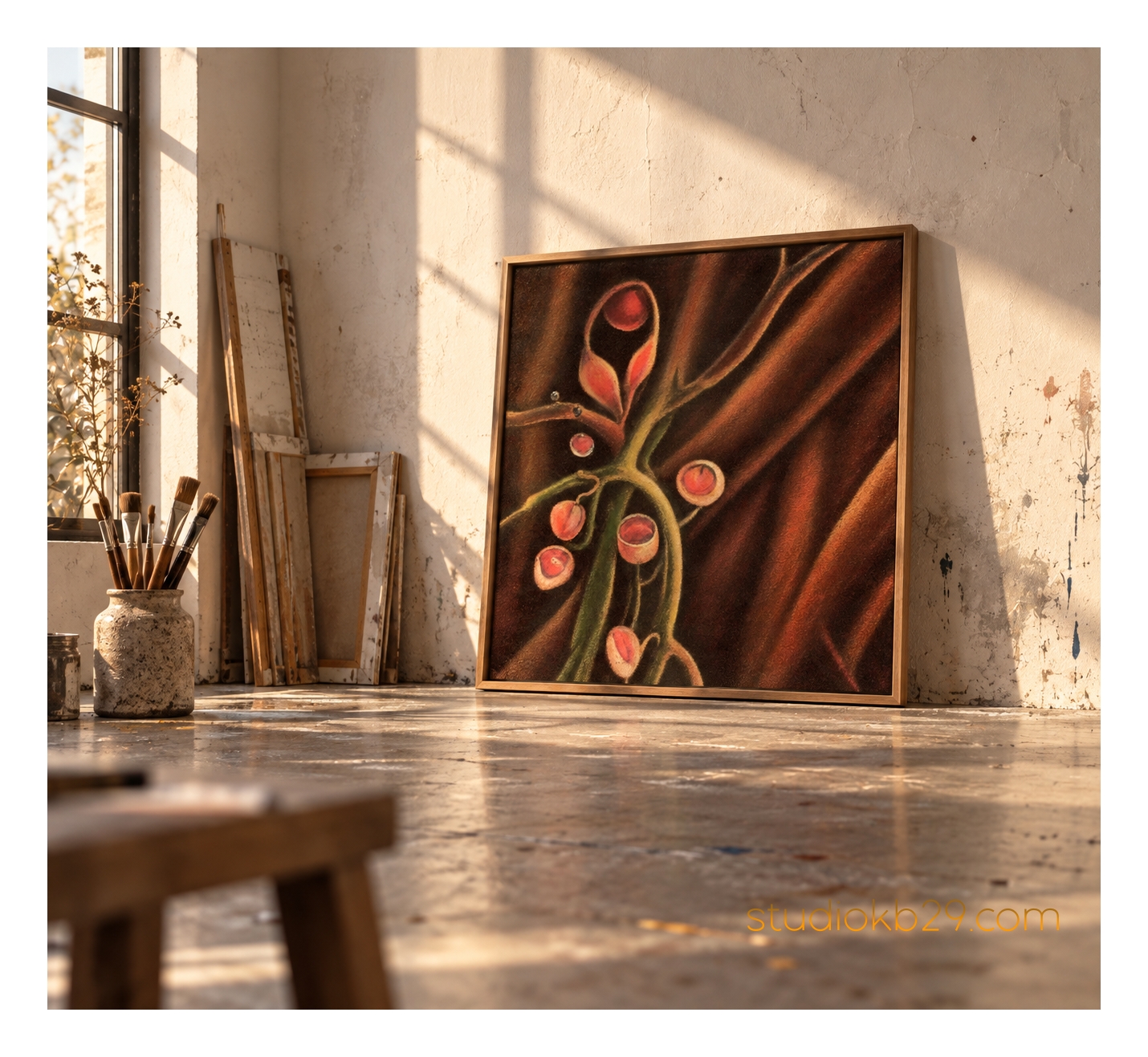
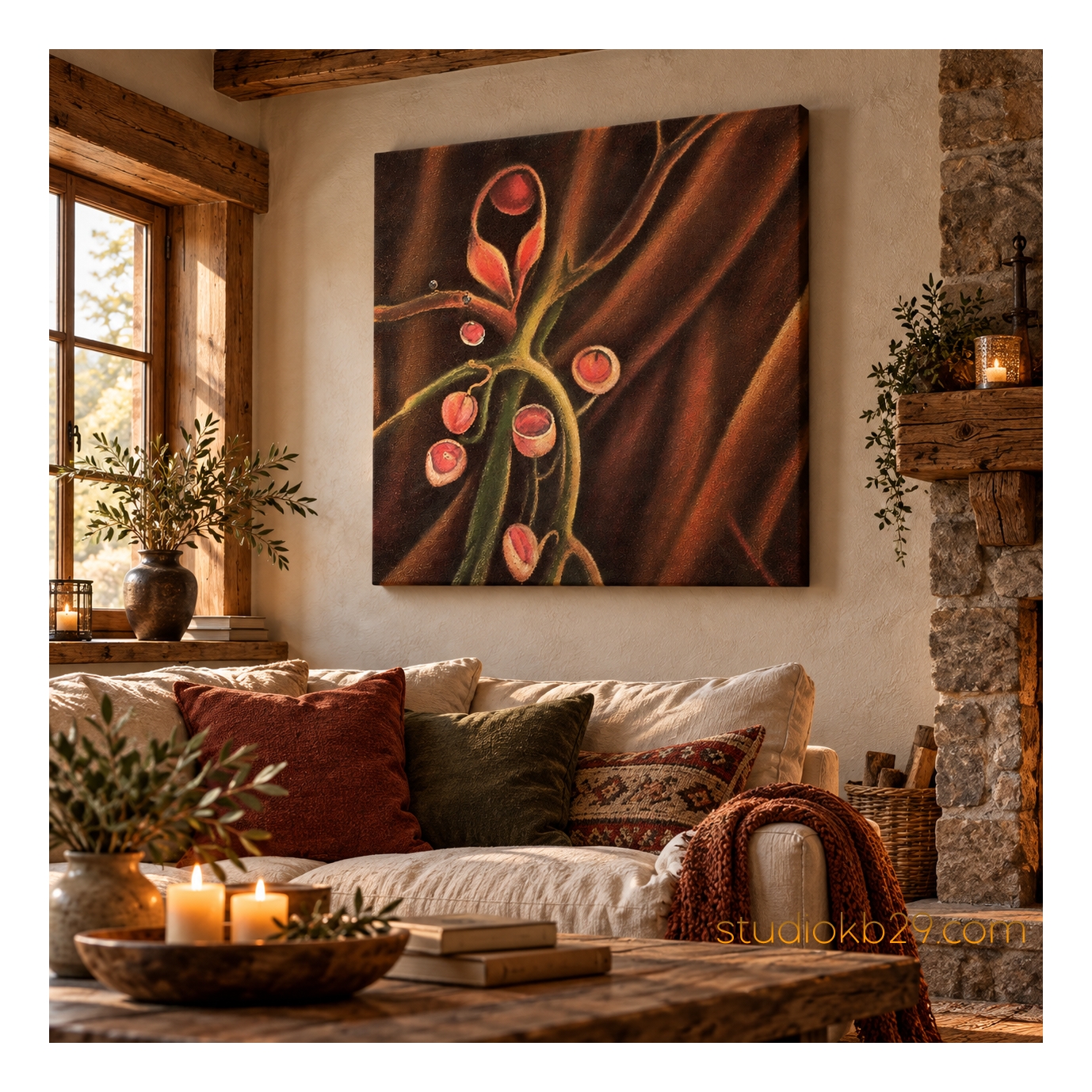
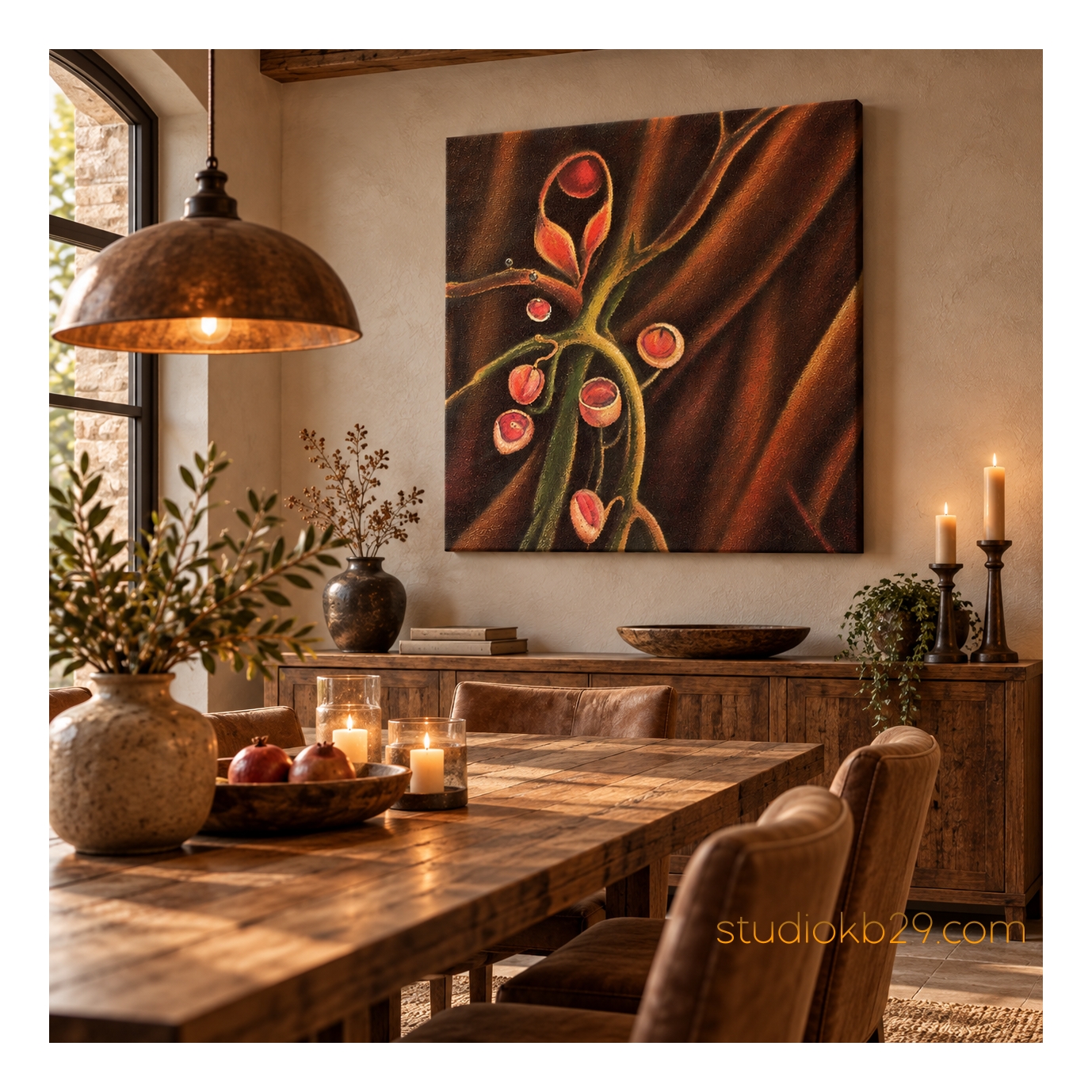
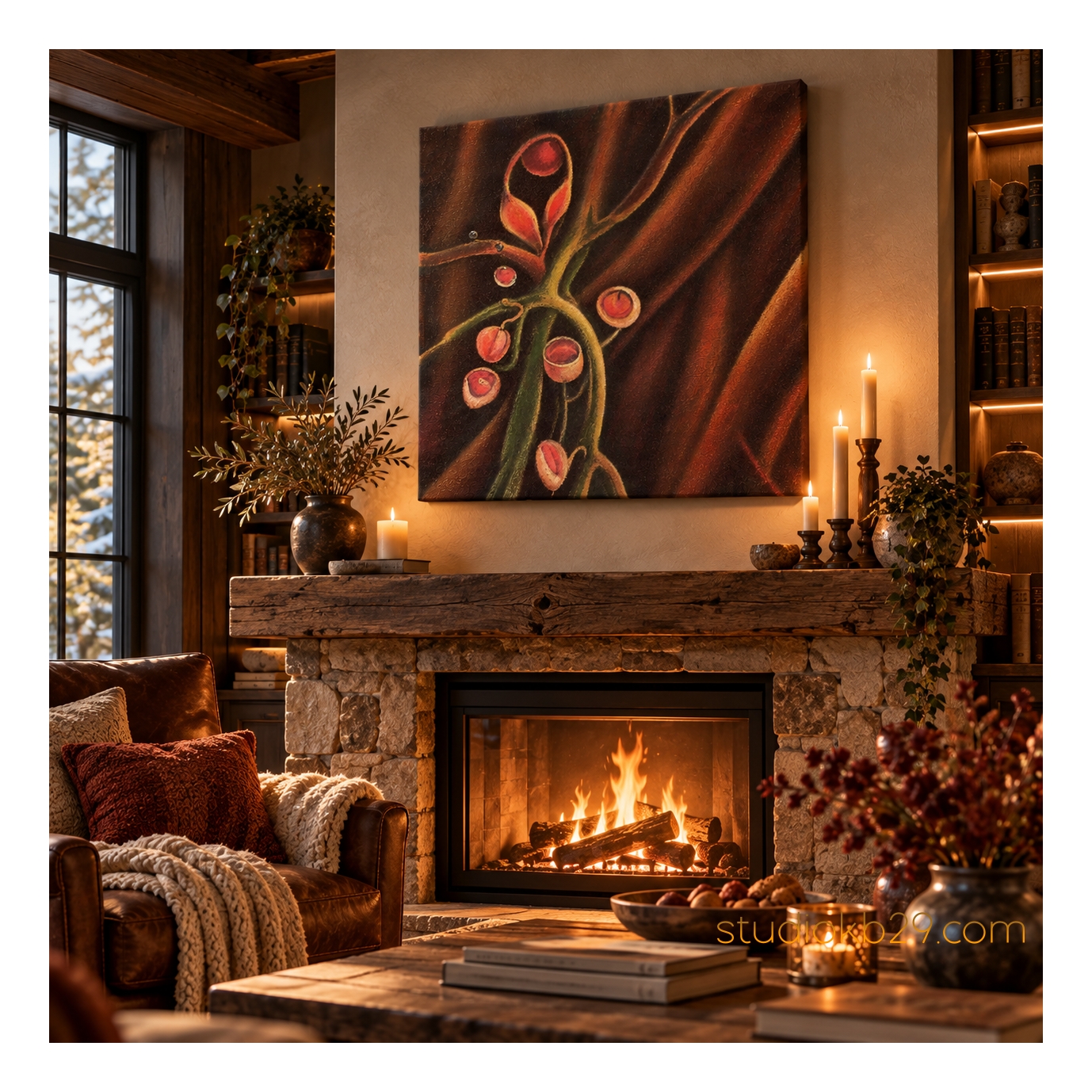
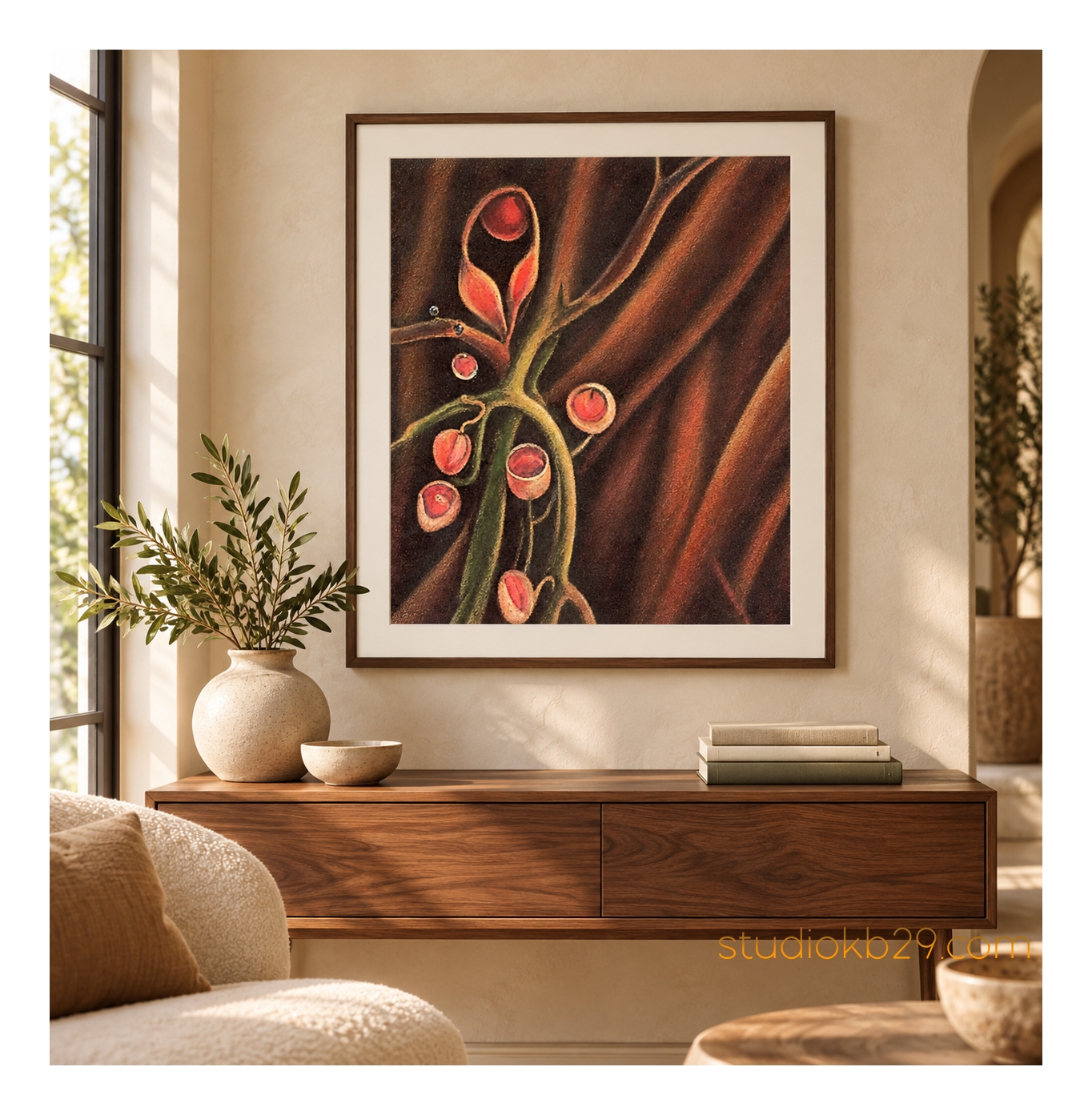
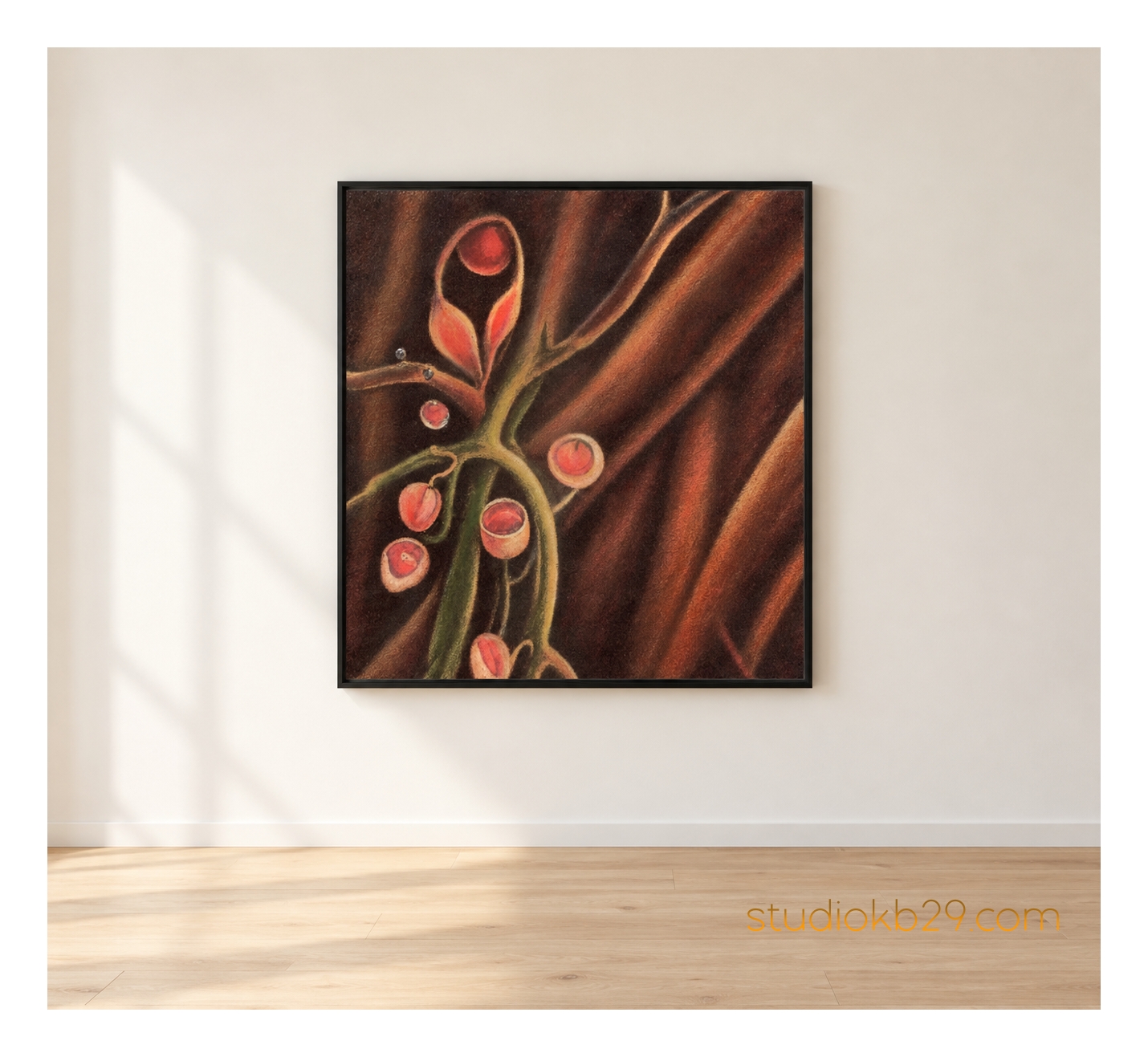
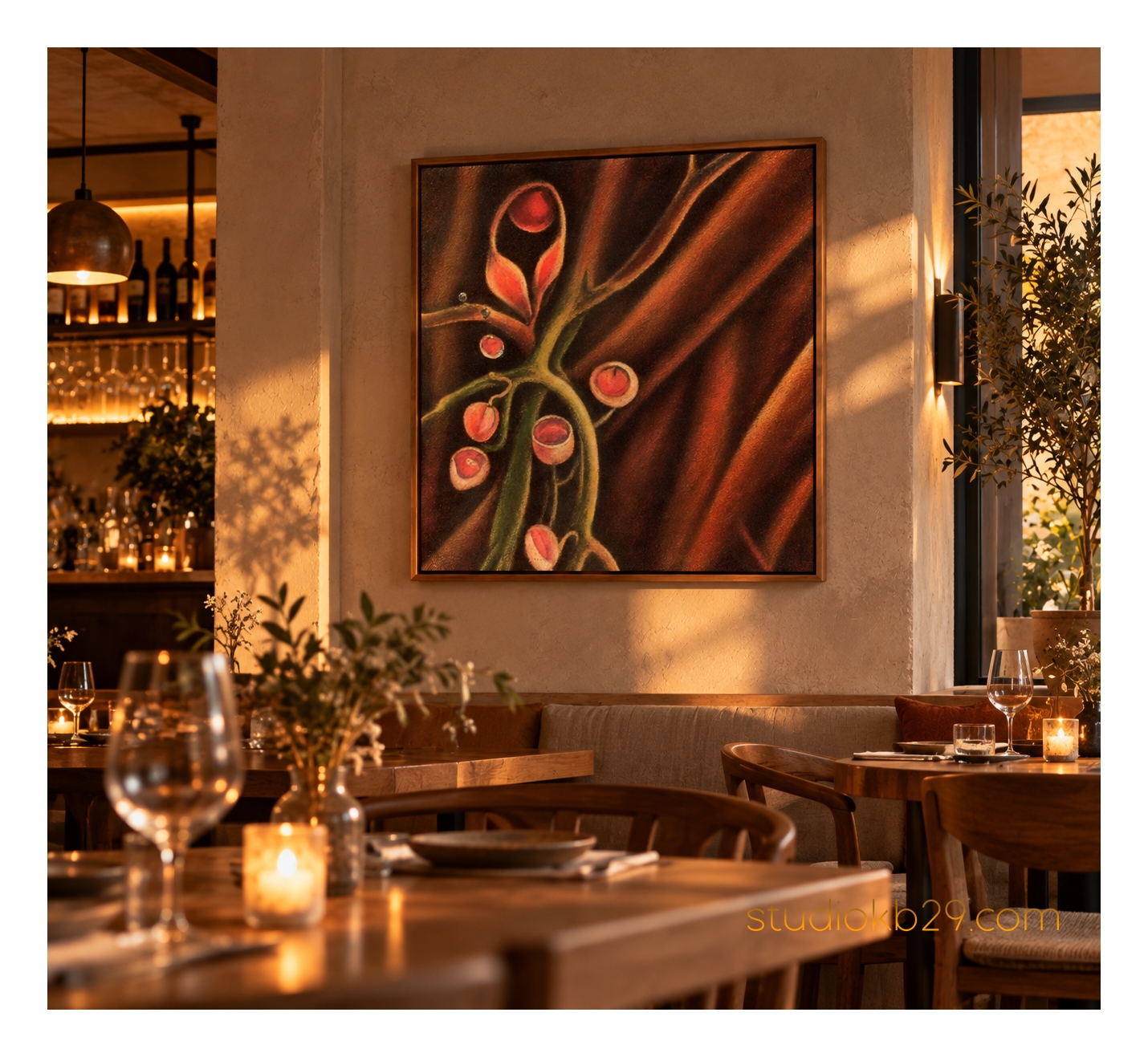
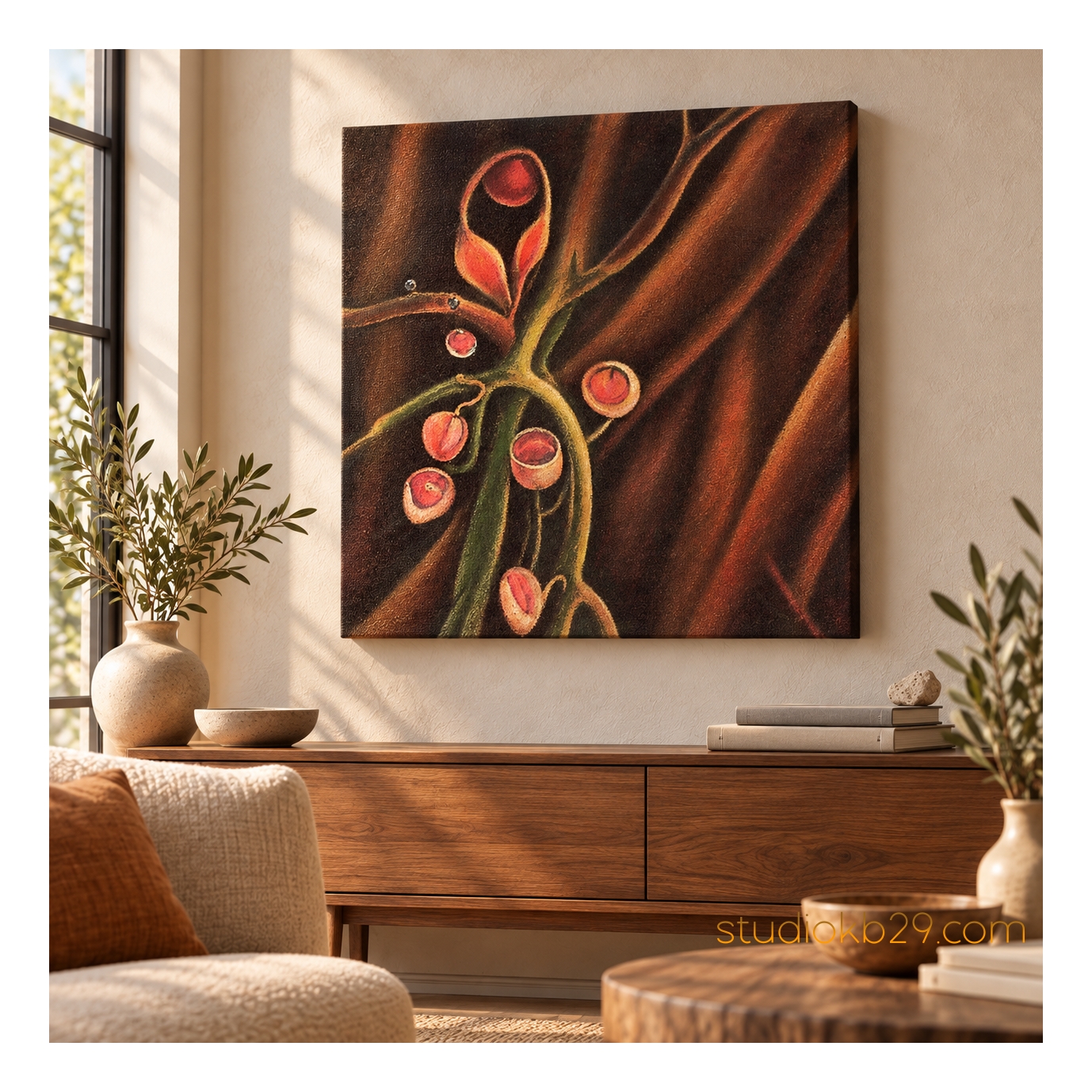
Emerging from a world of deep shadows and earthy warmth, unfamiliar structures unfold in a composition that hovers between organic abstraction and surreal imagination. Curving lines branch and intertwine, while small, vividly coloured forms appear to grow from their surroundings, suggesting fragments of an unknown living system.
Nothing is entirely familiar, yet the composition carries an unmistakable sense of organic movement. Slender extensions, rounded shapes and elongated contours evoke the language of growth without referring to any identifiable plant or natural specimen. The forms seem to belong to an imagined world in which nature follows its own mysterious principles.
Against a richly layered background of dark brown, charcoal and muted black, the warm accents of crimson, coral, copper and ochre emerge with quiet intensity. These luminous details draw the eye through the composition, creating a delicate balance between concealment and revelation.
Broad, flowing structures sweep diagonally across the image, introducing a sense of movement and depth. In contrast, the smaller rounded forms create moments of stillness and visual concentration. Their placement suggests an intricate relationship between the surrounding structures, as though each element were part of a larger organism whose full shape remains beyond view.
The result is an intimate, enigmatic composition that invites the viewer to look beyond the recognisable and discover a world shaped by imagination, transformation and the suggestion of life.
The Secret Architecture of Growth
At the heart of the artwork lies the idea of an unfamiliar organic order.
The branching structures suggest pathways of growth, while the rounded forms appear suspended between emergence and transformation. Some resemble unopened buds, others evoke small vessels or enigmatic organic objects. Yet none settles into a definitive identity.
This ambiguity is essential to the work. Rather than illustrating a specific natural subject, the composition explores the underlying language of organic form: branching, unfolding, connecting and evolving.
The image suggests that beneath the visible surface of things lies an intricate architecture, a network of relationships that is felt rather than fully understood.
Forms emerge from darkness, follow unexpected trajectories and intersect in ways that seem at once deliberate and mysterious. What initially appears fragmented gradually reveals a sense of internal coherence, as though the composition were governed by an unseen logic.
This interplay between structure and uncertainty gives the artwork its distinctive surreal character. It evokes the possibility of life without describing life literally, allowing imagination to complete what the image deliberately leaves unresolved.
Between the Organic and the Imagined
The composition occupies a space where familiar natural associations begin to dissolve into abstraction.
Its sinuous lines recall roots, stems or tendrils, while the small rounded elements suggest possible buds or fruits. These references remain fleeting, never becoming a literal botanical depiction.
Instead, the forms appear to have evolved beyond the boundaries of the natural world. They possess an organic sensibility, yet their relationships and proportions belong to a visual language that is entirely imagined.
This creates a subtle tension between the familiar and the unknown. The viewer recognises qualities associated with growth and living structures but cannot assign them to a particular species, environment or object.
The artwork therefore becomes an invitation to explore the space between recognition and invention, where an imagined form can feel alive without needing to resemble anything that exists.
Its visual narrative remains open, allowing each encounter to reveal different relationships between line, shape, colour and space.
A Palette of Depth, Warmth and Contrast
The artwork’s colour palette is built around deep brown, charcoal, muted black, warm copper, earthy ochre and vivid accents of crimson and coral.
The darker background creates a sense of enclosure, allowing the organic structures to emerge gradually from shadow. Warm reddish tones trace their contours, while touches of green and ochre introduce subtle variations that enrich the composition.
Rather than relying on brightness alone, the image creates intensity through contrast. Small areas of warm colour become focal points within the surrounding darkness, guiding the eye along the branching lines and curved forms.
The overall effect is intimate and contemplative, with a restrained sense of drama. The warm hues introduce an understated richness, while the deep background lends the artwork a sculptural quality.
For interior designers, this palette offers opportunities to create depth and contrast without relying on an overtly decorative colour scheme.
The artwork can complement:
- Walnut, smoked oak and dark-stained timber
- Warm neutrals, including sand, taupe and soft ivory
- Rust, terracotta, burgundy and muted red accents
- Olive green and understated botanical tones
- Textured plaster, natural stone and tactile wall finishes
- Linen, wool, velvet and other richly textured fabrics
- Dark metal details and sculptural contemporary furniture
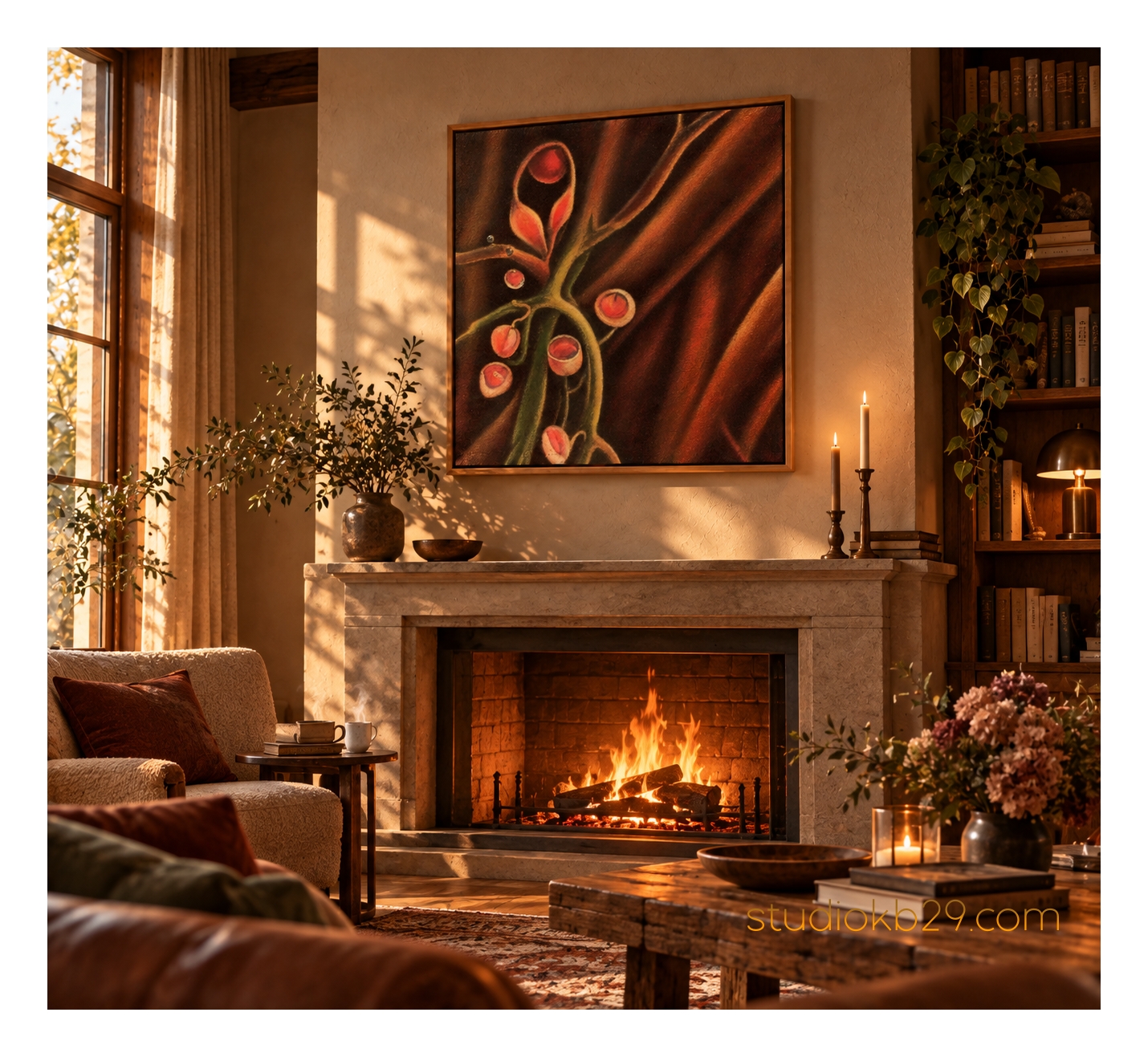
Against a light, neutral wall, the artwork can provide a concentrated point of colour and visual interest. In darker, more atmospheric interiors, it can become part of a layered composition of shadow, texture and warm tonal accents.
A Distinctive Presence in Contemporary Interiors
With its intricate organic structures, restrained colour palette and surreal visual language, The Secret Architecture of Growth offers an alternative to conventional botanical art.
It does not depict flowers, foliage or natural specimens in a literal sense. Instead, it explores the possibility of an imagined organic world, giving the viewer a sense of discovery without imposing a fixed interpretation.
This makes the work particularly suited to interiors that value artistic individuality, material richness and a carefully considered atmosphere.
Ideal for:
- Contemporary residential interiors and curated art collections
- Boutique hotels and design-led hospitality spaces
- Private lounges, libraries and intimate reception areas
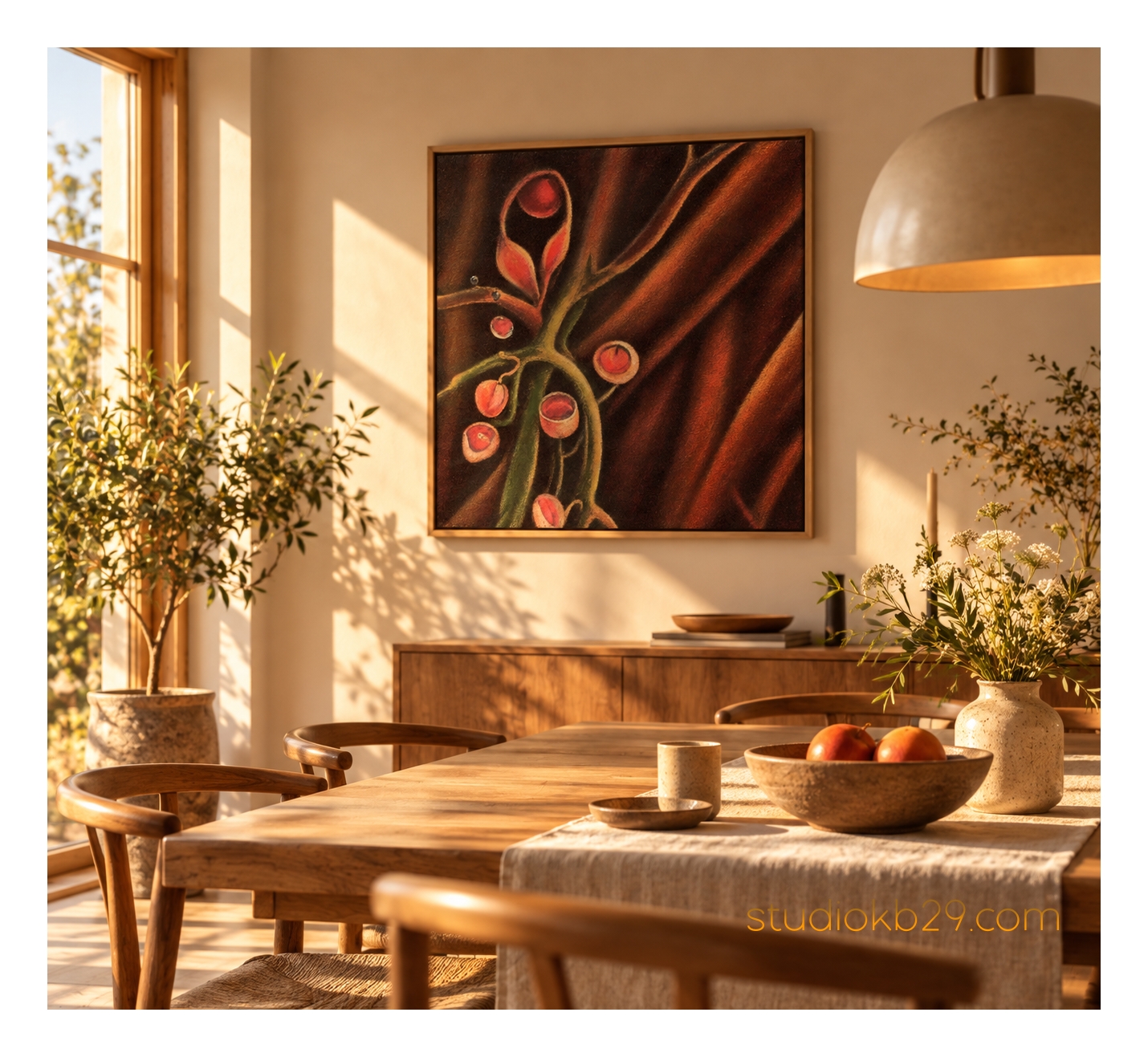
- Restaurants, bars and atmospheric dining environments
- Creative studios, galleries and distinctive commercial interiors
- Interiors combining organic modernism with expressive or surreal elements
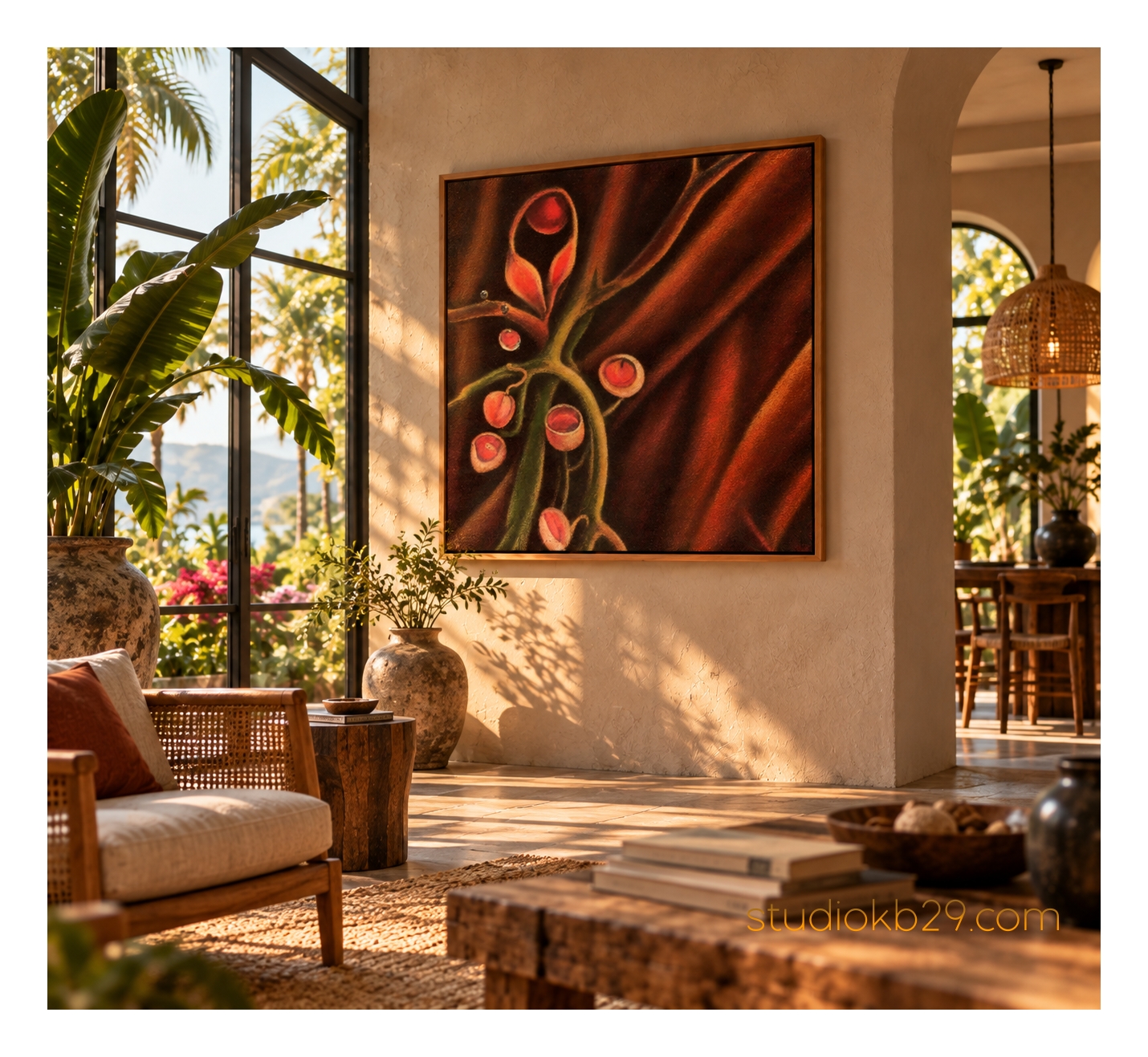
In minimalist settings, the composition can introduce a concentrated visual focal point, adding warmth and complexity to otherwise restrained surroundings. In more layered interiors, its dark tones and organic contours can complement sculptural furnishings, tactile surfaces and richly coloured materials.
For hospitality projects, the artwork offers a distinctive visual presence that encourages closer observation and contributes to a memorable interior identity.
Organic Complexity and Sculptural Form
One of the artwork’s defining qualities is the relationship between its flowing structures and its more compact, rounded forms.
The sweeping lines create movement across the composition, while the smaller elements interrupt that movement with moments of visual emphasis. This contrast produces a sense of rhythm, almost as though the forms were participating in an unfamiliar process of growth.
The composition also plays with scale. Individual elements seem intimate and almost delicate, while the surrounding structures suggest something considerably larger extending beyond the visible frame.
This uncertainty gives the artwork a sculptural dimension. The forms appear to occupy a space that is neither entirely flat nor fully three-dimensional, allowing the viewer to move between seeing the image as an abstract arrangement and imagining it as a fragment of an unknown environment.
Within an interior, this quality can create an engaging dialogue with curved furniture, sculptural lighting, organic silhouettes and architectural details.
Multiple Print Materials. One Imaginary World.
Available in a selection of print materials, this surreal abstract artwork can be adapted to different interior concepts and presentation preferences.
Canvas
A painterly presentation that complements the artwork’s atmospheric depth, warm tonal transitions and expressive organic forms.
Metal
A contemporary option for modern interiors, architectural settings and design-led commercial environments.
Wood
A natural material choice that can complement the artwork’s earthy palette and organic visual language.
Acrylic
A sleek, contemporary presentation suited to interiors where a clean finish and modern material aesthetic are desired.
Paper
A classic art-print format offering flexibility through a choice of framing options. Particularly suitable for curated residential interiors, galleries and projects where the frame forms an integral part of the design.
Material availability and finishes may vary by selected format.
Framing to Complement Your Design Vision
The right frame can subtly influence how the artwork interacts with its surroundings.
Dark timber can reinforce the composition’s depth and create a grounded, understated presentation. A slim black frame can emphasise the branching lines and warm colour accents, lending the work a more architectural character.
Natural wood can introduce a softer contrast, while a lighter frame can create a deliberate separation between the dark composition and its surroundings.
A choice of framing options and frame styles allows the presentation to be coordinated with the broader interior scheme, from restrained residential spaces to carefully curated hospitality environments.
Ready to Hang. Ready to Integrate.
Your selected artwork arrives ready to hang, helping simplify installation and the final stages of interior styling.
For interior designers, architects and project specifiers, the choice of print material and framing offers flexibility when integrating the artwork into a wider design concept.
Whether specified for a private residence, boutique hotel, restaurant or creative commercial environment, the work can contribute to a cohesive visual identity through its distinctive forms, warm accents and atmospheric depth.
From material selection to frame choice, the presentation can be tailored to the intended aesthetic of the space.
The Secret Architecture of Growth – An Imagined Organic World
The Secret Architecture of Growth explores the mysterious relationship between structure, transformation and the suggestion of life.
Branching lines and flowing contours intertwine with small, vividly coloured forms, creating the impression of an unfamiliar organic system emerging from darkness. Deep browns and muted blacks provide a rich atmospheric foundation, while accents of crimson, coral, copper and ochre introduce warmth and visual intensity.
Neither botanical illustration nor pure geometric abstraction, the artwork inhabits a space between the recognisable and the imagined. Its forms suggest growth without defining it, revealing fragments of an enigmatic world whose larger structure remains hidden.
Poetic, intricate and open to interpretation, the composition brings a distinctive expression of surreal organic abstraction to contemporary interiors.
An imagined architecture of living forms, where growth follows unseen paths and the familiar dissolves into mystery.