Description
An Imaginary World of Interwoven Forms
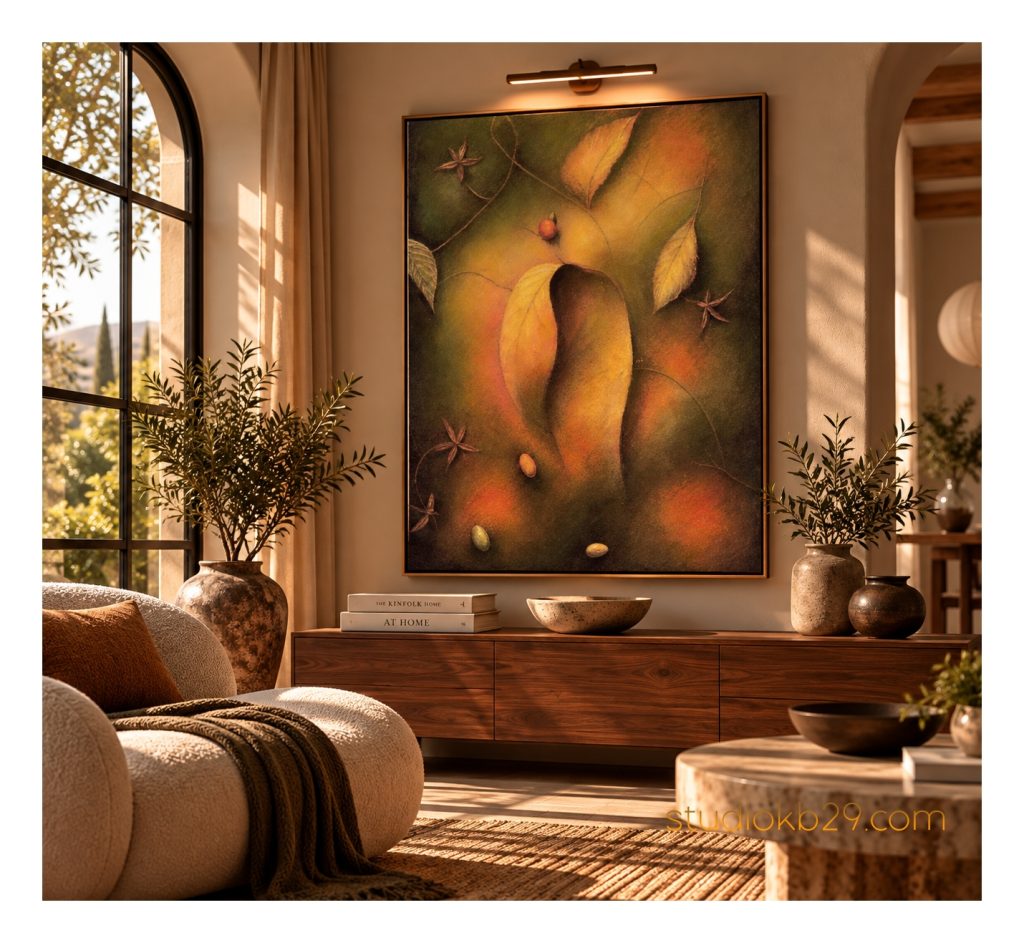
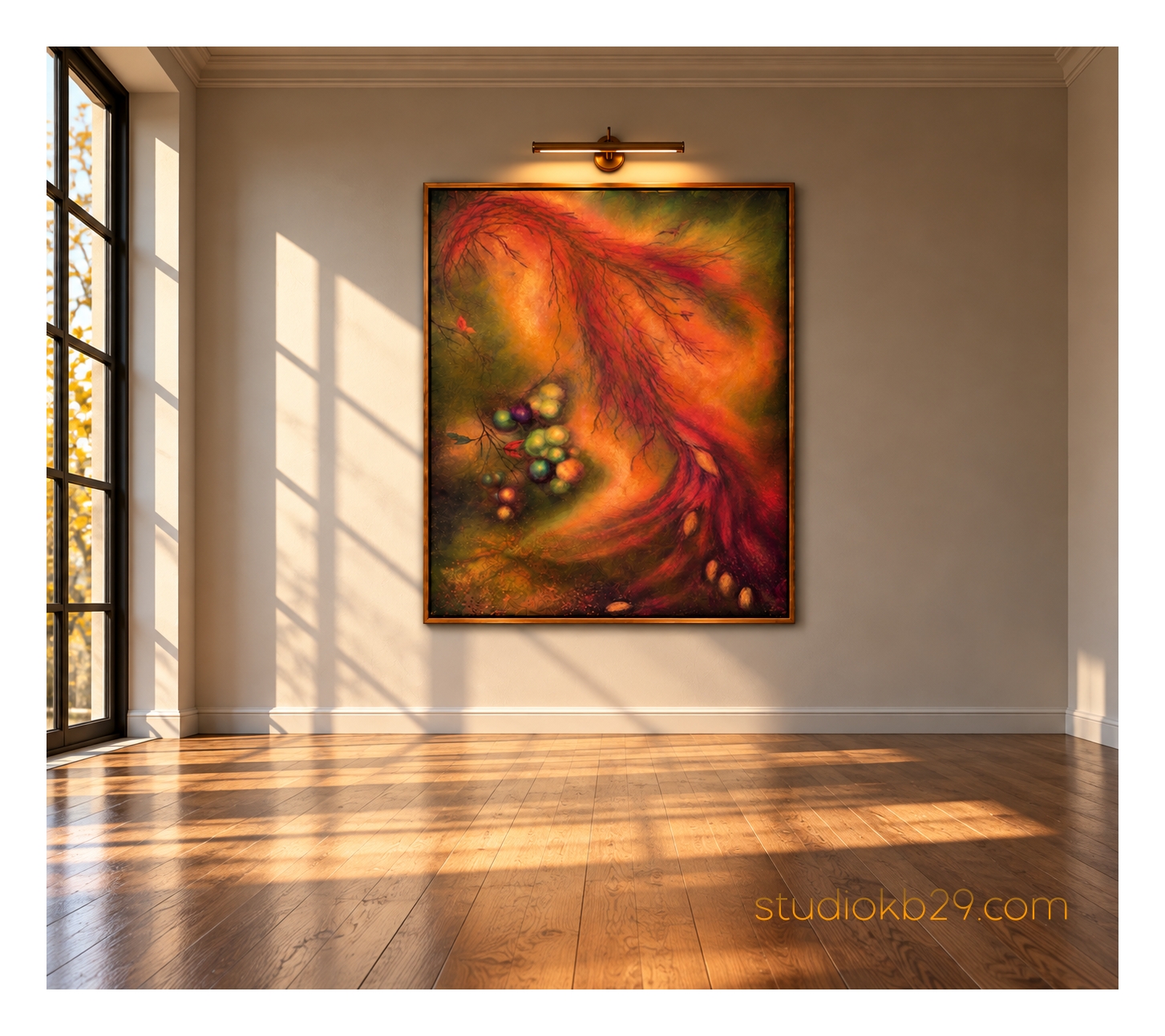
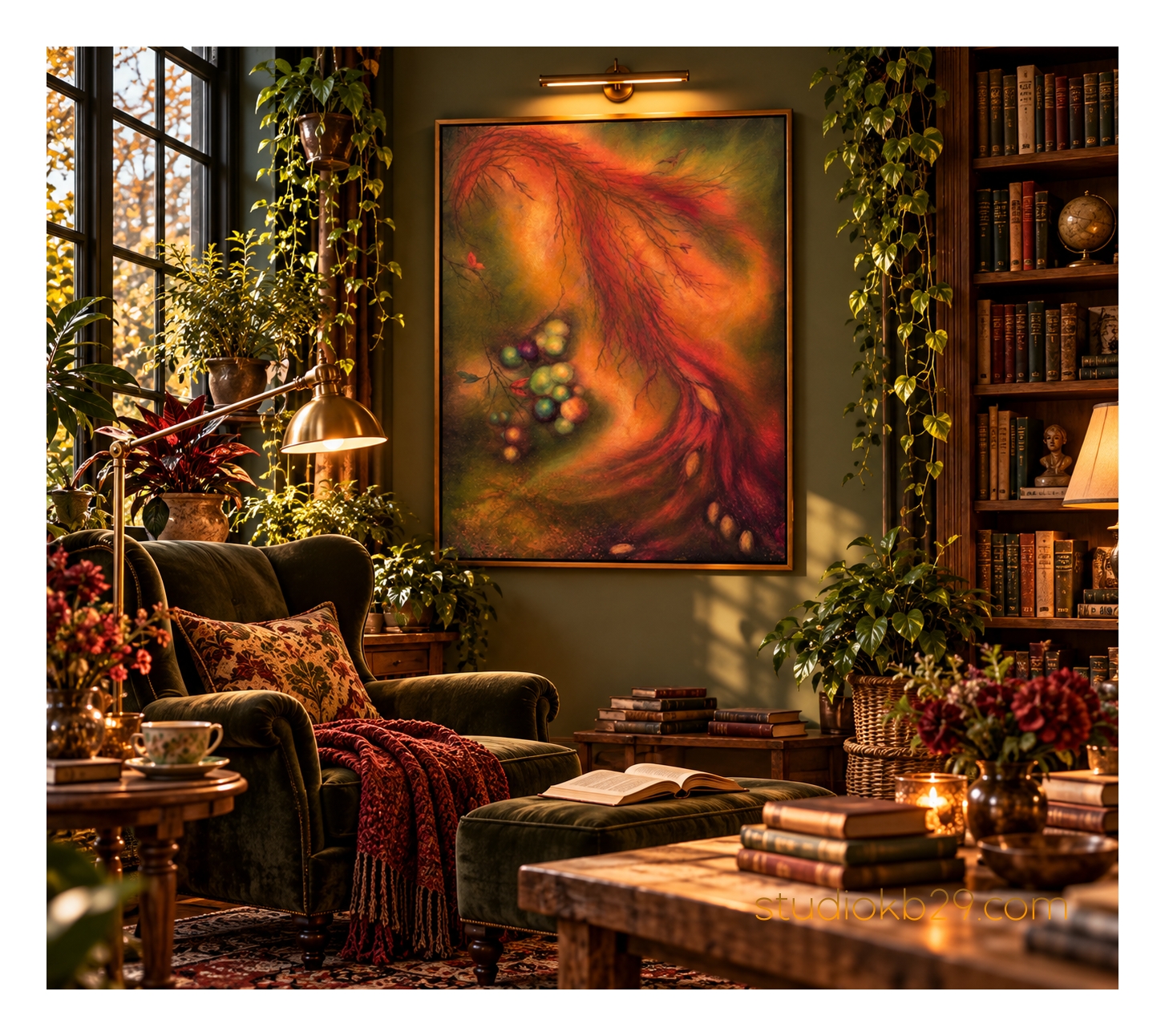
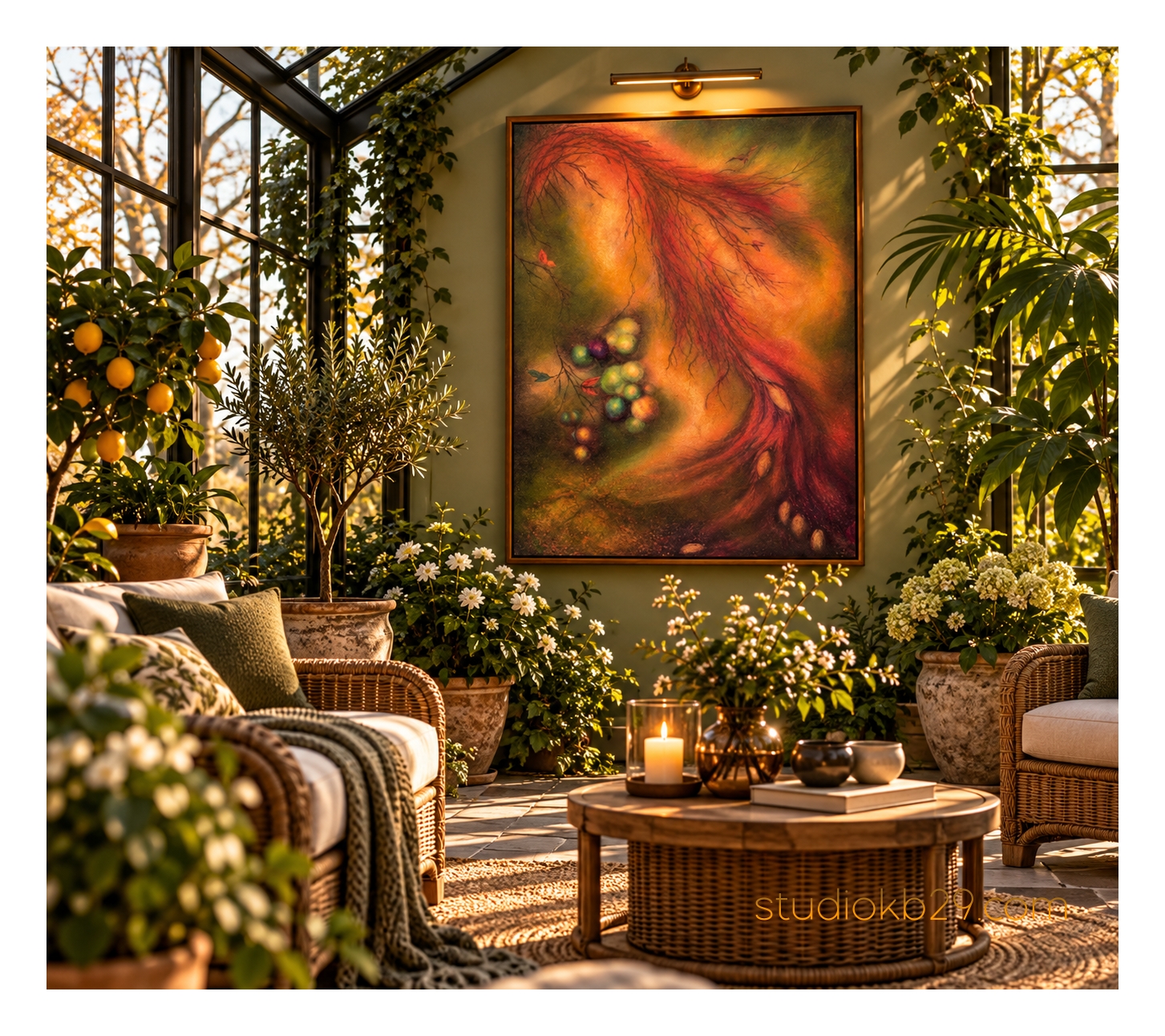
An intricate network of branching lines unfolds across a luminous, atmospheric landscape of coral, amber, olive green and deep violet. Fine, vein-like structures sweep through the composition, extending and dividing as though tracing the hidden pathways of an unfamiliar living system. Beneath them, clusters of rounded, jewel-like forms emerge from the shadows, introducing moments of colour and quiet intensity into this mysterious organic world.
The composition evokes the suggestion of roots, veins, branches and seeds without depicting any recognisable plant or natural specimen. Instead, these elements appear to merge into an imagined structure in which organic growth becomes something fluid, expansive and almost otherworldly.
Warm light seems to emanate from within the image, illuminating the central forms in shades of orange, coral and muted gold. These luminous passages contrast with the deeper olive, earthy brown and violet tones that gather around the edges, creating a sense of depth and visual movement.
The branching lines appear to flow across the surface like traces of an invisible network, while the rounded forms beneath them suggest unfamiliar organic structures suspended between growth and abstraction. Their colours shift subtly from green and amber to violet and soft rose, adding a delicate sense of variation to the composition.
Nothing is entirely fixed or literal. The image suggests the presence of a living system without revealing its identity, inviting the viewer to explore a world in which the familiar language of nature has been transformed into something unexpected.
The result is a richly atmospheric work of surreal abstract art, balancing intricate detail with expressive colour and an enduring sense of mystery.
The Hidden Architecture of Life
At the heart of this artwork lies the idea of an unseen structure connecting forms that might otherwise appear unrelated.
The delicate branching lines create a complex visual network, extending across the composition in sweeping, irregular movements. Their fine contours suggest pathways through which something might travel, grow or transform, yet their purpose remains deliberately undefined.
These lines evoke the visual language of roots, veins and branching systems, but they do not belong to any identifiable organism. They are fragments of an imagined architecture, a structure that seems to organise the composition while resisting a literal explanation.
The rounded forms gathered beneath the network introduce a contrasting visual rhythm. Their soft, almost spherical silhouettes interrupt the fine lines with moments of concentrated colour, creating a dialogue between delicacy and density, continuity and interruption.
Together, these elements suggest a world in which visible forms are connected by relationships that extend beyond the surface. What appears fragmented at first gradually reveals an underlying sense of interdependence.
The artwork does not explain this system. Instead, it invites the viewer to imagine the hidden processes that might sustain it, transforming the composition into a poetic meditation on connection, growth and the unseen structures of existence.
Organic Forms Beyond Recognition
The artwork draws upon the visual language of nature while moving beyond botanical representation.
The branching structures may recall the intricate patterns of roots or veins, while the rounded clusters suggest seeds, fruits or unfamiliar growths. Yet these associations remain fluid rather than definitive.
No individual form can be identified with certainty, and the composition does not establish a recognisable landscape or biological subject. Instead, organic references dissolve into a surreal arrangement in which different forms seem to share a common origin.
This ambiguity is central to the work’s artistic character. Nature becomes a starting point for imagination rather than a subject to be reproduced. Familiar structural principles are transformed, recombined and extended into an unfamiliar visual world.
The sweeping lines create a sense of movement across the image, while the clustered forms introduce moments of stillness and concentration. The eye moves between these contrasting elements, gradually discovering new relationships and associations.
The result is an imagined organic environment that feels simultaneously ancient, intricate and unfamiliar, as though it belongs to a hidden dimension of nature that can be sensed but never fully explained.
A Luminous Dialogue of Colour and Shadow
Colour gives the composition much of its emotional depth.
Warm coral, orange and muted amber illuminate the central areas, creating an impression of light emerging from within the forms themselves. These tones transition into olive green, earthy brown and deep violet, establishing a rich interplay between warmth and shadow.
The transitions are soft and atmospheric rather than sharply defined. Colours appear to merge, overlap and dissolve into one another, reinforcing the sense that the entire composition belongs to a continuous, interconnected environment.
The small rounded forms provide subtle accents within this broader palette. Their muted green, amber, violet and rose tones create moments of visual intensity without disrupting the overall harmony.
The darker passages around the edges give the luminous areas greater presence, while the branching lines connect the different colour zones through their continuous movement across the image.
This balance of warmth, depth and complexity makes the artwork particularly compelling in spaces where colour is used to establish atmosphere rather than simply provide decoration.
For interior designers, the palette offers opportunities to work with earthy greens, warm terracotta, muted coral and deep plum tones. These colours can introduce richness and visual interest while remaining compatible with natural materials and sophisticated, layered interiors.
A Surreal Study of Connection and Transformation
The composition can be understood as an exploration of transformation: the moment when familiar organic structures begin to evolve into something entirely imagined.
The branching network appears to spread and divide, while the rounded forms seem to emerge from within its pathways. Their relationship suggests an ongoing process rather than a fixed arrangement, as though the image captures a fragment of a larger system in a state of quiet change.
The forms do not follow a conventional hierarchy. Fine lines, clustered shapes and flowing contours each contribute to the composition, creating a visual language in which even the smallest details participate in the larger structure.
This gives the artwork a contemplative quality. It encourages the viewer to look beyond individual shapes and consider the relationships that connect them.
The result is not a literal illustration of life, but an imaginative interpretation of the principles that seem to govern it: interconnection, emergence, variation and the continuous transformation of form.
A Distinctive Artwork for Contemporary Interiors
With its intricate linework, sculptural organic forms and richly layered colour palette, The Hidden Architecture of Life offers a distinctive interpretation of surreal abstract art.
The composition combines visual complexity with atmospheric warmth. Its branching structures create movement and rhythm, while the rounded forms introduce concentrated points of colour against a landscape of coral, amber, olive and violet.
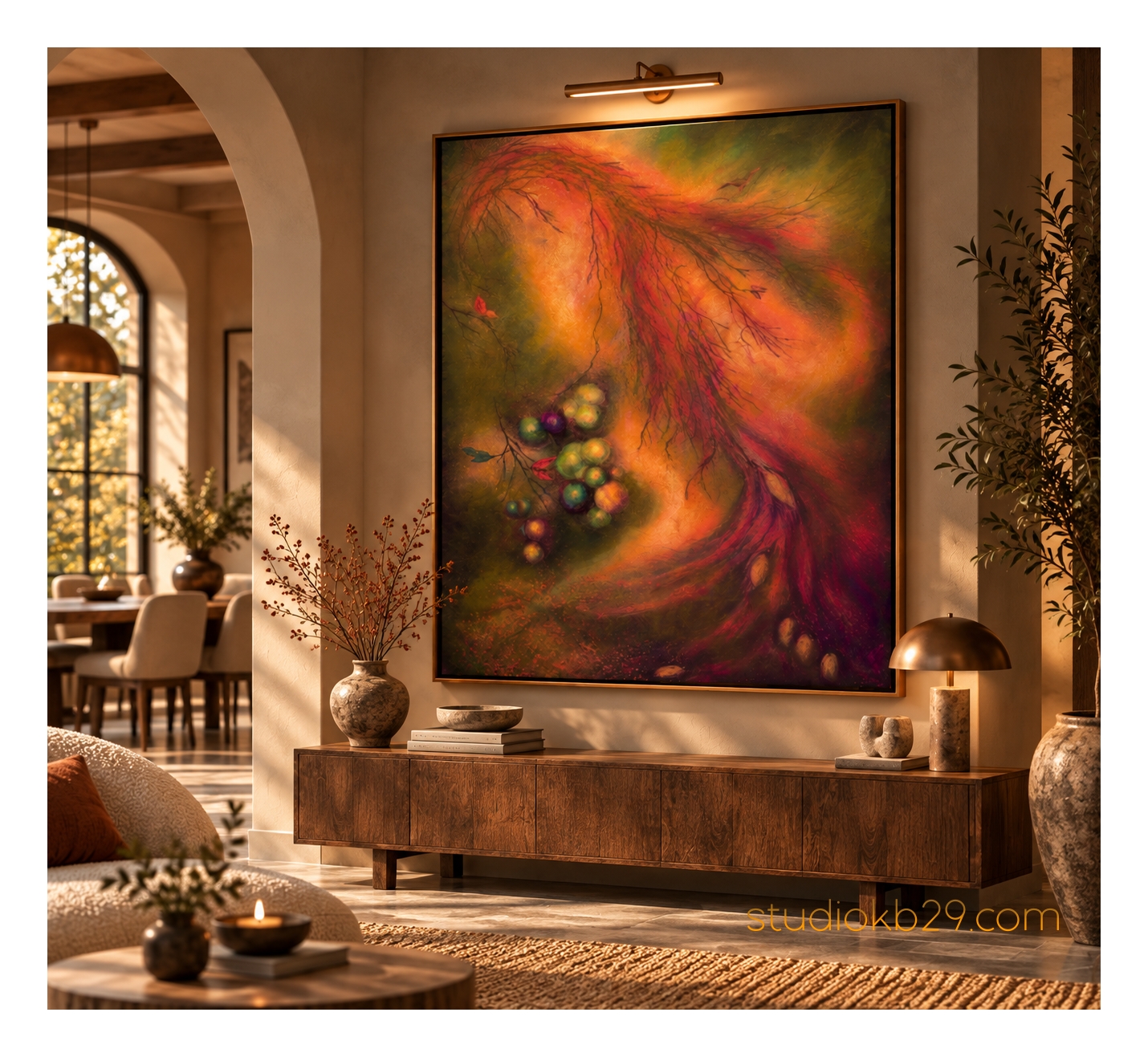
The artwork can serve as a focal point in interiors where individuality, material richness and artistic expression are important considerations.
Ideal for:
- Contemporary residential interiors and statement walls
- Boutique hotels and design-led hospitality environments
- Creative studios, galleries and architectural practices
- Private lounges, libraries and contemplative spaces
- Interiors inspired by organic modernism and surreal abstraction
- Curated commercial spaces seeking distinctive, atmospheric artwork
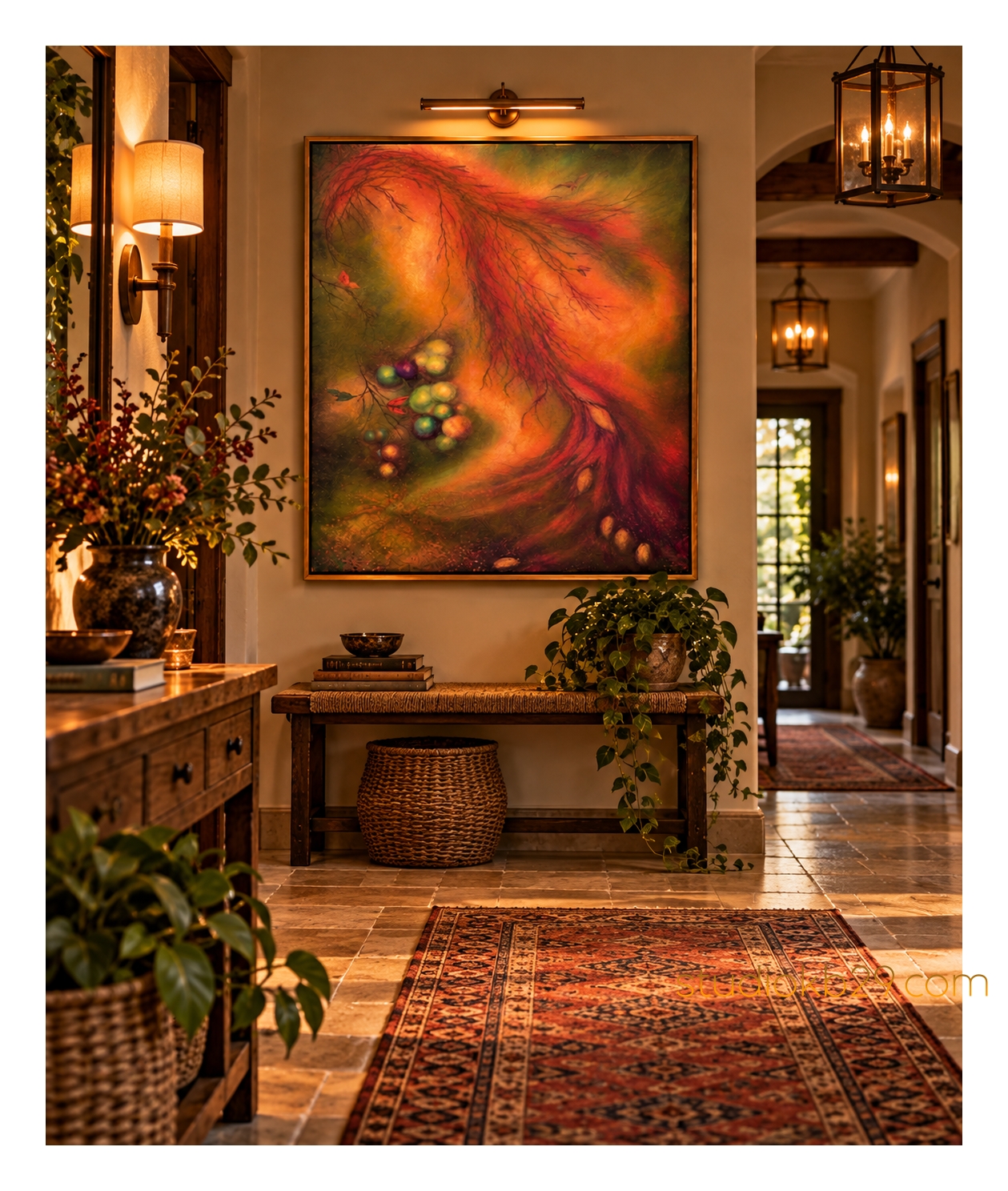
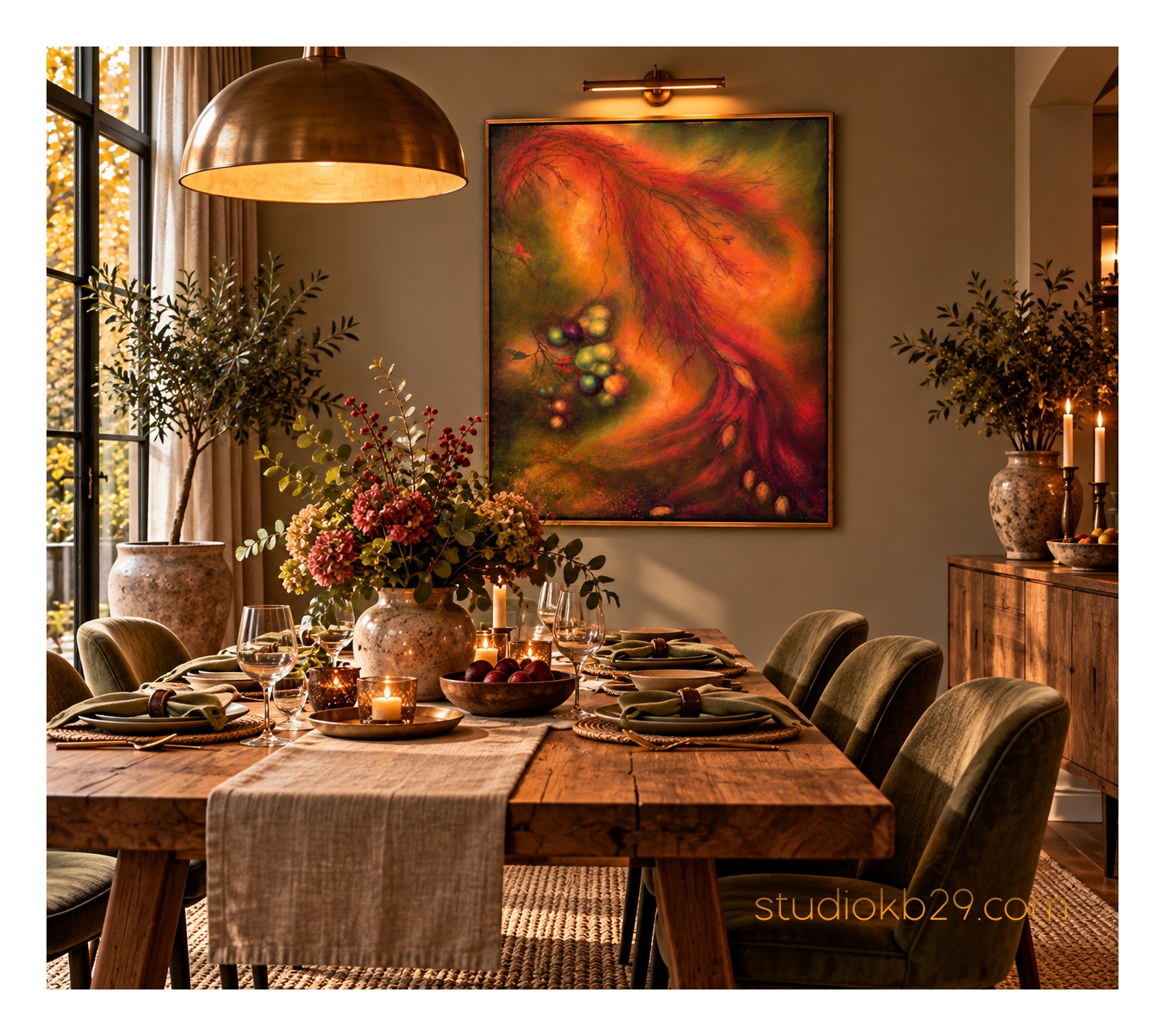
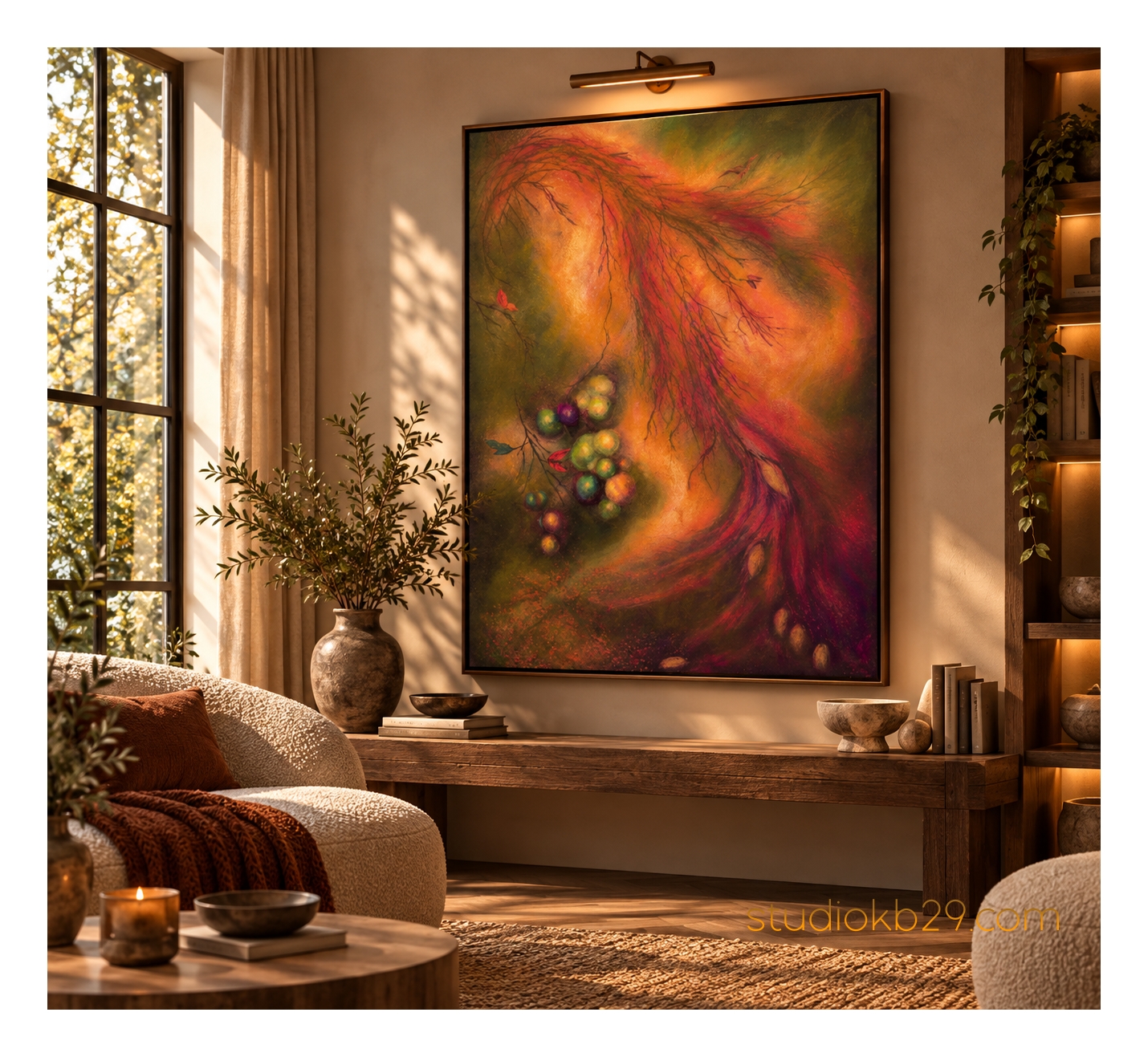
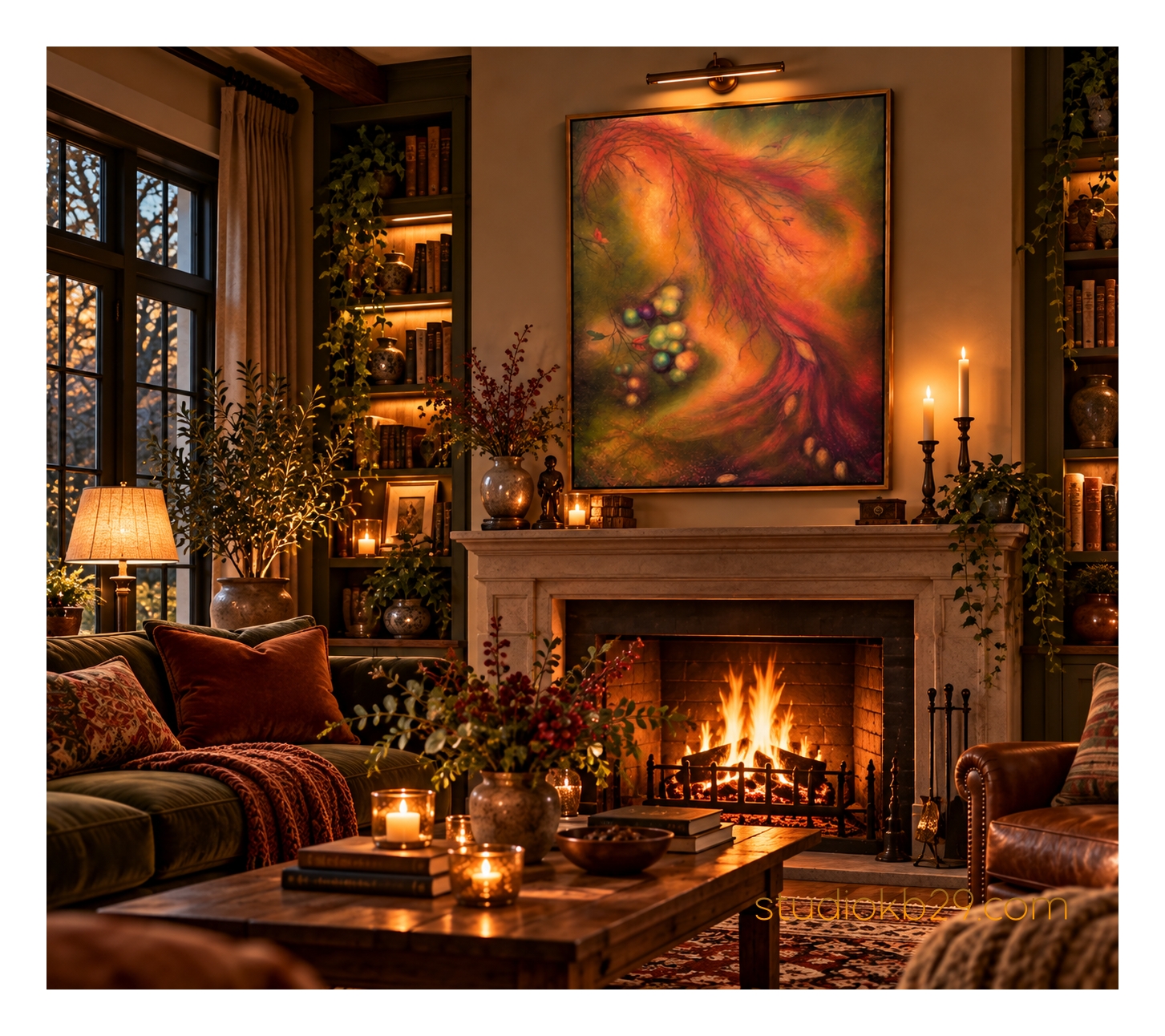
In minimalist settings, the artwork can introduce intricate detail and organic complexity without relying on recognisable imagery. In more expressive interiors, its earthy greens, warm reds and violet accents can complement layered textiles, natural timber, stone and sculptural furniture.
Its combination of sweeping lines and clustered forms makes it particularly suited to spaces where artwork is intended to invite prolonged attention rather than deliver an immediate, literal reading.
Integrating the Artwork into an Interior Concept
The colour palette offers a versatile foundation for interior styling.
Warm timber, terracotta and muted rust tones can reinforce the coral and amber passages, creating a cohesive and inviting atmosphere. Olive green and darker earthy finishes can echo the deeper areas, while carefully selected violet or plum accents can introduce a more expressive contrast.
Natural materials such as stone, textured plaster and woven textiles can complement the artwork’s organic visual language. In contemporary spaces, simple furniture silhouettes and restrained architectural detailing can provide a calm setting for its intricate forms.
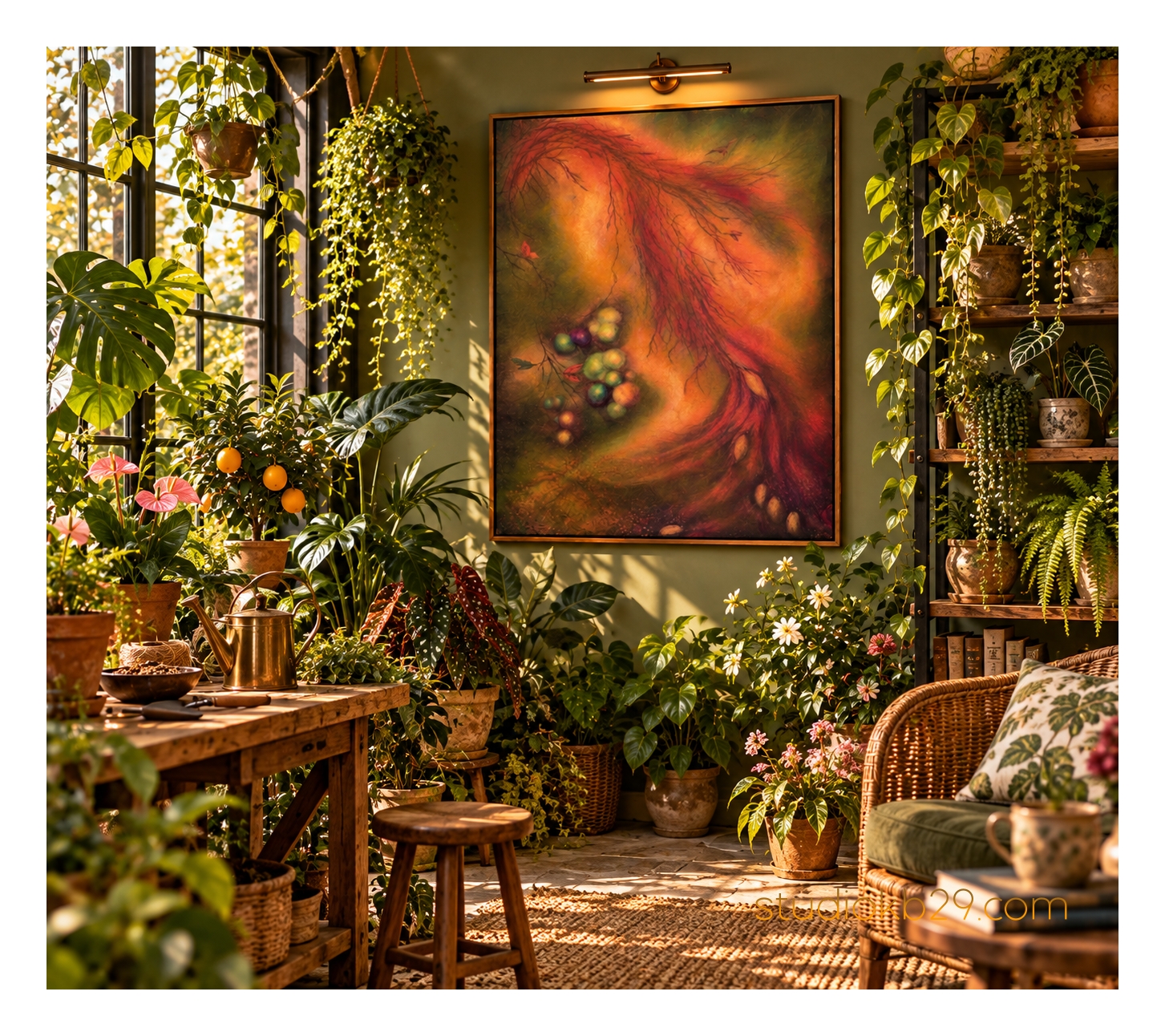
For a warmer, more layered concept, the artwork can be combined with tactile fabrics, natural wood and subdued botanical colours. For a more dramatic presentation, darker wall finishes can emphasise the luminous centre and the fine branching structures.
Its appeal lies in the relationship between the familiar and the unfamiliar: the artwork feels connected to nature while remaining distinctly imaginative.
This allows it to contribute to a wide range of interior concepts without losing its independent artistic identity.
Multiple Print Materials. One Imaginary World.
Available in a selection of print materials, this surreal abstract artwork can be adapted to different interior concepts and presentation preferences.
Canvas
A painterly presentation that complements the soft transitions, atmospheric depth and intricate details of the composition.
Metal
A contemporary option for modern interiors, architectural environments and design-led commercial spaces.
Wood
A natural material choice that can complement the earthy palette and organic visual language of the artwork.
Acrylic
A sleek, contemporary presentation suited to interiors where a clean finish and modern material aesthetic are desired.
Paper
A classic art-print format offering flexibility through a choice of framing options. Particularly suitable for curated residential interiors, galleries and projects where the frame forms an integral part of the design.
Material availability and finishes may vary by selected format.
Framing to Complement Your Design Vision
The choice of frame can subtly influence how the artwork relates to its surroundings.
Natural wood can reinforce the organic character of the composition and complement its earthy tones. Dark wood can create a more grounded presentation, while a slim black frame can emphasise the intricate branching lines and darker passages.
A lighter natural-wood frame can introduce warmth without competing with the artwork’s colour transitions. For more expressive interiors, a darker frame can provide contrast and create a defined boundary around the richly layered image.
A choice of framing options and frame styles allows the presentation to be coordinated with the wider interior concept, whether the artwork is intended for a private residence, a boutique hospitality project or a curated commercial environment.
Ready to Hang. Ready to Integrate.
Your selected artwork arrives ready to hang, helping simplify installation and the final stages of interior styling.
For interior designers, architects and project specifiers, the choice of print material and framing offers flexibility when incorporating the artwork into a complete design concept.
Its rich palette can be coordinated with furnishings, textiles, lighting and architectural finishes, while its intricate, imagined organic forms introduce a distinctive artistic statement.
Whether presented as a focal point in a residential space or incorporated into a carefully curated hospitality or commercial project, the artwork offers a balance of atmospheric depth, organic complexity and interpretive openness.
The Hidden Architecture of Life – An Imaginary Organic System
The Hidden Architecture of Life explores an imagined world of interconnected forms, where delicate branching lines and rounded, jewel-like structures merge into an unfamiliar organic system.
Warm coral, orange and amber illuminate the composition, contrasting with olive green, earthy brown and deep violet. The interplay of light and shadow creates depth, while the intricate linework guides the eye through a landscape that feels both organic and otherworldly.
Suggestive of roots, veins and unfamiliar growths without depicting any recognisable organism, the artwork transforms natural associations into a richly atmospheric surreal abstraction.
Contemplative, intricate and open to interpretation, it invites the viewer to consider the hidden relationships that connect forms and sustain imagined worlds.
An exploration of invisible connections, where branching structures and unfamiliar forms reveal the poetic architecture of an imagined life.