Description
An Imaginary Landscape Between Dream and Nature
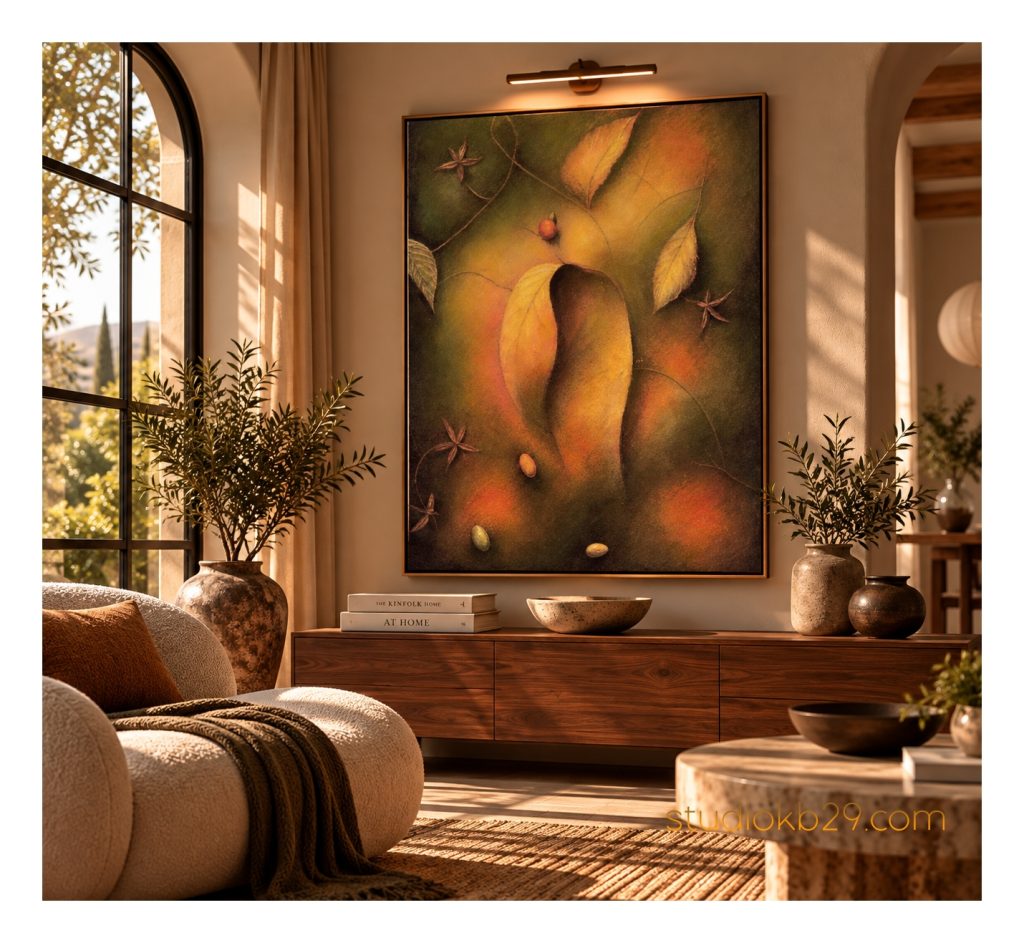
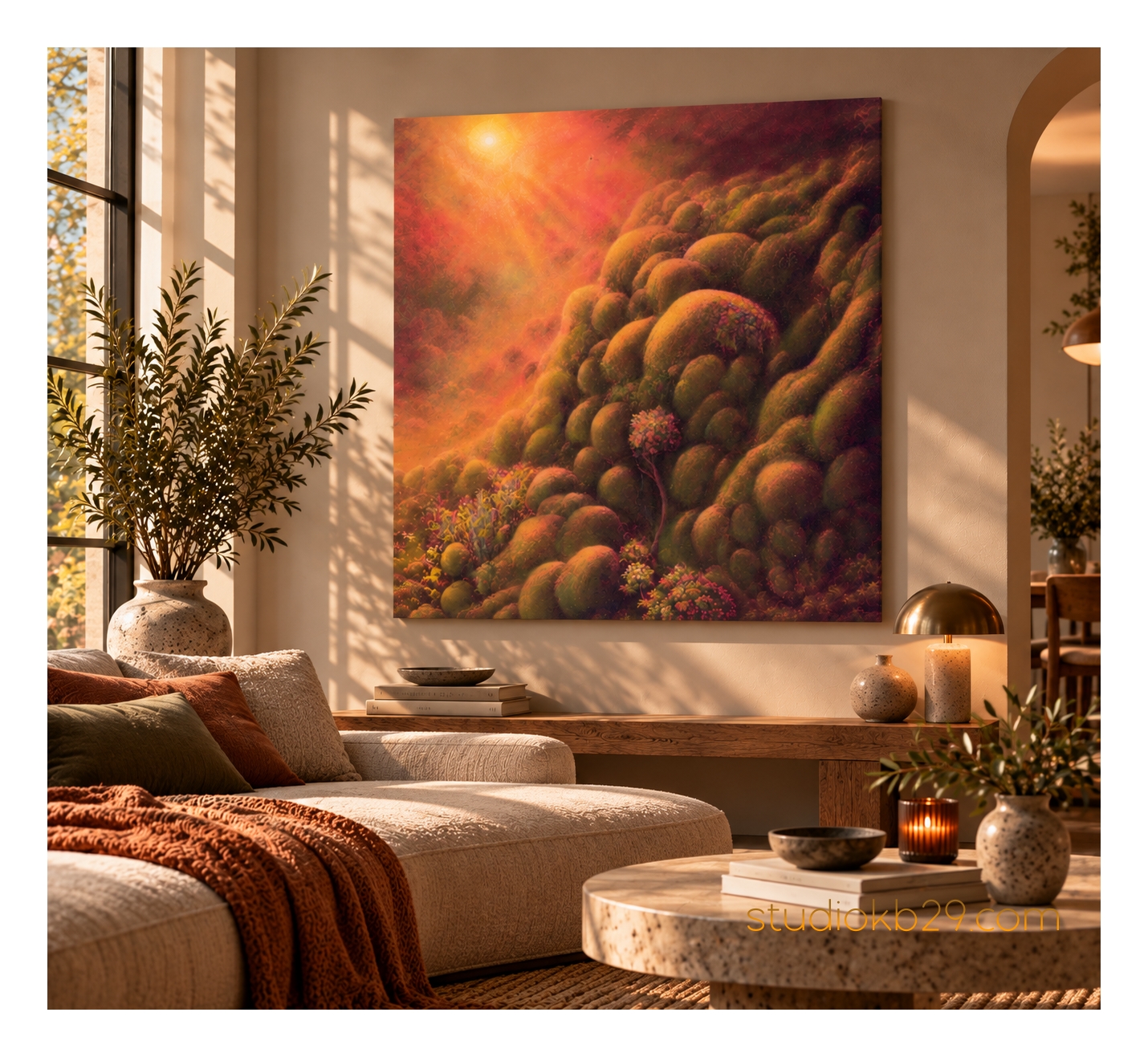
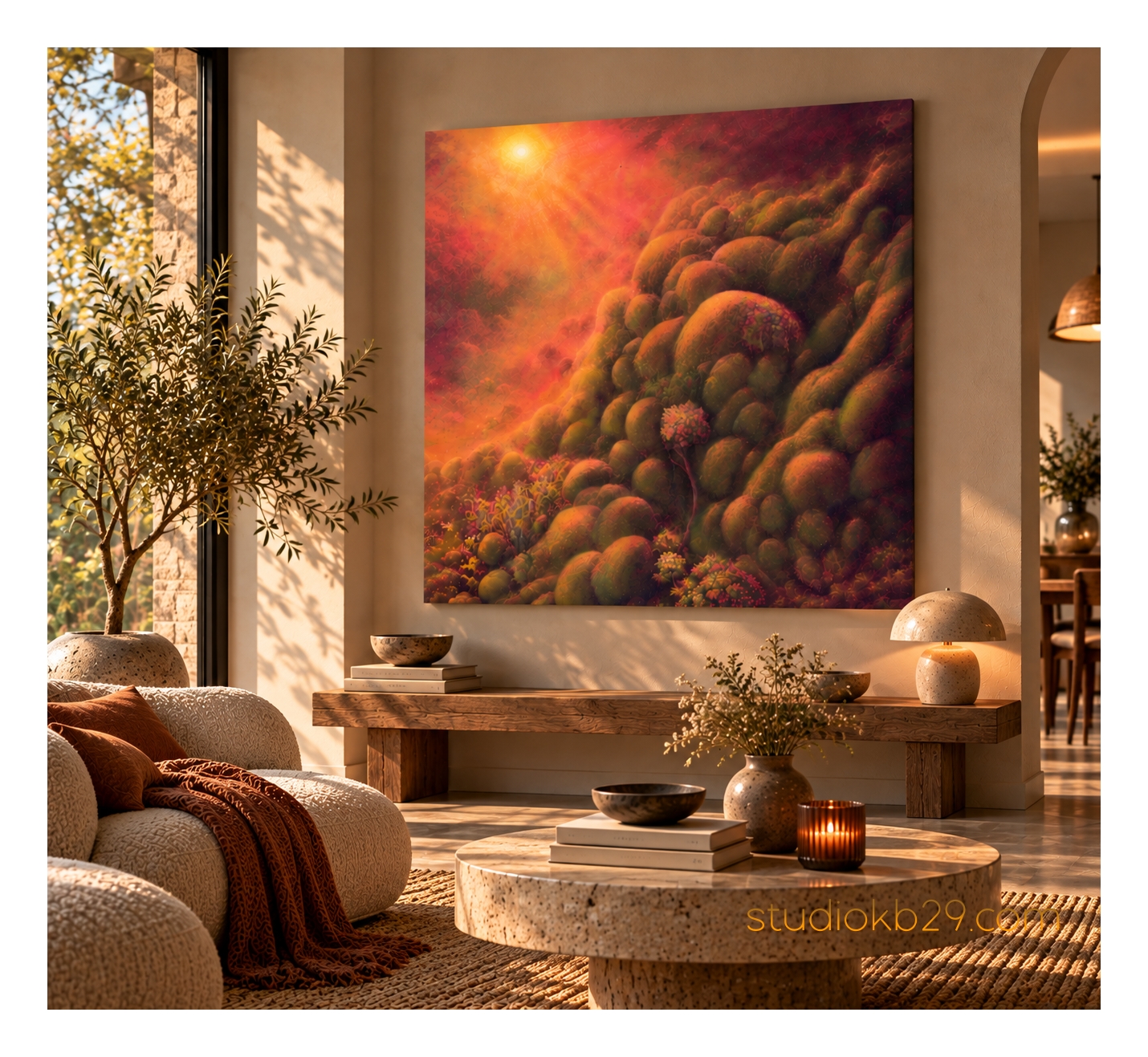
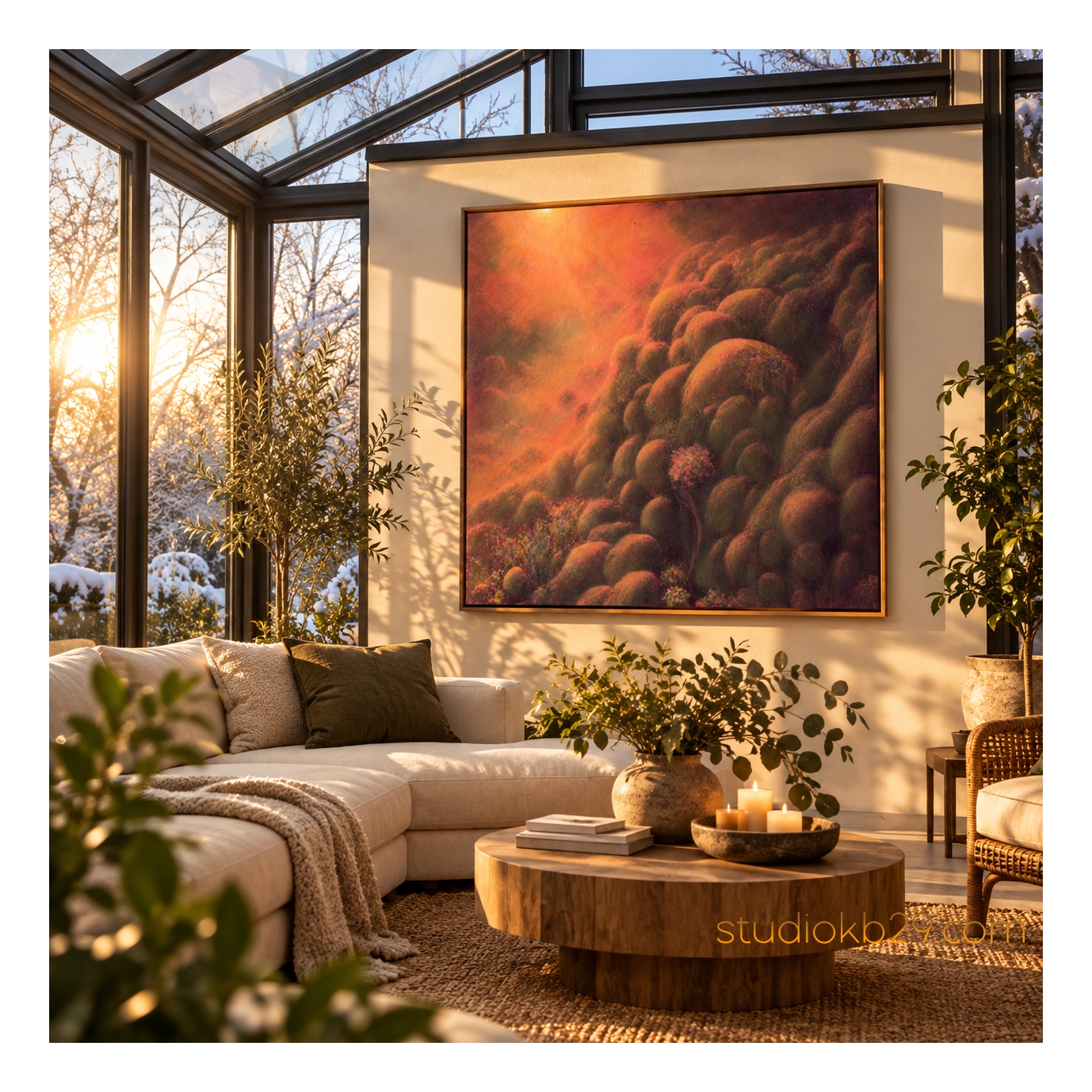
A mysterious landscape unfolds beneath a luminous atmosphere of coral, apricot and muted rose. Across the composition, rounded, sculptural forms rise and overlap, creating an undulating terrain that appears at once geological, organic and entirely imagined. Small clusters of delicate blossoms emerge unexpectedly between these formations, introducing moments of intricate detail into an otherwise expansive and dreamlike world.
The landscape resists a literal interpretation. Its soft, bulbous structures might suggest hills, moss-covered formations, unfamiliar growths or the contours of an imagined terrain, yet none of these associations fully defines what is seen. Instead, the forms seem to belong to a world governed by its own visual logic, somewhere between a surreal garden and a landscape remembered from a dream.
Light enters from the upper left, illuminating the atmosphere with a warm, diffuse glow. Shades of coral, peach and soft orange gradually dissolve into deeper tones of olive, earthy brown, muted plum and shadowed mauve. This gradual transition creates a remarkable sense of depth, as though the landscape continues into an atmospheric distance beyond the visible composition.
Within this unusual terrain, the small flowering structures provide delicate points of focus. Their fine, intricate forms contrast with the larger, rounded masses surrounding them, creating a relationship between the monumental and the miniature, the expansive and the intimate.
The result is a surreal vision of an imagined world in which landscape and organic form merge. Nothing is entirely familiar, yet the composition carries an underlying sense of natural rhythm, inviting the viewer to discover a place that seems to exist somewhere between the tangible and the impossible.
The Garden of Unseen Worlds
At the heart of the artwork lies the idea of a landscape that cannot be found in the physical world, yet feels strangely alive.
The rounded formations create a continuous sequence of rises, hollows and overlapping contours. Their repetition establishes a visual rhythm that guides the eye through the composition, from the illuminated foreground towards the darker, more distant regions.
Scattered among these formations, delicate flowering forms appear like small revelations. Their intricate silhouettes introduce moments of fragility and complexity, interrupting the larger shapes without disturbing the overall sense of continuity.
The relationship between these elements creates the impression of an ecosystem, although no recognisable species or actual habitat is depicted. The landscape seems to generate its own structures and forms, allowing something resembling botanical life to emerge from an environment that remains fundamentally imaginary.
This ambiguity gives the work its distinctive surreal quality. It does not attempt to reproduce a garden or illustrate a fantastical location. Instead, it explores the possibility of a world that feels organic without being identifiable, familiar without being real.
The viewer is invited to enter this imagined environment without a predetermined destination, allowing the composition to unfold through colour, texture and association.
An Organic Terrain of Imagined Forms
The rounded structures dominate the composition, creating a landscape of unusual scale and visual complexity.
Their soft contours appear almost sculpted, with subtle variations in light and shadow lending each formation a sense of volume. Some rise prominently from the surrounding terrain, while others recede into darker layers, creating a continuous interplay between foreground and distance.
These forms evoke multiple associations without settling into a single interpretation. They may recall eroded geological formations, dense organic growth or the rounded surfaces of an unfamiliar botanical world. Their repetition suggests an underlying order, while their irregular arrangement prevents the landscape from becoming predictable.
The effect is both contemplative and slightly uncanny. The terrain feels structured, yet its logic remains elusive. It appears to have developed naturally, although the nature of that development belongs entirely to the imagination.
The flowering structures introduce a contrasting visual language. Their fine, clustered details create intricate focal points within the broader masses, suggesting delicate forms emerging from a world of greater weight and density.
Through this contrast, the artwork creates a compelling dialogue between solidity and fragility, repetition and variation, landscape and abstraction.
A Dreamlike Garden Without Boundaries
Although the composition evokes the idea of a garden, it does not conform to a recognisable botanical setting.
There is no clearly defined path, horizon or conventional arrangement of plants. Instead, the terrain appears to rise and fold into itself, creating an environment in which scale and spatial relationships remain ambiguous.
The flowering forms are equally suggestive rather than descriptive. Their delicate clusters may evoke blossoms, miniature growths or unfamiliar botanical structures, but they never resolve into identifiable flowers.
This distinction is essential to the artwork’s surreal character. The image draws upon the visual language of nature while transforming it into something new.
The landscape becomes an imaginative space in which organic forms can develop according to unexpected principles. The viewer may recognise echoes of the natural world, but these associations remain open, allowing the composition to retain its sense of mystery.
Rather than telling a story, the artwork creates an atmosphere: a quiet encounter with a place that feels both ancient and otherworldly, intimate and seemingly endless.
Colour as Atmosphere and Emotional Depth
The palette plays a defining role in the artwork’s sense of space and mood.
Warm coral, apricot and muted orange illuminate the upper left, creating an atmospheric glow that gradually dissolves into earthy olive, deep brown, dusty rose and subdued mauve. These transitions give the composition a sense of light that appears to emerge from within the landscape rather than from a clearly identifiable source.
The warm tones create a feeling of openness and distant illumination, while the darker colours lend the rounded forms weight and depth. Subtle shifts in hue distinguish the overlapping formations without relying on sharp outlines.
The small flowering structures introduce delicate accents of pale pink, muted yellow and soft cream. Their intricate details catch the eye against the darker terrain, creating moments of visual delicacy within the broader composition.
Together, these colours establish a balance between warmth and shadow, softness and depth. The atmosphere feels suspended in an undefined moment, neither fully daylight nor twilight, but belonging to an imagined world of its own.
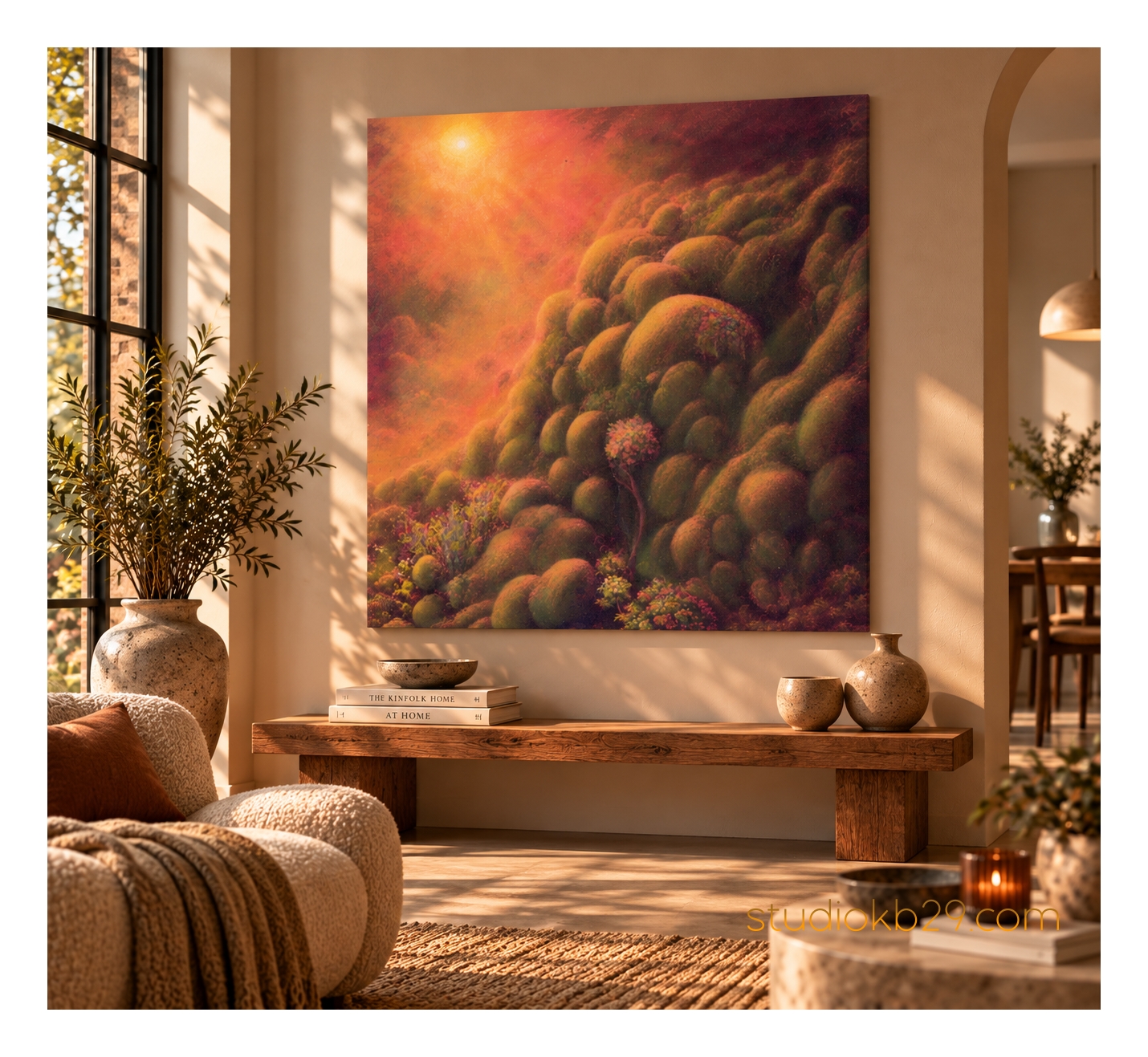
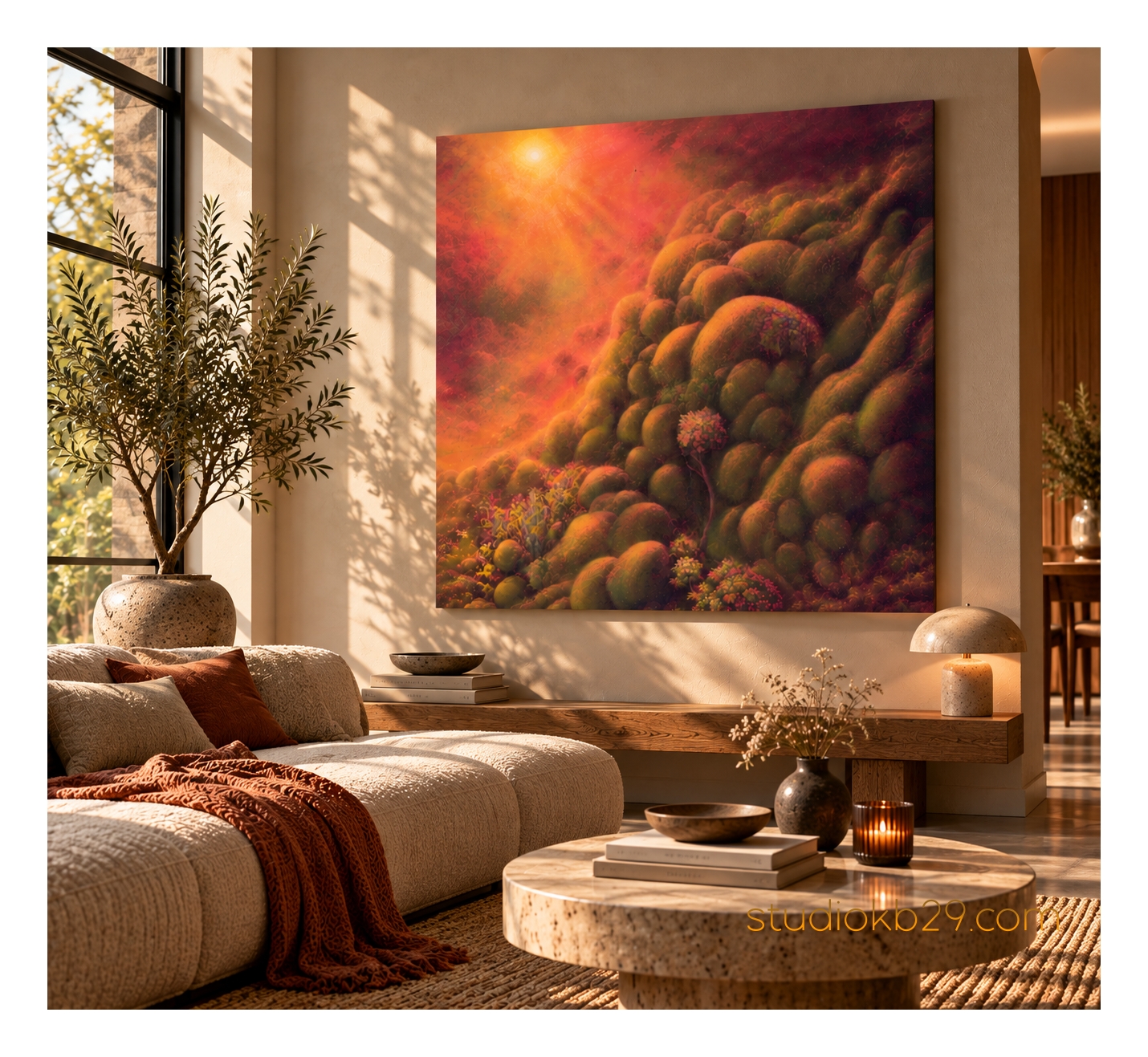
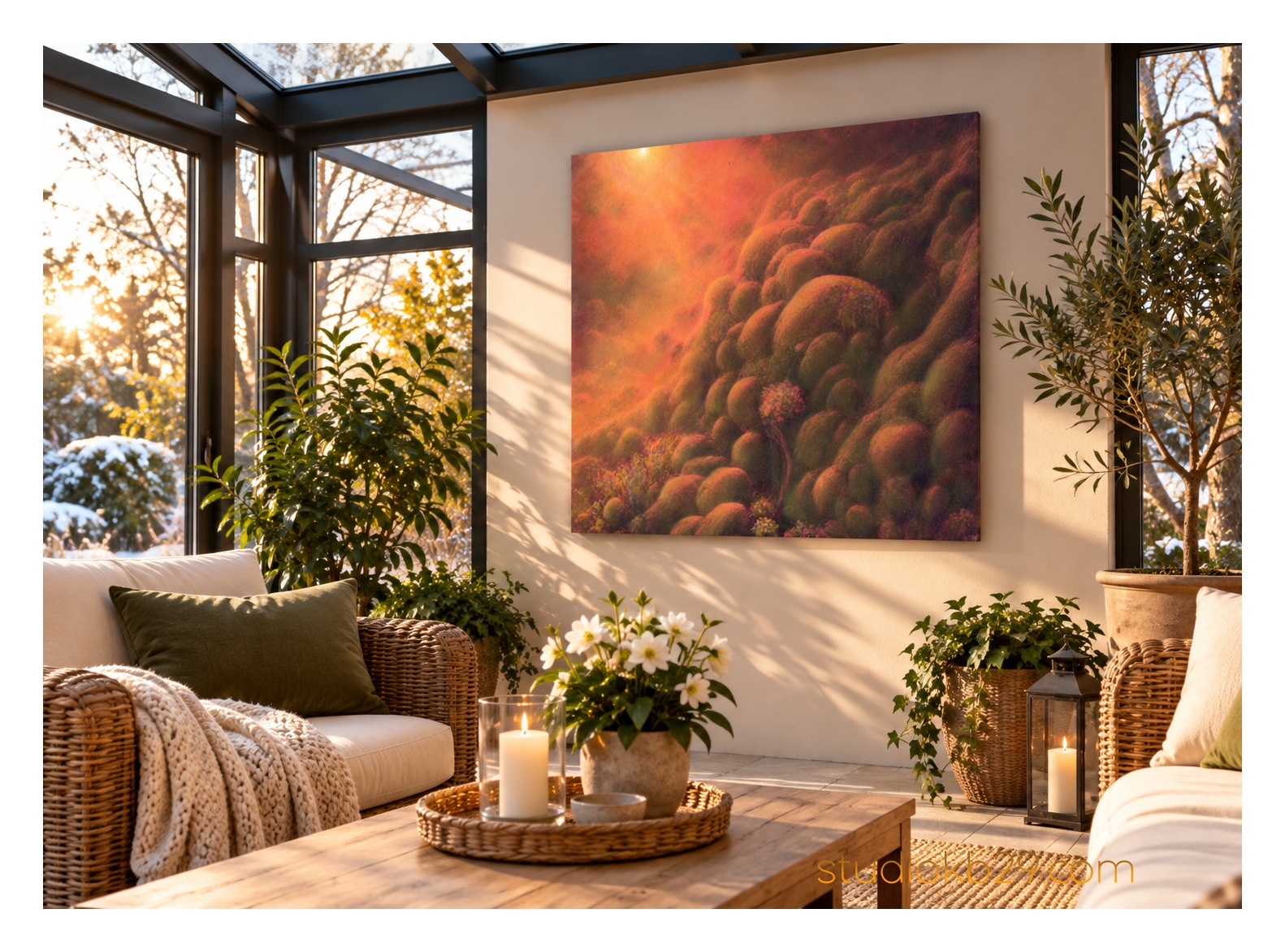
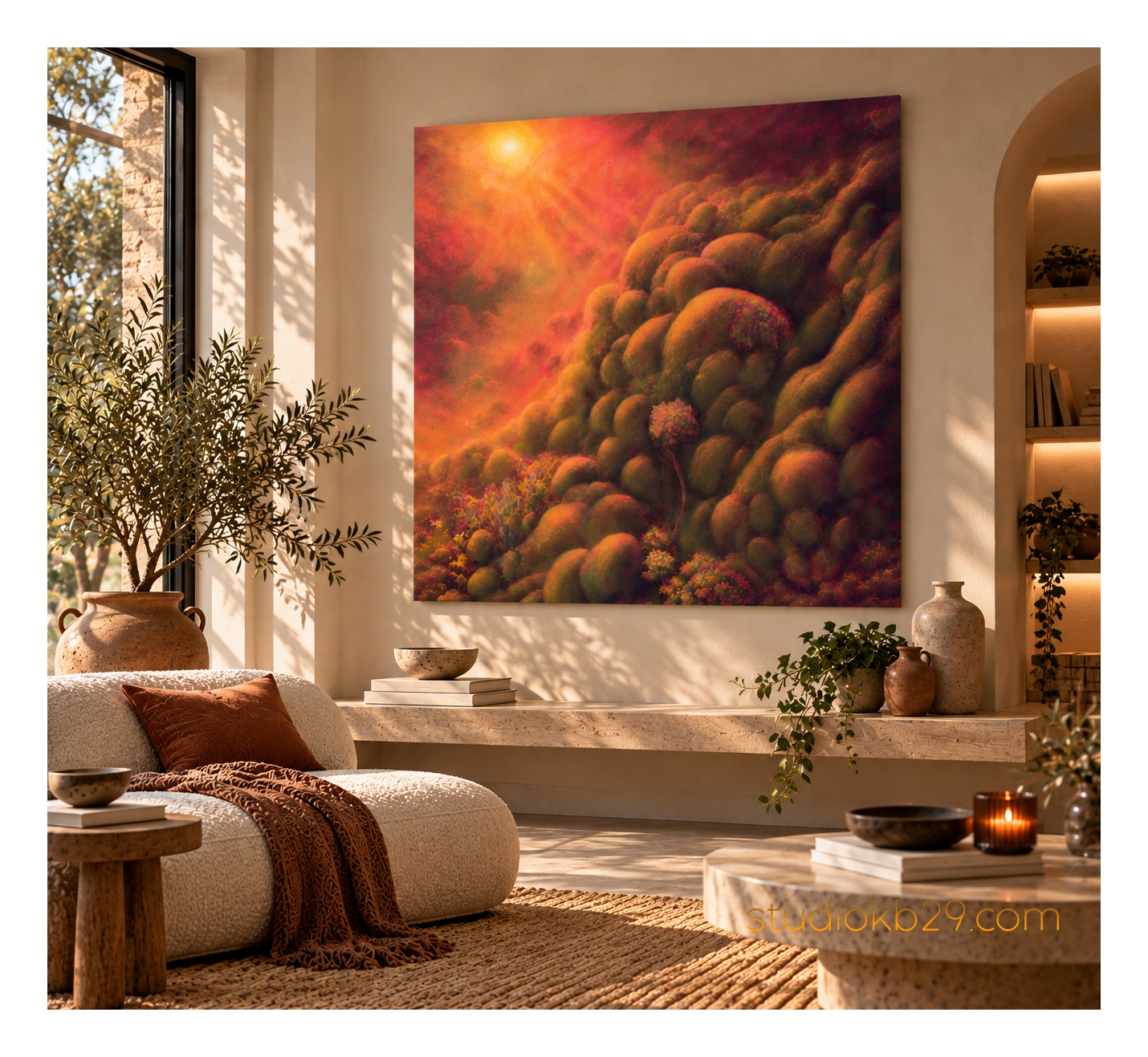
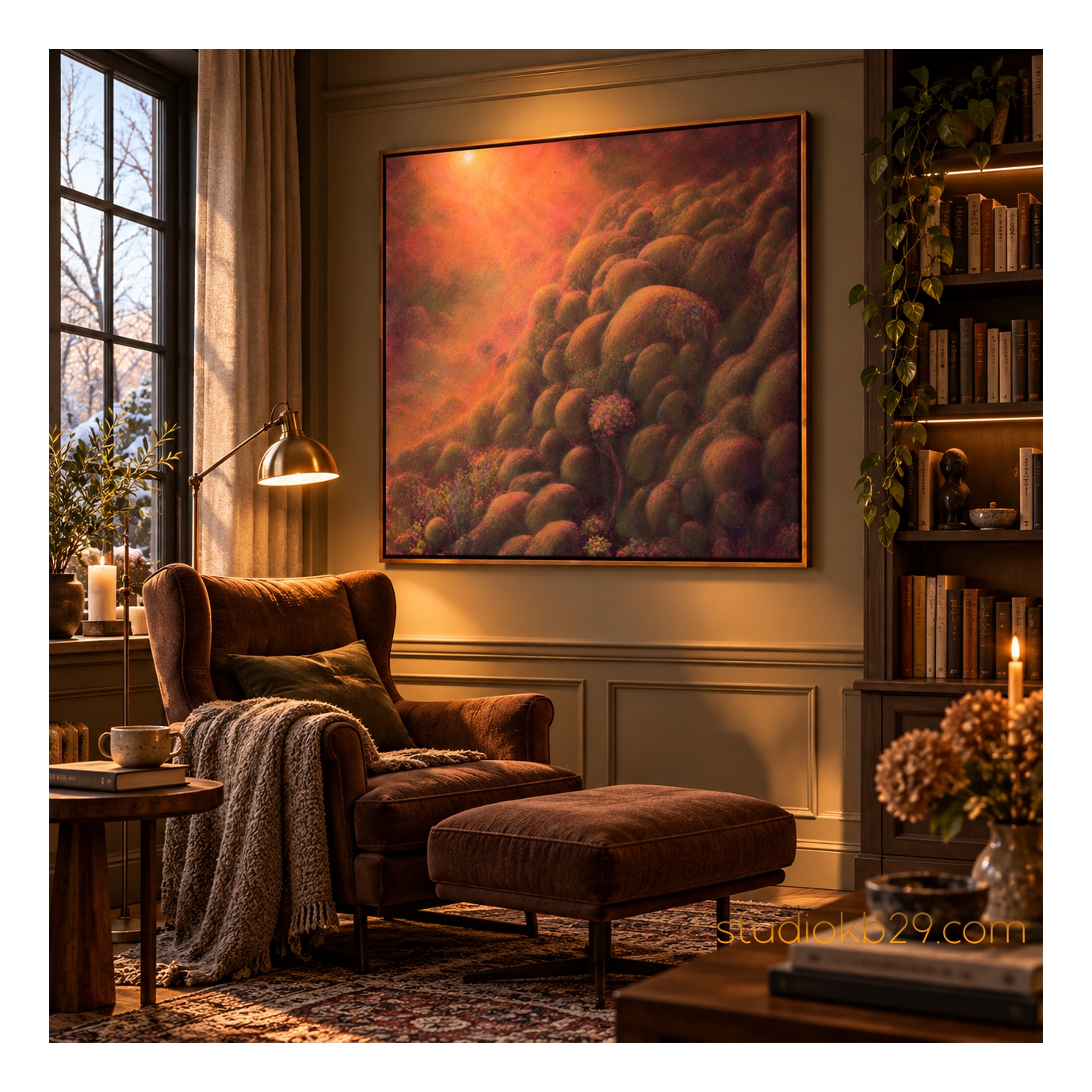
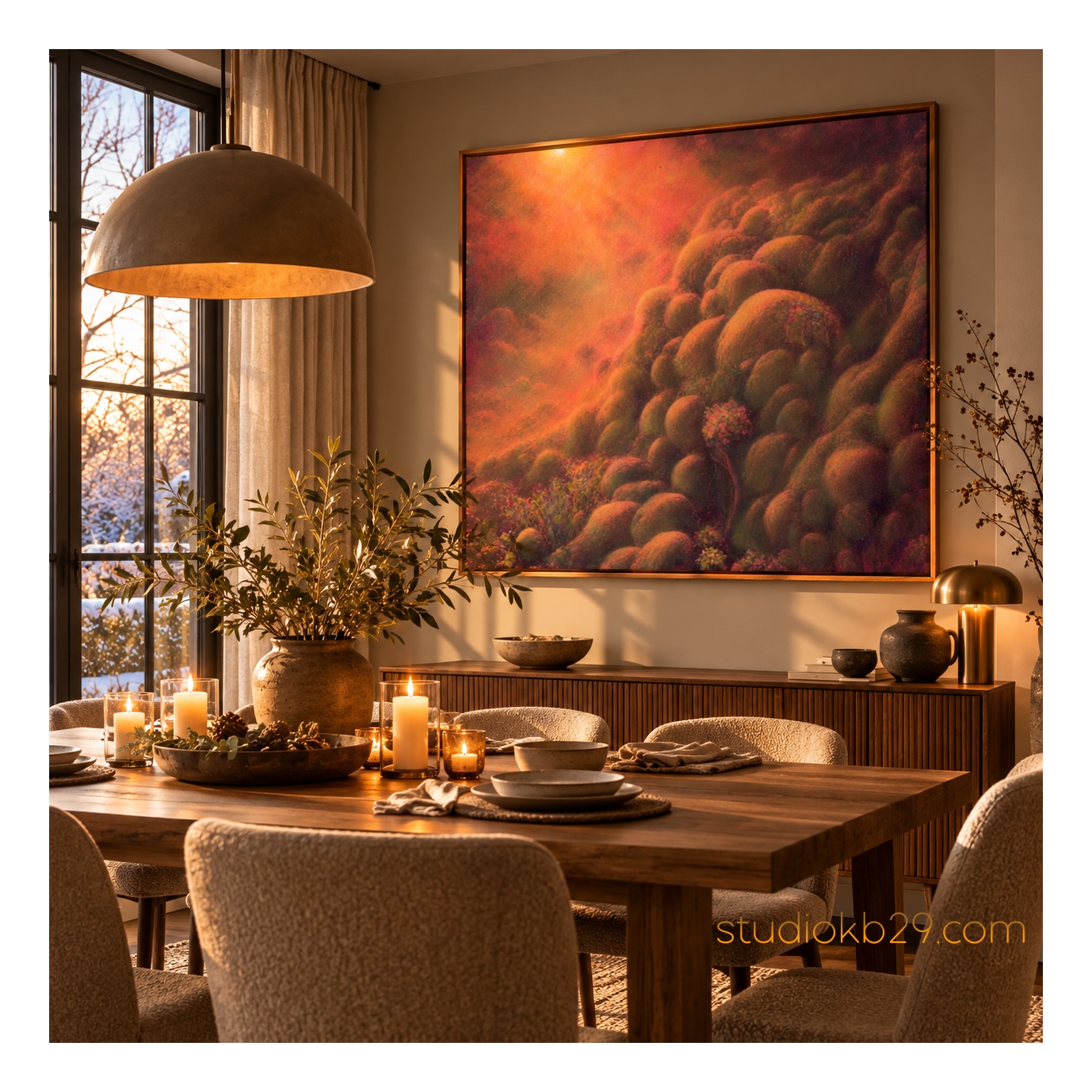
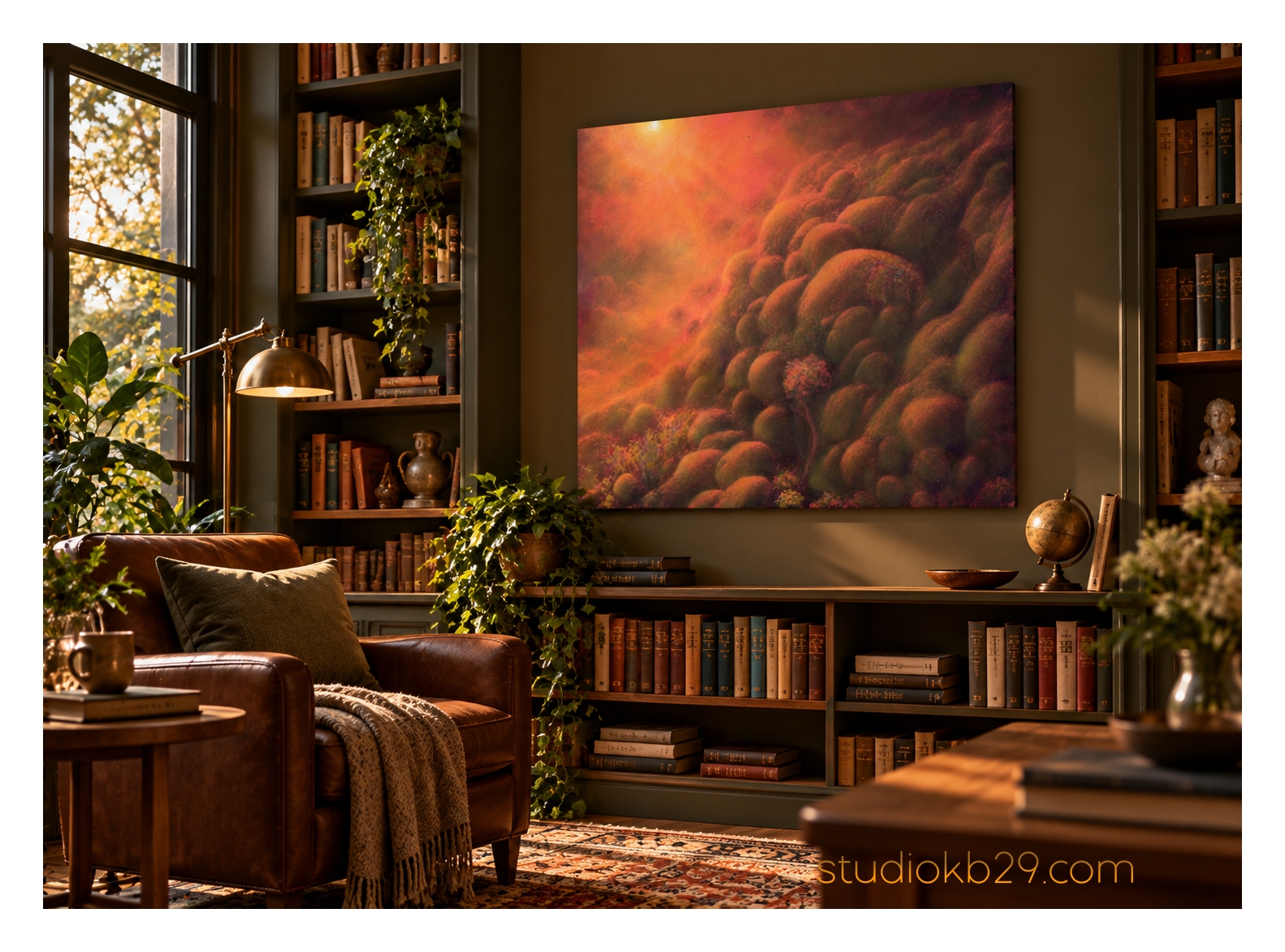
For interior design, this palette offers a sophisticated combination of warm neutrals, earthy greens and muted botanical accents. It can introduce richness and atmosphere while remaining compatible with a wide range of natural materials and restrained colour schemes.
A Distinctive Artwork for Considered Interiors
With its layered organic forms, subtle botanical references and atmospheric colour transitions, The Garden of Unseen Worlds offers a distinctive interpretation of surreal abstract art.
The composition combines the visual presence of a sculptural landscape with the delicacy of imagined flowering structures. Its unusual forms invite closer attention, while its harmonious palette allows it to integrate naturally into carefully curated spaces.
Ideal for:
- Contemporary residential interiors and statement walls
- Boutique hotels and design-led hospitality environments
- Spa, wellness and retreat interiors
- Private lounges and contemplative living spaces
- Creative studios, galleries and curated commercial projects
- Interiors inspired by organic modernism, surrealism and expressive abstraction
In minimalist interiors, the artwork can introduce a sense of organic complexity and visual depth. In more layered spaces, its earthy tones can complement textured fabrics, natural timber, stone and muted botanical colours.
Its landscape-like composition makes it particularly suitable for walls where the image can be appreciated as a whole, allowing the eye to travel gradually through its layered forms and atmospheric transitions.
Rather than demanding attention through stark contrast or literal imagery, the work establishes its presence through subtle complexity, colour and a sense of an unfamiliar world unfolding within the frame.
Integrating the Artwork into an Interior Concept
The artwork’s palette and sculptural forms create opportunities for thoughtful material combinations.
Walnut, smoked oak and warm natural timber can reinforce the deeper earthy tones, while limestone, travertine and textured plaster can echo the rounded, softly modelled character of the landscape.
Muted terracotta, dusty rose and warm ivory can complement the luminous areas of the background. Olive green and deep brown can establish a more grounded relationship with the darker formations, while restrained botanical accents can reference the delicate flowering details.
For a contemporary, understated scheme, the artwork can be paired with neutral walls, natural textiles and sculptural furniture. In a more expressive environment, it can become part of a layered palette incorporating warm coral, earthy greens and muted pinks.
Its visual complexity also makes it an interesting counterpoint to interiors defined by clean architectural lines. The soft, irregular contours introduce a sense of movement and organic variation without relying on literal botanical imagery.
The result is an artwork that can support a considered design concept while preserving its own independent and imaginative character.
Multiple Print Materials. One Imaginary World.
Available in a selection of print materials, this surreal abstract artwork can be adapted to different interior concepts and presentation preferences.
Canvas
A painterly presentation that complements the atmospheric transitions, soft contours and layered appearance of the composition.
Metal
A contemporary option for modern interiors, architectural environments and design-led commercial spaces.
Wood
A natural material choice that can complement the earthy palette and organic visual language of the artwork.
Acrylic
A sleek, contemporary presentation suited to interiors where a clean finish and modern material aesthetic are desired.
Paper
A classic art-print format offering flexibility through a choice of framing options. Particularly suitable for curated residential interiors, galleries and projects where the frame forms an integral part of the design.
Material availability and finishes may vary by selected format.
Framing to Complement Your Design Vision
The choice of frame can subtly influence the artwork’s relationship with its surroundings.
Natural wood can reinforce the warm, organic character of the composition, creating a harmonious connection with timber furniture and natural materials. Dark wood can provide a more grounded presentation, while a slim black frame can establish a contemporary contrast against the luminous coral and apricot tones.
A lighter frame may offer a softer transition between the artwork and a neutral wall, particularly in interiors featuring warm ivory, pale stone or textured plaster.
A choice of framing options and frame styles allows the presentation to be coordinated with the wider interior concept, whether the artwork is intended for a private residence, a boutique hospitality project or a curated commercial environment.
Ready to Hang. Ready to Integrate.
Your selected artwork arrives ready to hang, helping simplify installation and the final stages of interior styling.
For interior designers, architects and project specifiers, the choice of print material and framing offers flexibility when incorporating the artwork into a complete design concept.
Its warm, earthy palette can be coordinated with surrounding furnishings, textiles, lighting and architectural finishes, while its imaginative landscape introduces a distinctive artistic focal point.
Whether displayed in a residential living space, a boutique hotel or a carefully curated commercial environment, the work offers a balance of atmospheric warmth, organic complexity and interpretive openness.
The Garden of Unseen Worlds – A Landscape Beyond the Familiar
The Garden of Unseen Worlds explores the meeting point between imagined landscape and surreal organic abstraction.
Rounded, sculptural formations unfold across a dreamlike terrain, while delicate clusters of imagined blossoms emerge from between the larger shapes. A luminous atmosphere of coral, apricot and muted orange gradually gives way to earthy olive, brown and dusty mauve, creating depth and a sense of quiet mystery.
The composition evokes a garden without depicting a recognisable botanical environment. Its forms suggest natural growth while remaining entirely open to interpretation, creating a world that feels simultaneously familiar and otherworldly.
Atmospheric, intricate and contemplative, the artwork invites the viewer to discover an imagined landscape in which organic structures develop beyond the boundaries of the known.
An otherworldly garden where sculptural forms rise from the shadows and delicate traces of imagined life emerge into the light.