Description
An Enigmatic World of Organic Forms and Earthy Tones
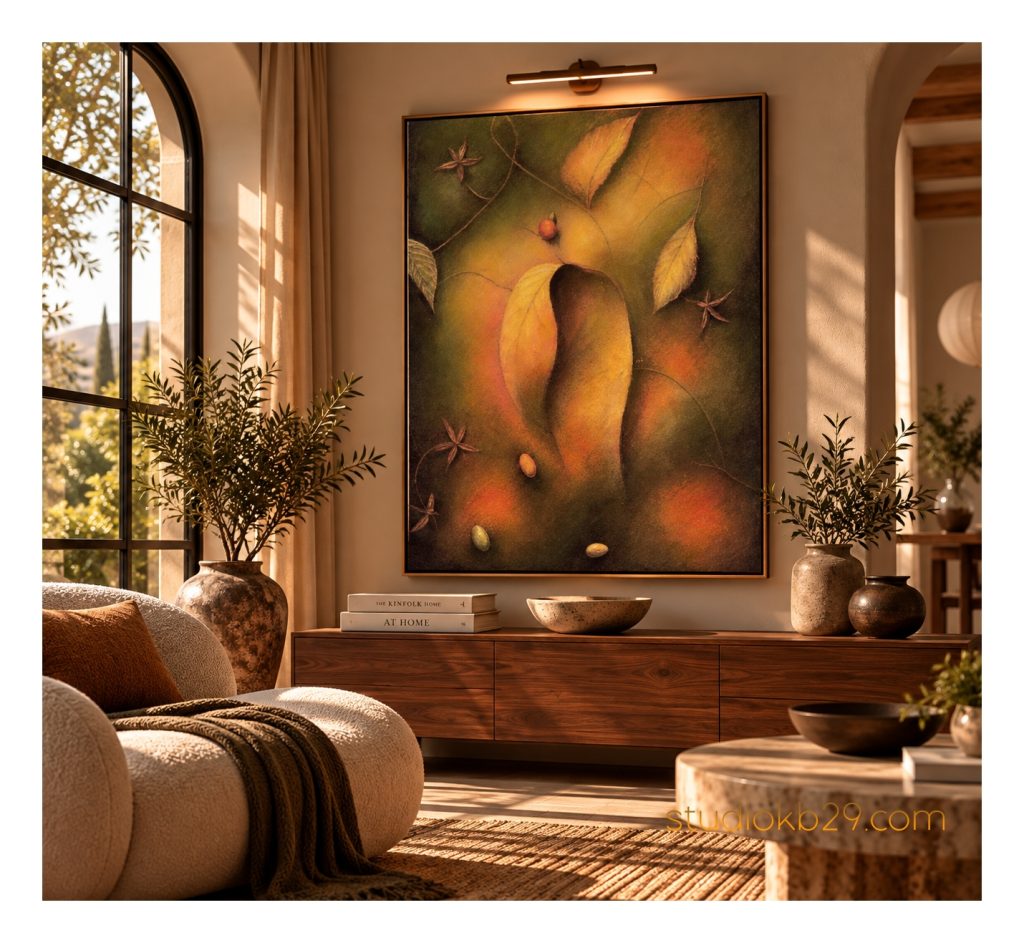
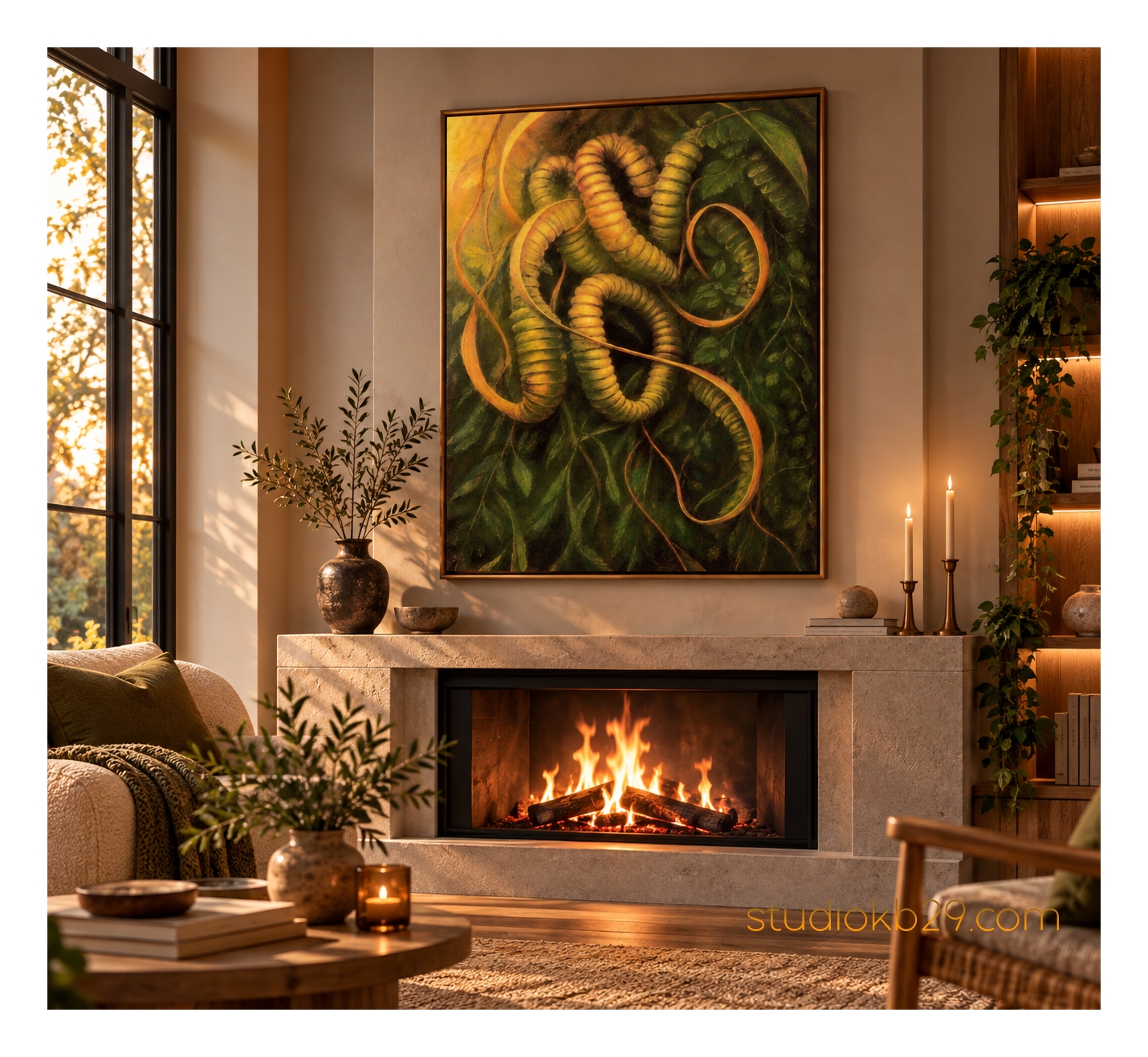
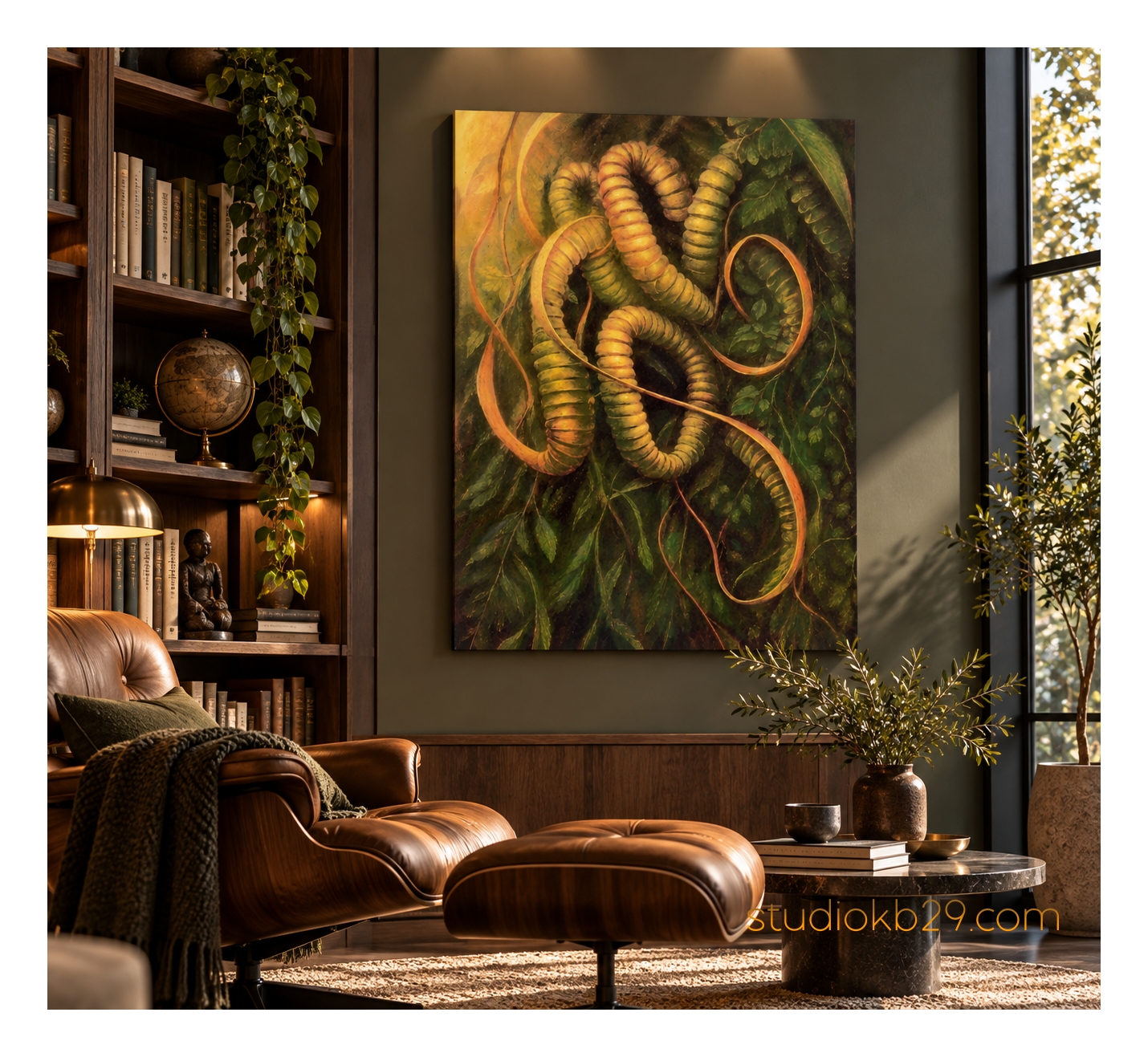
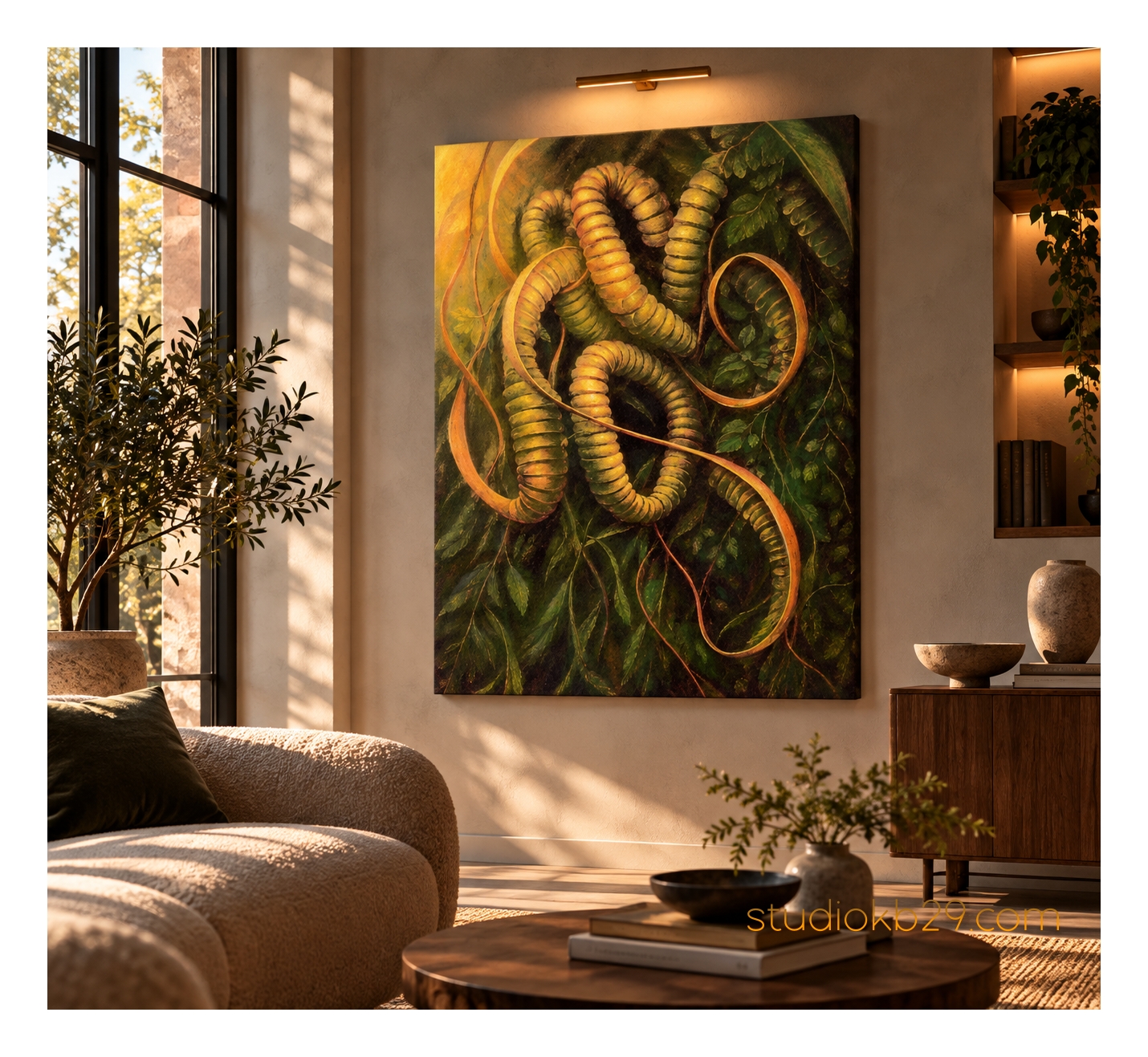
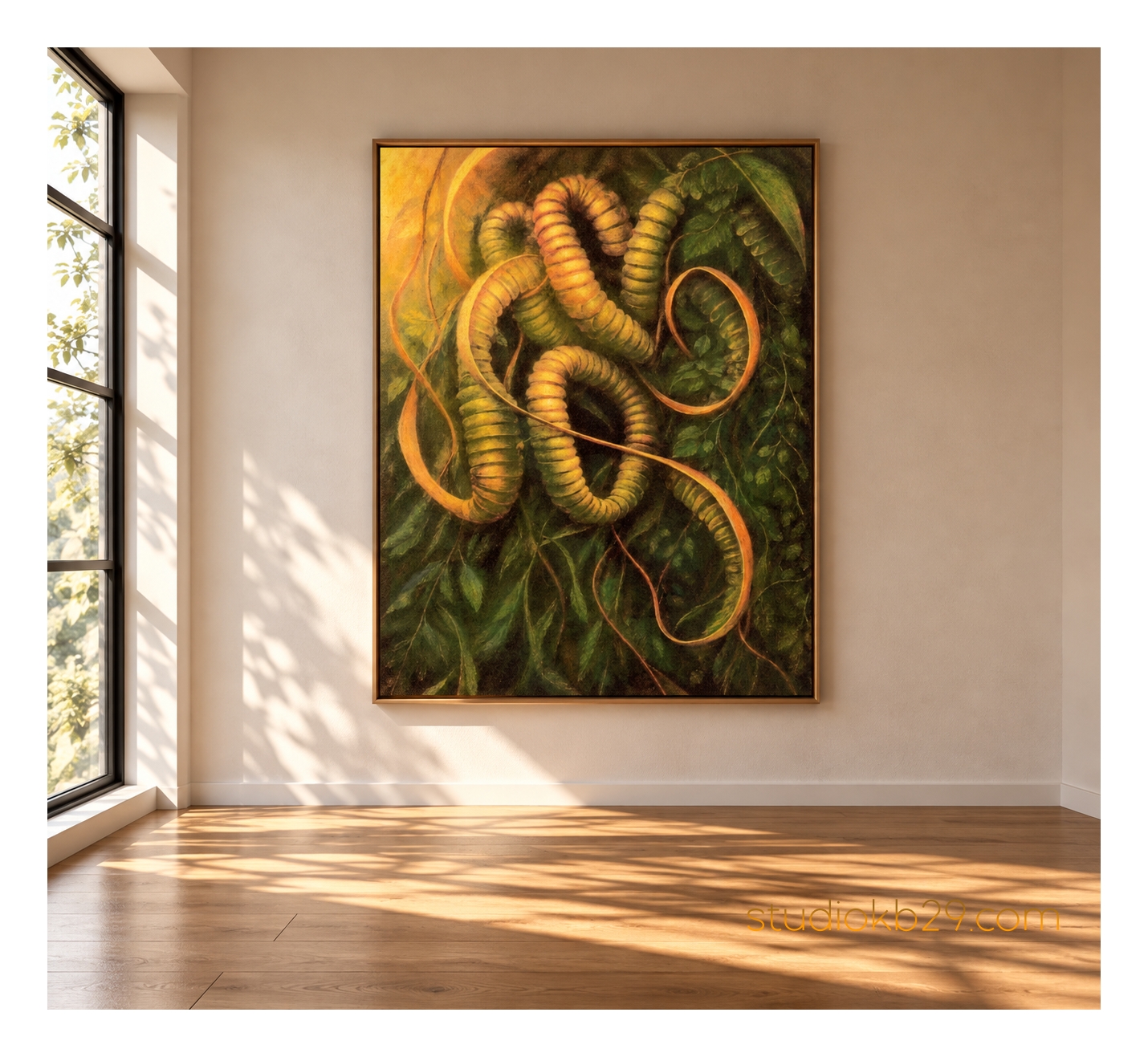
An intricate world of twisting organic forms and lush botanical textures unfolds in this surreal artwork, where familiar elements of nature take on an unfamiliar, almost sculptural character.
A series of unusual, segmented structures winds through a dense arrangement of deep green leaves, forming an elaborate network of loops, spirals and interwoven curves. Their ribbed contours create a distinctive visual rhythm, while slender, flowing lines weave across the composition, connecting the individual forms and guiding the eye through the image.
The surrounding foliage establishes a richly layered environment of forest green, muted olive and earthy brown. Warm ochre and golden yellow emerge softly from the upper left, creating a natural interplay of light and shadow. These nuanced earth tones lend the composition warmth and depth, while the darker areas evoke the mysterious atmosphere of a dense, imagined botanical world.
The result is an artwork that feels simultaneously organic and otherworldly. Its unusual structures suggest fantastical vines, intertwined roots or unfamiliar plant formations, yet they resist a literal interpretation. Their repeated segments and fluid contours introduce a sculptural quality, transforming the familiar language of botanical growth into something distinctly surreal.
Rather than depicting a conventional garden or landscape, the artwork invites the viewer into an enigmatic environment where organic forms follow their own mysterious logic. Its intricate details reward closer observation, while its earthy palette creates a sense of visual cohesion and understated intensity.
The Rhythm of Spirals, Texture and Movement
The defining characteristic of this composition is the interplay between repetition and fluid movement.
The segmented forms create a recurring rhythm as they wind through the image, bending, looping and overlapping in unexpected configurations. Their repeated contours establish a subtle sense of structure, while their irregular arrangement gives the composition a spontaneous, almost living quality.
In contrast, the finer, elongated lines sweep across the foliage in broader curves. These gestures introduce a sense of movement and continuity, linking the more compact structures with the surrounding botanical environment.
The layered leaves provide a dense, textured foundation. Their varying shades of green create depth without competing with the more prominent organic forms. This balance between intricate detail and atmospheric shadow gives the artwork its distinctive visual character.
Light is equally important to the composition. Softly illuminated areas in warm ochre and muted yellow emerge from the darker foliage, creating subtle tonal contrasts that suggest volume and spatial depth. Rather than relying on sharp outlines or dramatic colour changes, the artwork achieves its richness through gradual transitions between light, shadow and natural colour.
The resulting composition feels almost three-dimensional, as though its unusual structures are suspended within a hidden botanical environment.
Surreal Botanical Art for Sophisticated Interiors
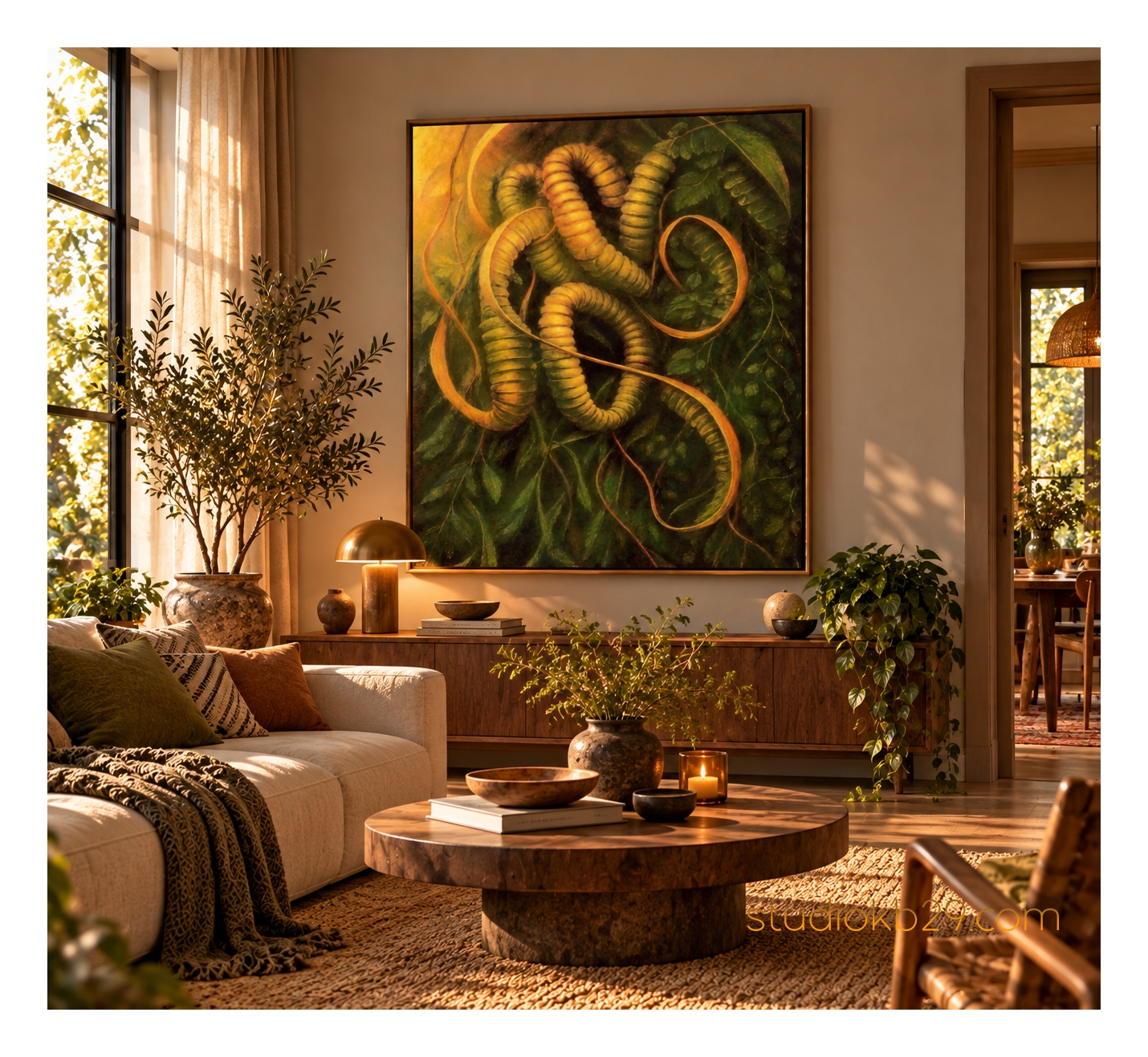
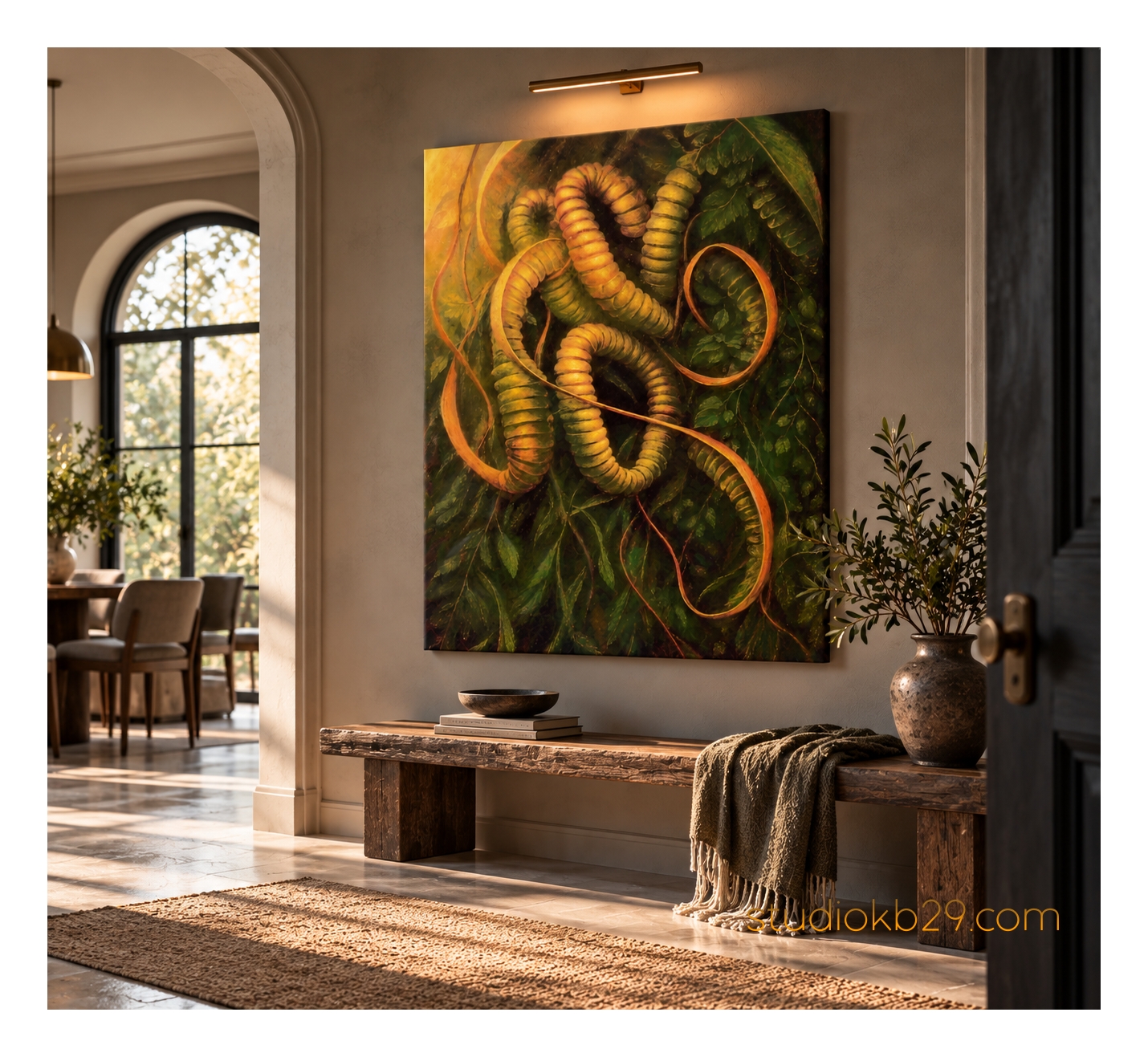
With its intricate organic forms, layered foliage and earthy colour palette, this artwork offers interior designers an alternative to conventional botanical prints and decorative floral imagery.
Its complexity creates a distinctive focal point, while the natural tones allow it to integrate into carefully considered interior schemes. The flowing contours introduce movement, and the deep green background adds visual depth without relying on an overtly dramatic colour statement.
Ideal for:
- Boutique hotels and design-led hospitality interiors
- Contemporary residential living spaces and statement walls
- Private lounges, libraries and intimate reception areas
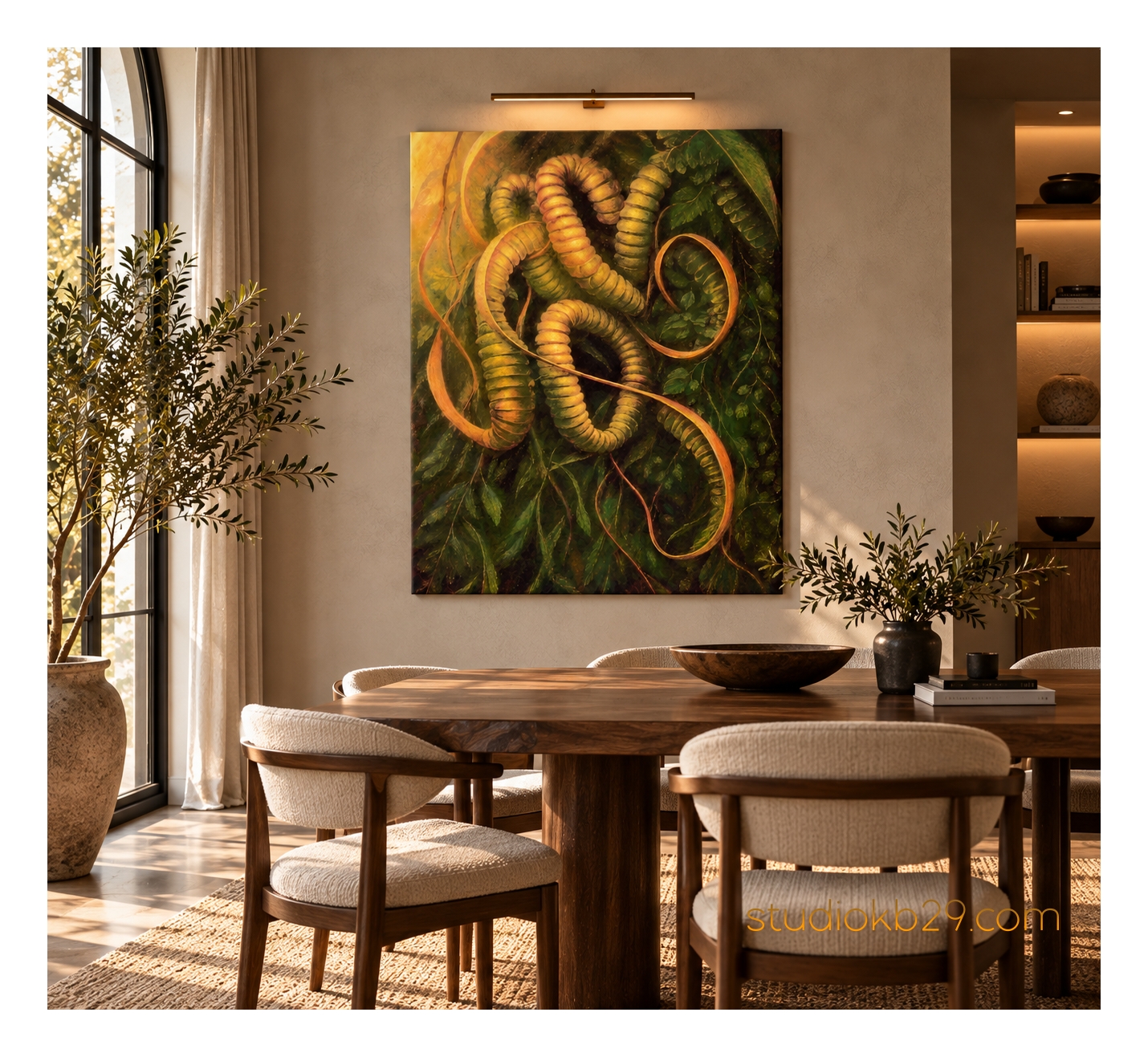
- Restaurants and atmospheric dining environments
- Creative studios, galleries and curated commercial spaces
- Interiors inspired by organic modernism, biophilic design and contemporary eclecticism
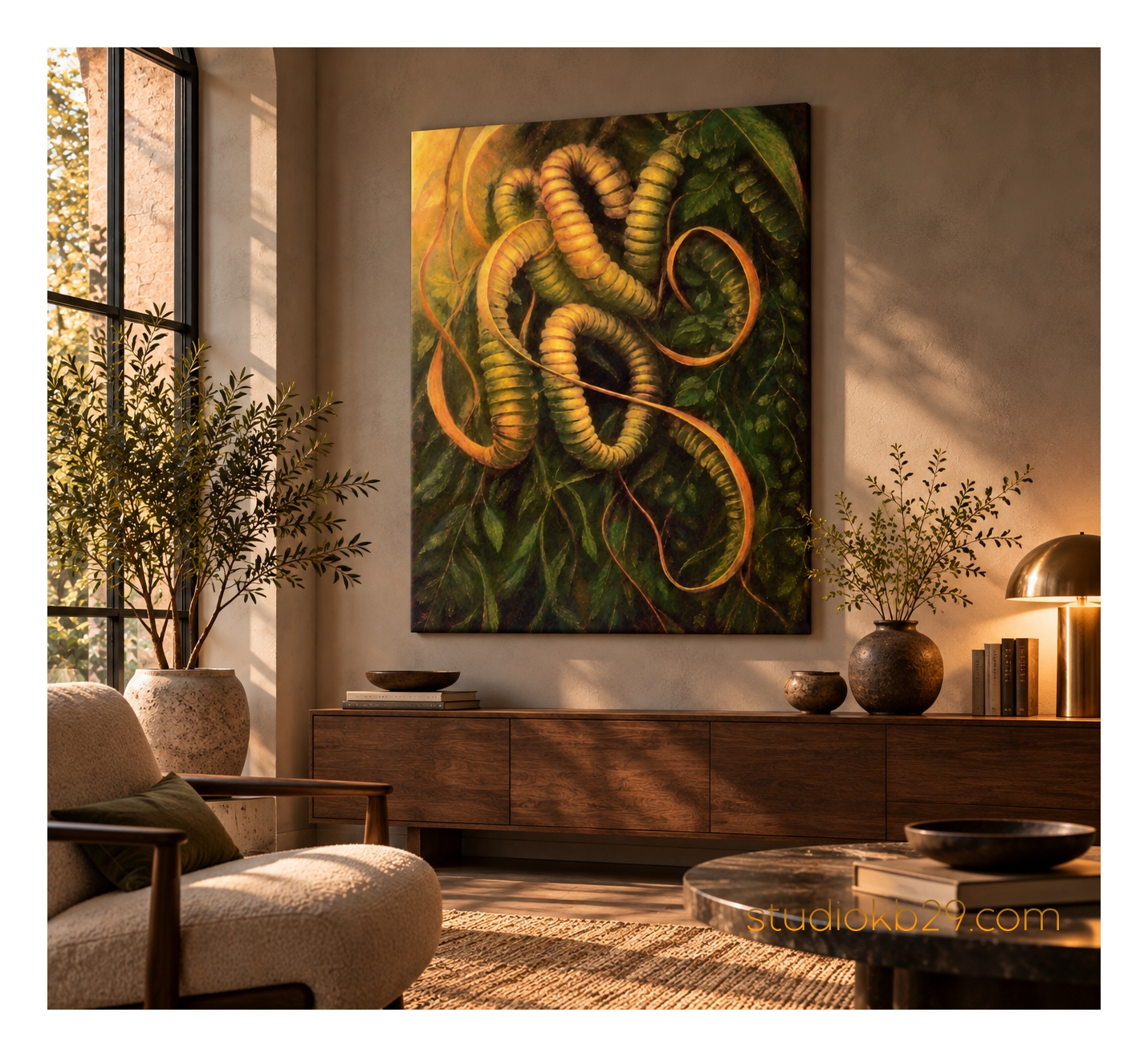
In minimalist interiors, the artwork can introduce organic complexity and visual interest against clean architectural lines. In richer, more layered environments, it can complement sculptural furniture, tactile textiles, natural wood and carefully selected decorative objects.
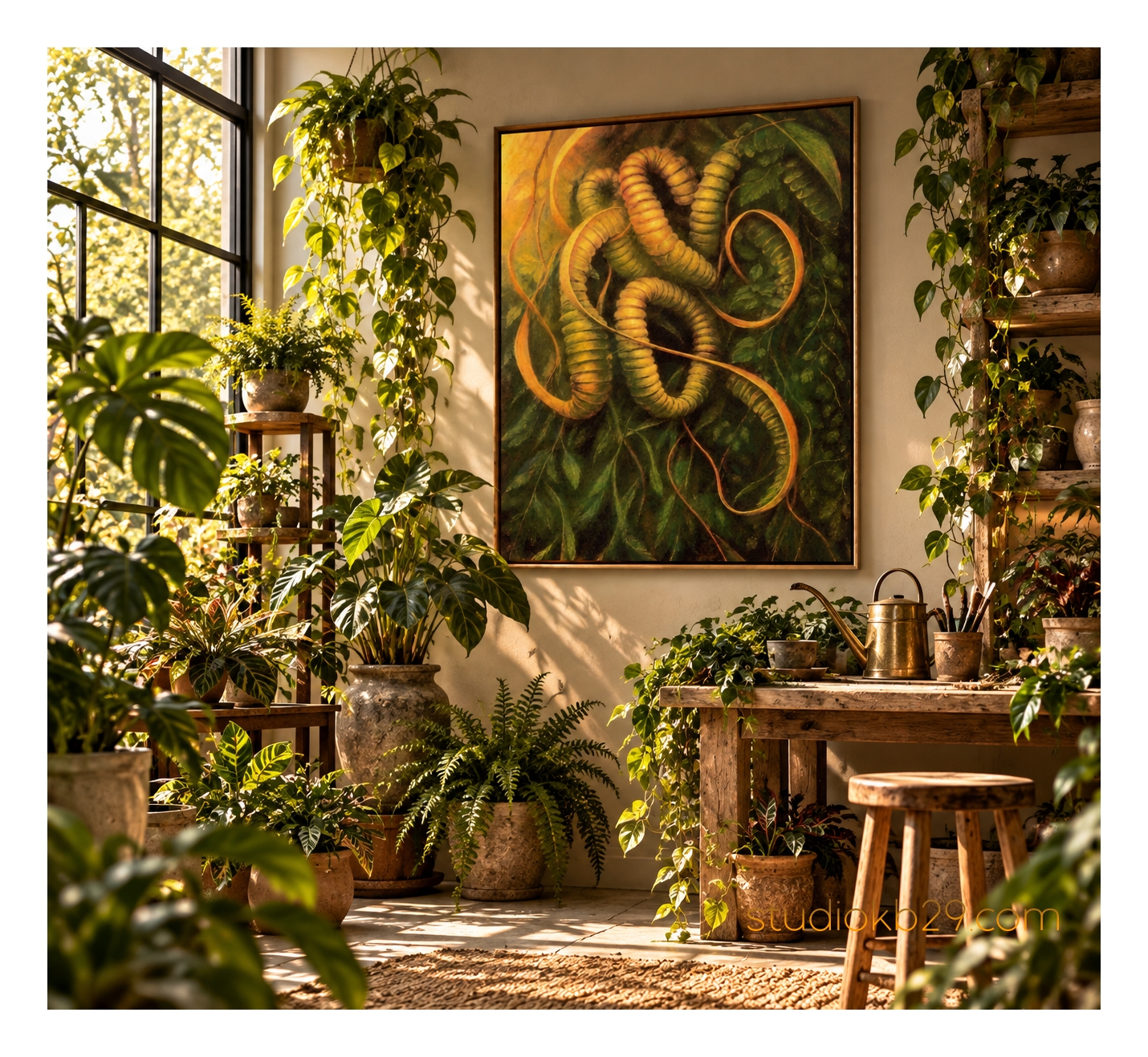
Its botanical references make it particularly suitable for nature-inspired design concepts, while its surreal interpretation gives it an individuality that distinguishes it from more conventional representations of plant life.
For hospitality and commercial projects, the composition can contribute to a distinctive visual identity, creating an atmosphere that feels immersive, thoughtful and connected to natural forms.
Between Nature and Surreal Abstraction
The artwork explores the boundary between recognisable botanical structures and imagined organic forms.
The segmented contours suggest unfamiliar plant formations, while the sweeping curves evoke vines, tendrils or intertwined roots. Their arrangement creates a sense of growth and movement, yet the unusual shapes challenge familiar expectations of how natural structures develop.
This ambiguity is central to the artwork’s appeal. The composition might be interpreted as an imaginary plant species, a network of intertwined organic structures or an abstract study of repetition, rhythm and form.
The dense foliage reinforces the impression of a hidden ecosystem, creating the feeling of discovering a natural environment that exists somewhere beyond ordinary observation. Nothing is fully explained, allowing the viewer to develop an individual interpretation.
For interior designers, this balance between botanical familiarity and surreal abstraction offers considerable flexibility. The artwork can complement nature-inspired interiors while also working within more architectural schemes where shape, texture and spatial relationships are central to the design.
A Natural Palette of Ochre, Olive and Forest Green
The artwork is defined by a rich, entirely natural palette of earthy ochre, muted golden yellow, olive, warm umber and deep forest green.
These organic tones create a nuanced interplay of warmth and shadow. The lighter ochre hues emerge softly from the surrounding darkness, while the greens and earthy browns establish a sense of density and depth. Subtle tonal transitions give the composition its atmospheric character, allowing the unusual forms to remain expressive without overpowering the surrounding foliage.
The golden quality of the ochre tones comes from the colour itself, contributing to the artwork’s warmth and organic character.
For a cohesive interior scheme, consider pairing the artwork with:
- Natural oak, walnut or other warm timber finishes
- Olive, moss-green and earthy brown upholstery
- Travertine, limestone and textured stone
- Linen, wool and other tactile natural fabrics
- Warm ivory, sand and muted beige tones
- Terracotta, clay and other understated earth colours
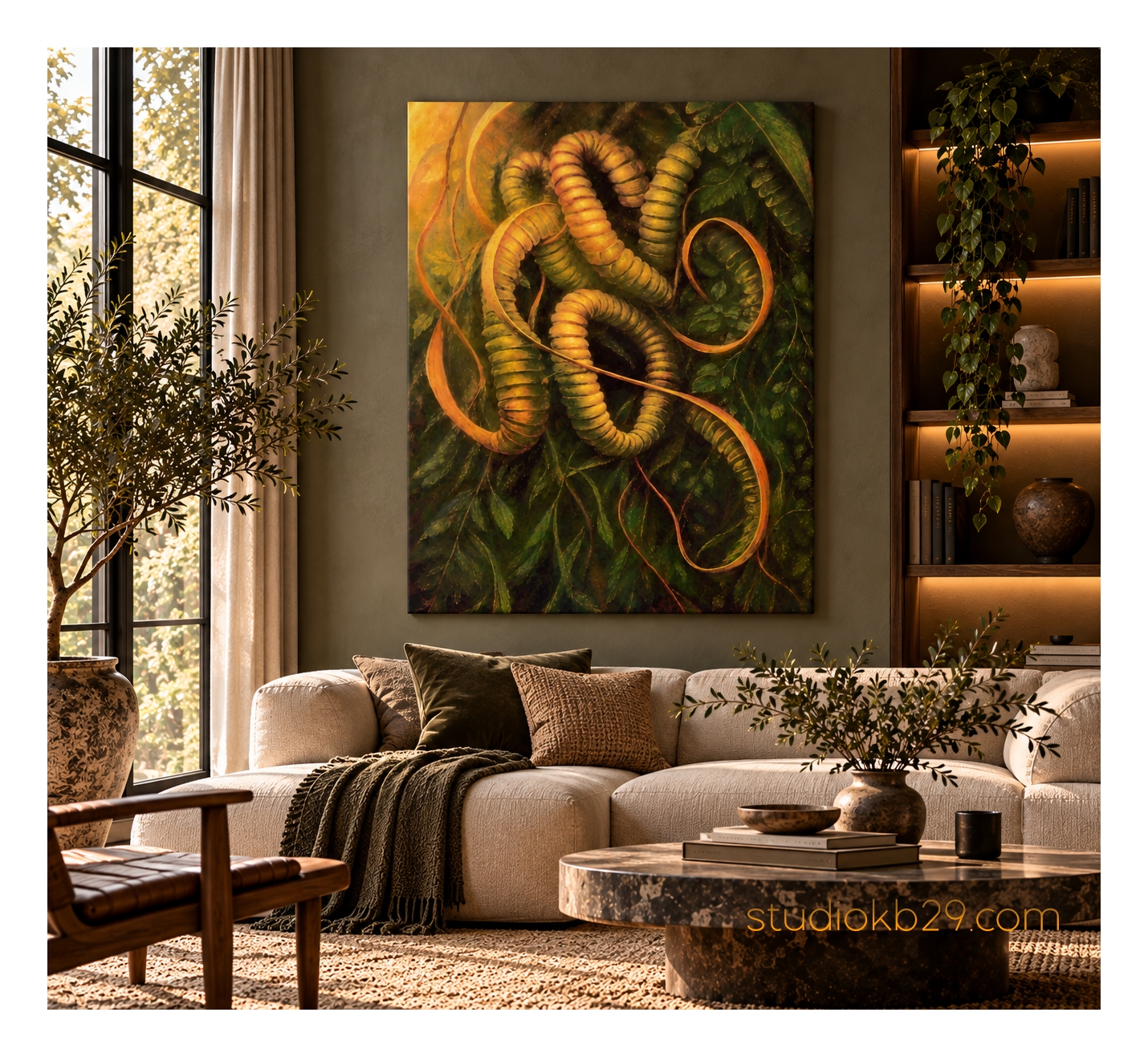
In a light, neutral interior, the artwork can introduce a concentrated note of earthy colour and visual depth. In a richer scheme featuring dark wood, olive textiles and natural stone, it can become part of a more immersive, layered environment.
Its restrained palette makes it particularly adaptable to interiors where materials, textures and subtle colour relationships are carefully coordinated.
Multiple Print Materials. One Distinctive Artwork.
Available in a selection of print materials, this surreal botanical composition can be adapted to different interior styles, presentation preferences and project requirements.
Canvas
A painterly presentation that complements the artwork’s textured appearance, nuanced colour transitions and atmospheric depth. Particularly suitable for interiors that favour an expressive, art-led aesthetic.
Metal
A contemporary presentation option for modern interiors, architectural environments and design-led commercial spaces.
Wood
A natural material choice that resonates with the organic subject matter and earthy colour palette, particularly in interiors featuring timber, stone and tactile finishes.
Acrylic
A sleek, contemporary presentation suited to refined interiors where a clean finish and modern material aesthetic are desired.
Paper
A classic art-print format offering flexibility through different framing options. Particularly suitable for curated residential interiors, galleries and projects where the frame forms an integral part of the design.
Material availability, finishes and presentation options may vary by selected format.
Framing to Complement Your Design Vision
A carefully selected frame can reinforce the artwork’s natural character or introduce a more defined contemporary finish.
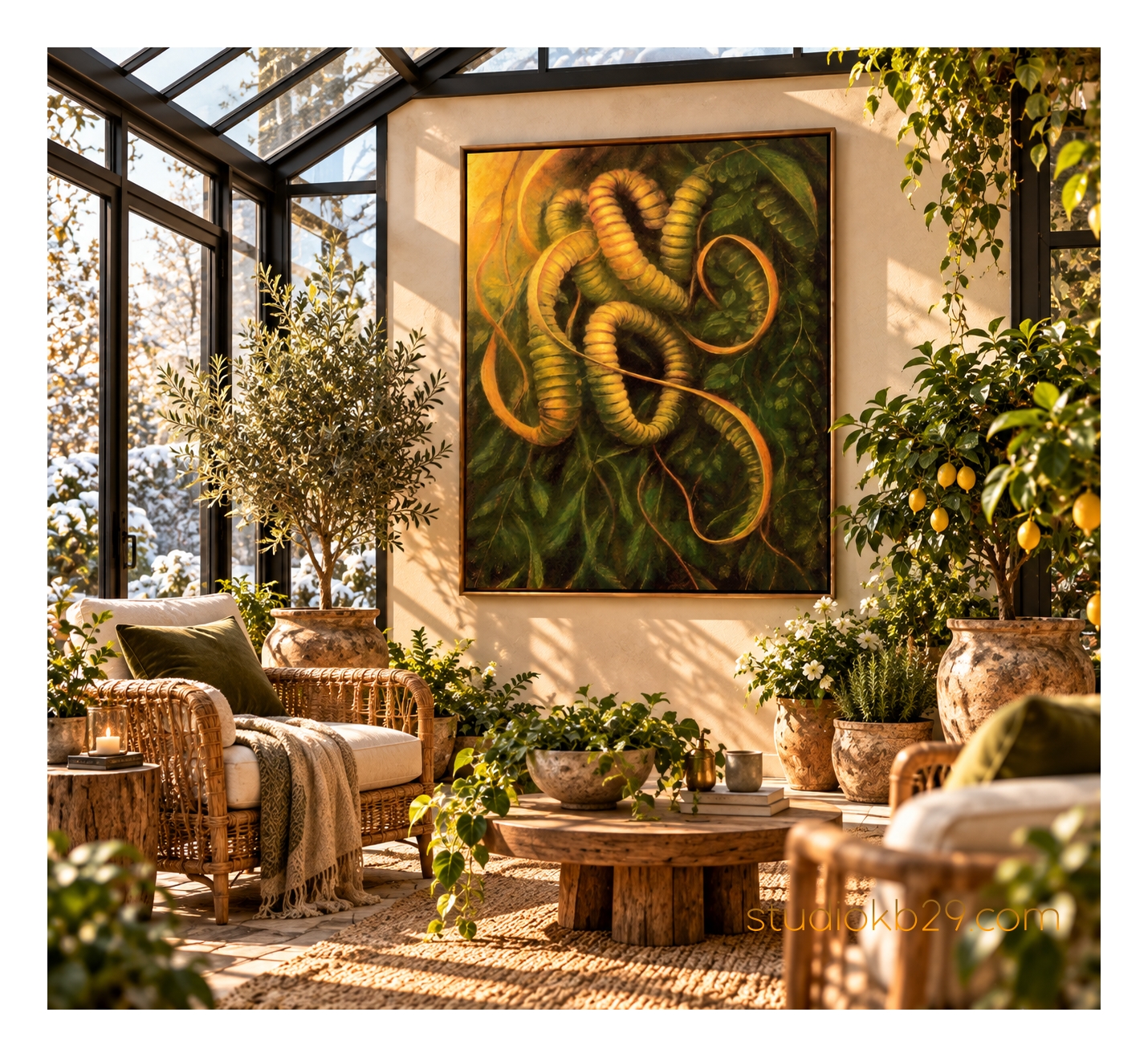
Natural wood frames complement the earthy palette and organic subject matter, creating a cohesive relationship between artwork and interior materials. Dark wood can provide a grounded, understated presentation, while a slim black frame can emphasise the intricate contours and establish a clear boundary around the composition.
Lighter wood and neutral finishes offer a softer alternative, particularly in interiors featuring warm whites, natural stone and understated textures.
With a choice of framing options and frame styles, the artwork can be tailored to your aesthetic preferences and the requirements of your project. This flexibility allows interior designers and architects to coordinate the final presentation with furniture, lighting, wall finishes and other elements of the overall design scheme.
Ready to Hang. Ready to Integrate.
Your selected artwork arrives ready to hang, helping simplify installation and the final stages of interior styling.
For interior designers, architects and project specifiers, this offers a practical way to incorporate the artwork into a complete design concept. The selected print material and framing can be coordinated with the surrounding furnishings, architectural details and wider material palette.
Whether specified for a private residence, boutique hotel, restaurant or creative commercial environment, the artwork offers a distinctive visual element that can be integrated into a considered interior scheme.
From print material to frame selection, the presentation can be adapted to support the intended atmosphere and visual identity of the space.
An Intricate Expression of Surreal Botanical Art
The artwork brings together intricate organic structures, flowing contours and a richly nuanced palette of earthy ochre, olive and deep green. Its interplay of repetition, texture and movement creates a distinctive visual presence that feels both botanical and sculptural.
The unusual forms invite interpretation, while the natural colour palette gives the composition a grounded, harmonious quality. The result is an artwork that introduces visual complexity and a sense of mystery without losing its connection to the organic world.
Designed for interiors that value individuality, natural materials and artistic depth, this work offers a distinctive alternative to conventional botanical wall art.
A captivating exploration of surreal organic form, bringing earthy warmth, intricate detail and sculptural movement to thoughtfully designed interiors.