Description
An Imaginary Nature Between Dream and Reality
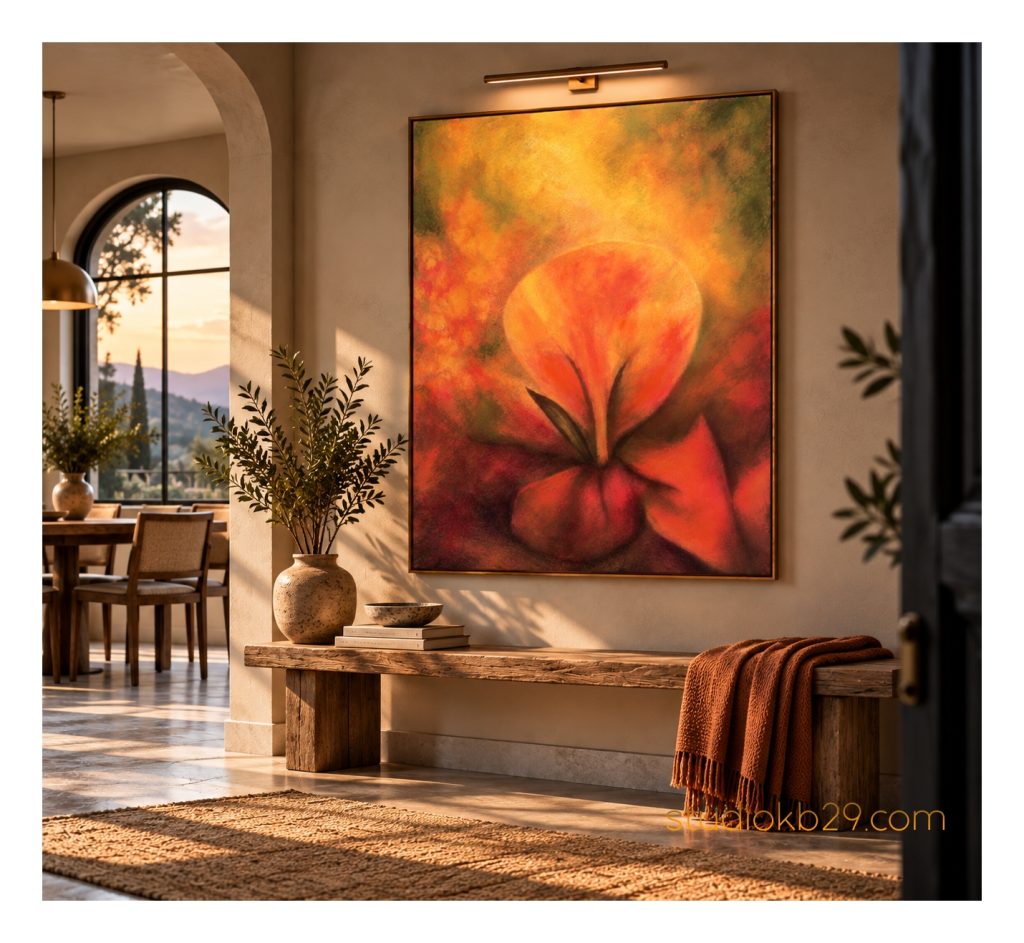
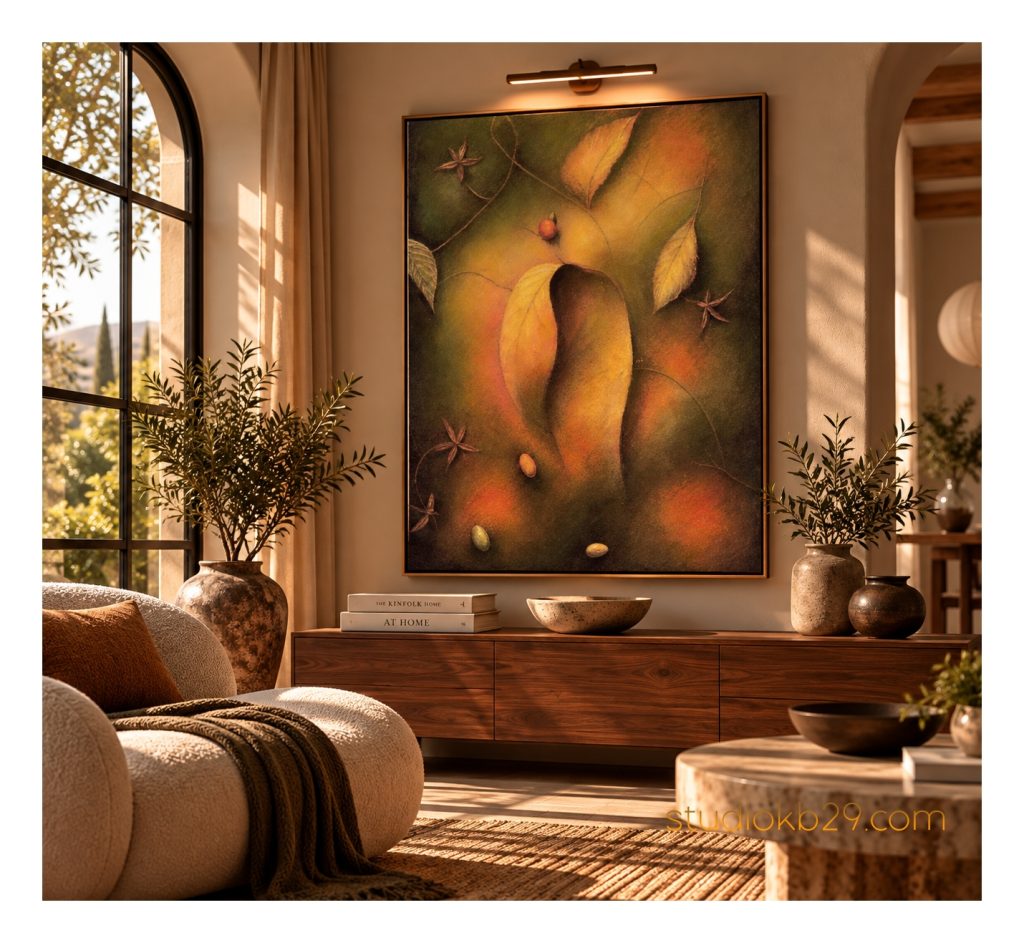
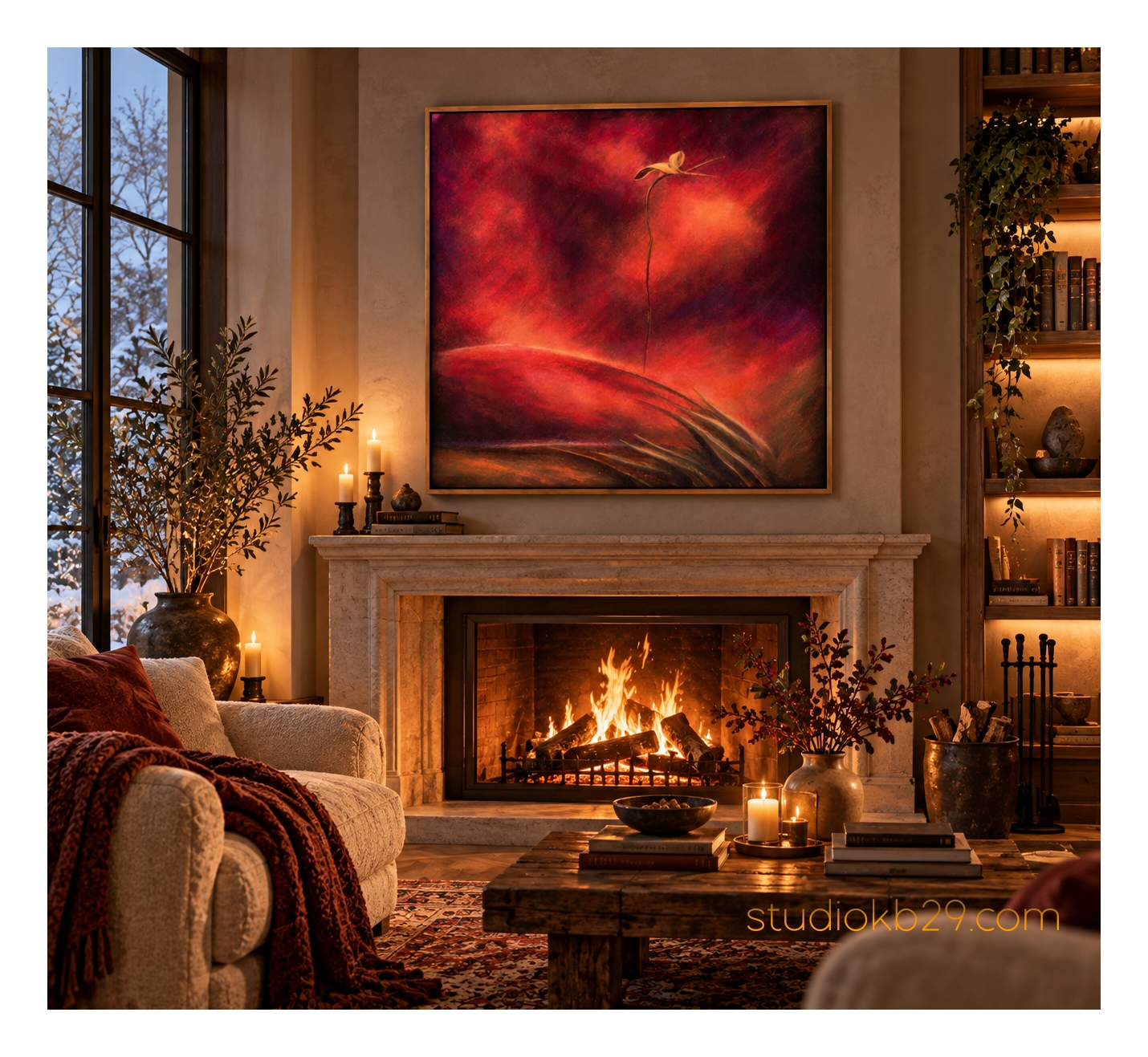
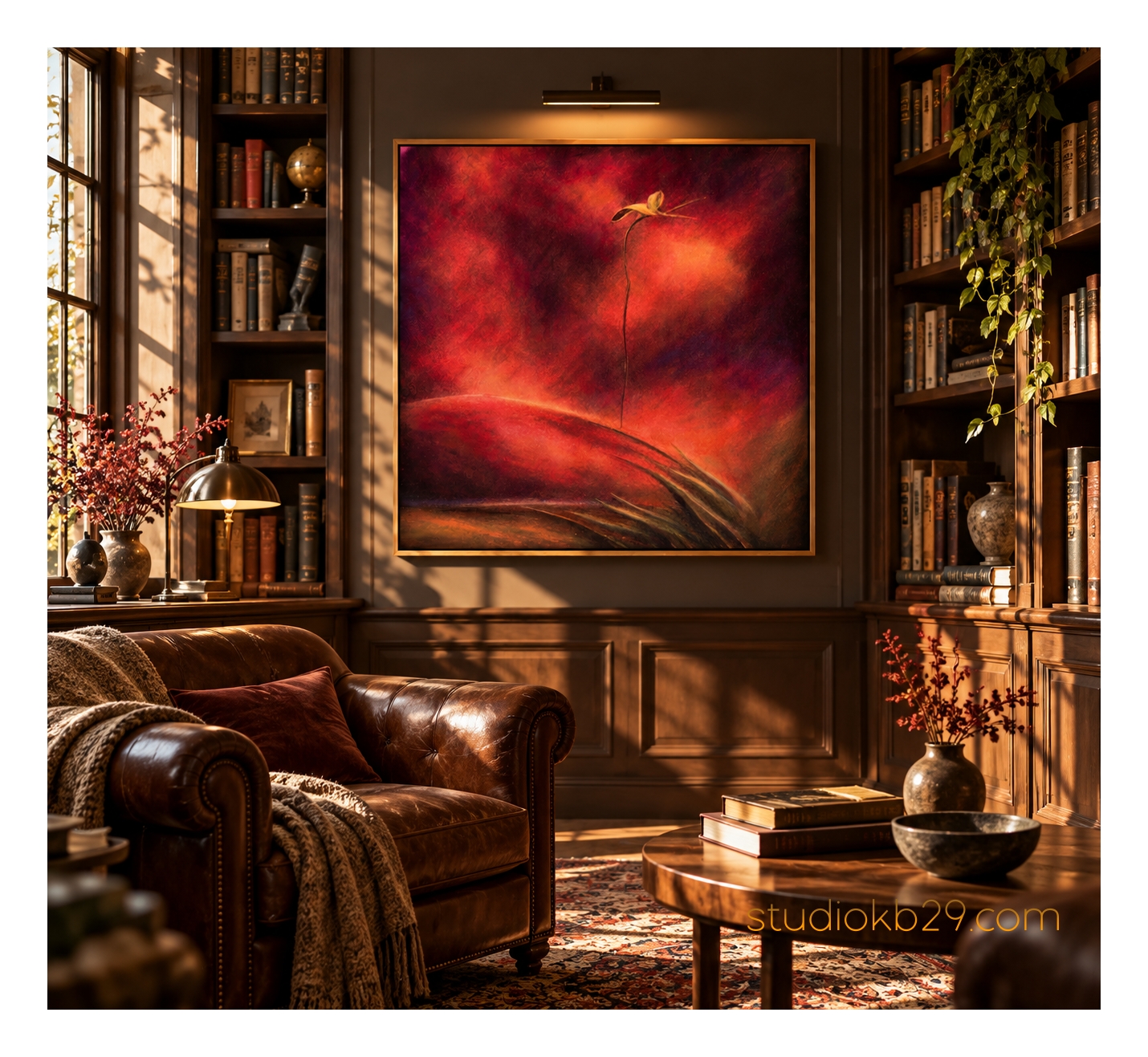
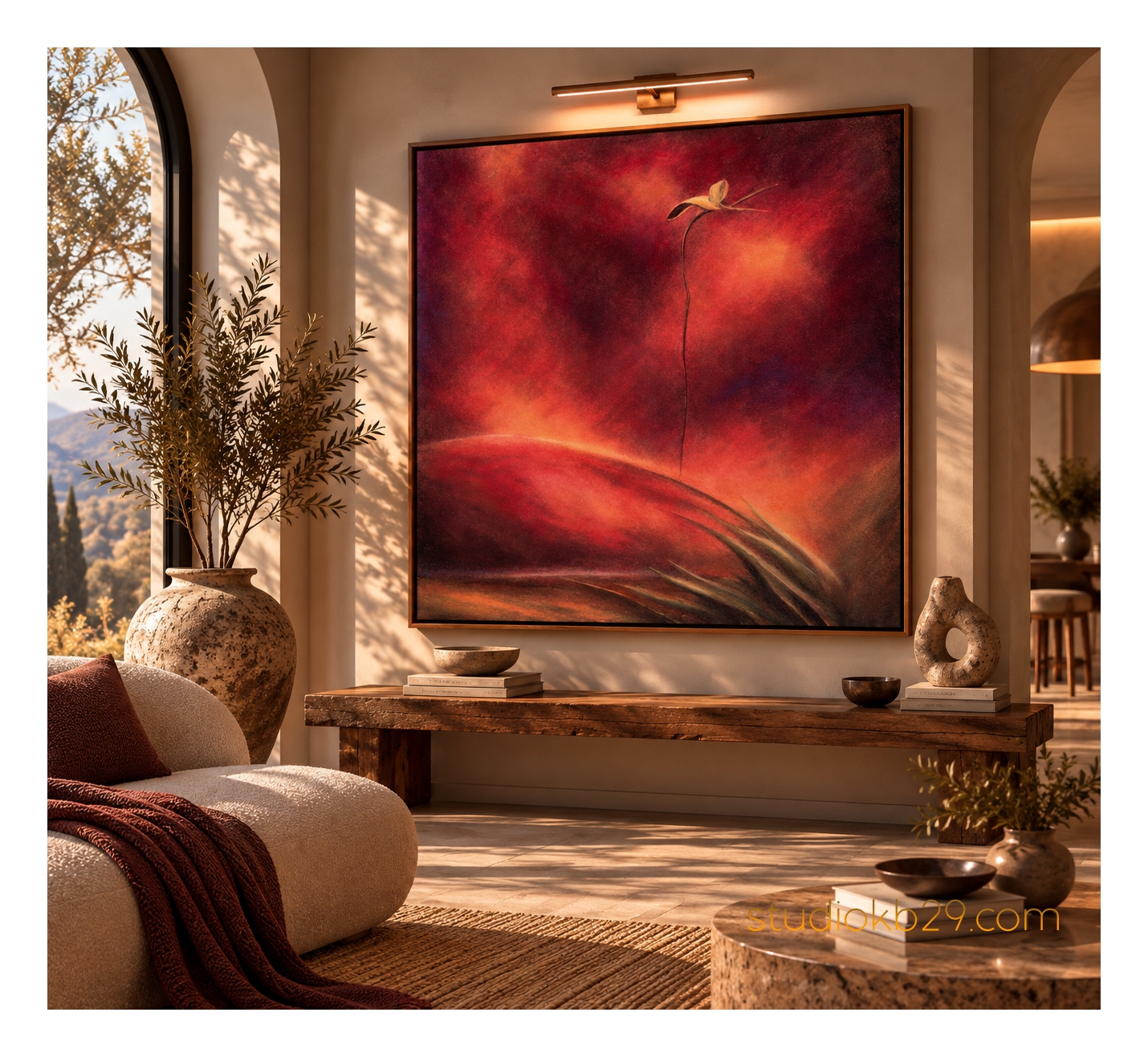
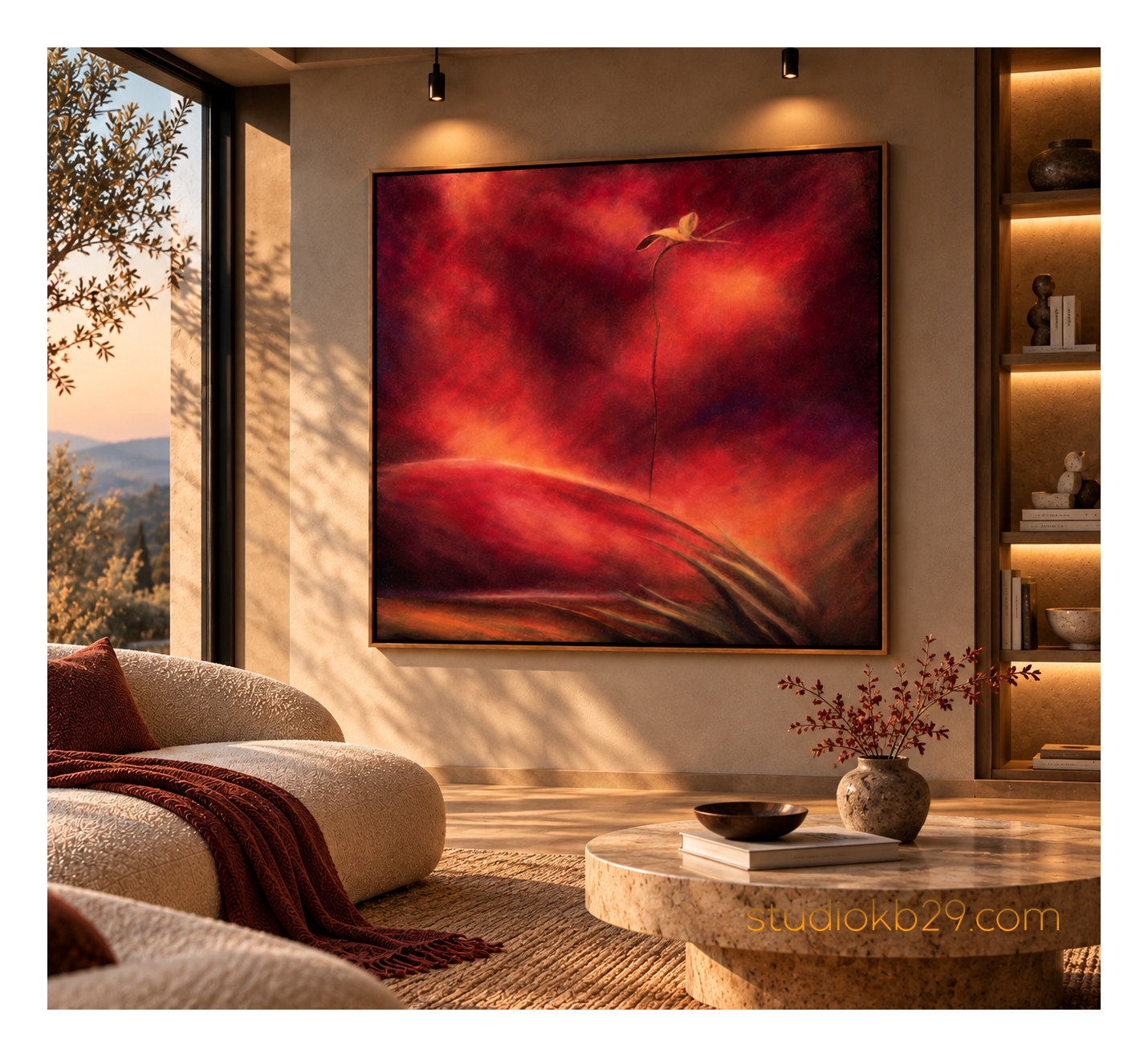
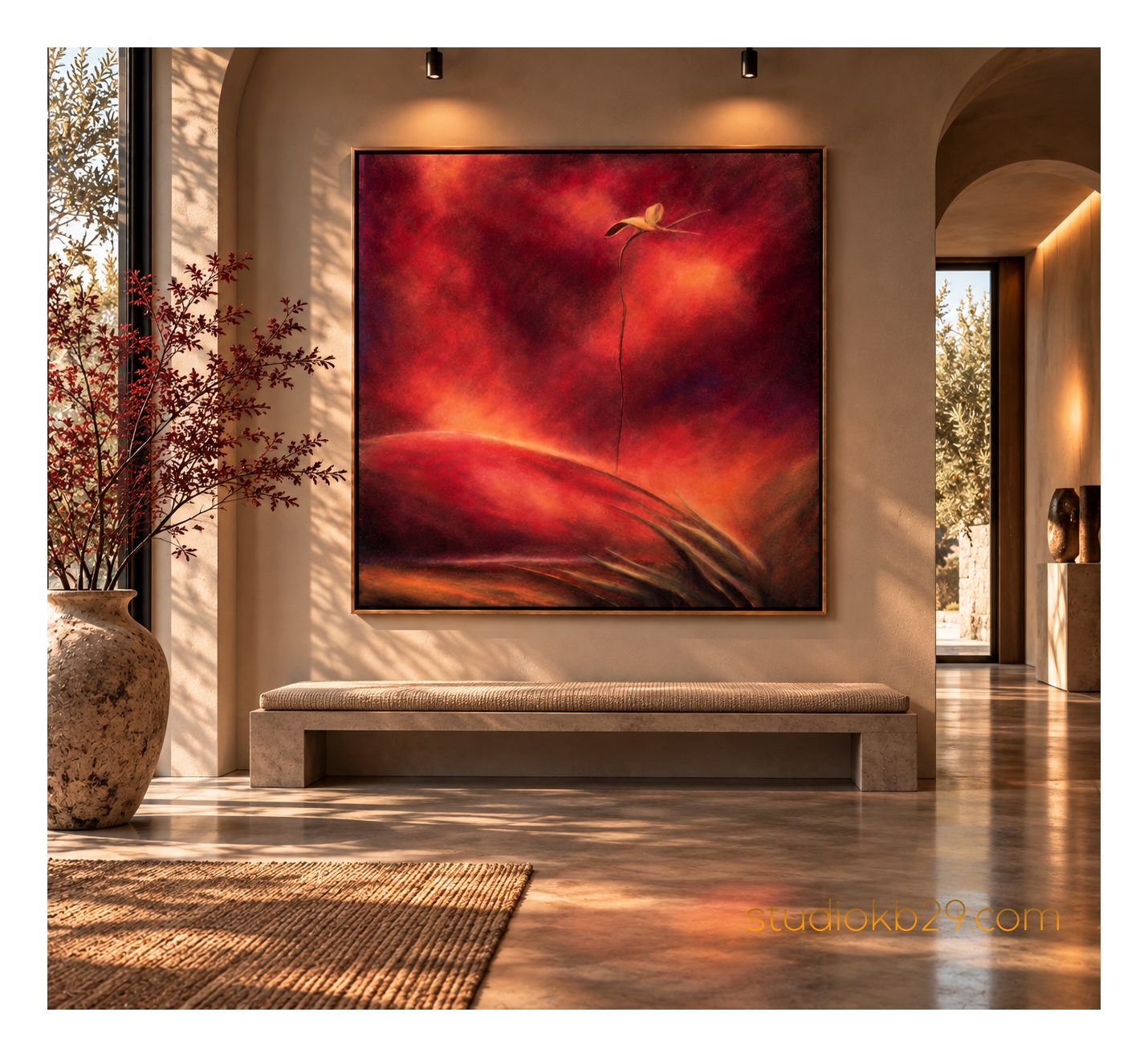
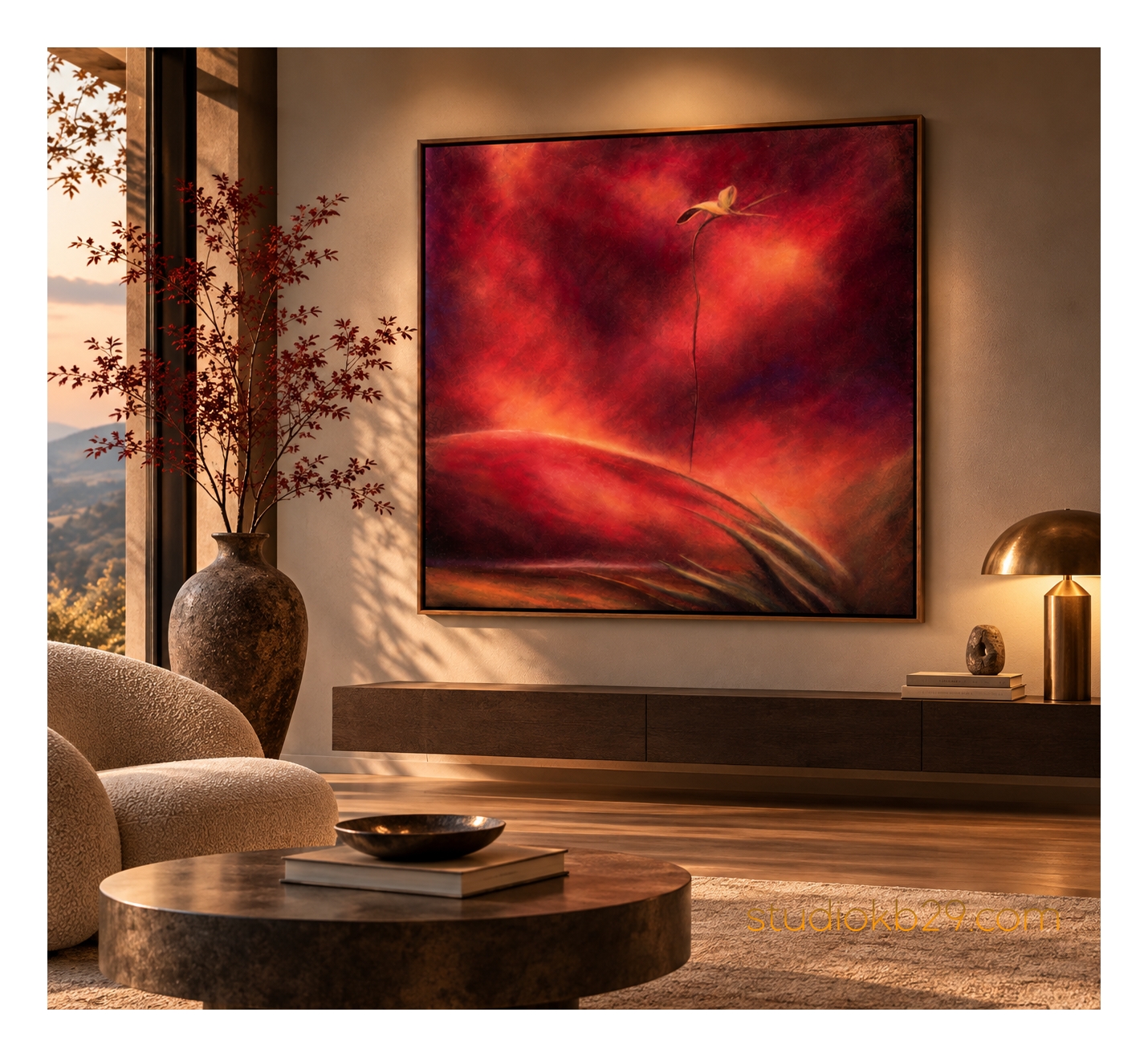
In a world suspended between dream and reality, unfamiliar forms begin to stir. Lines emerge from shadow, fluid shapes unfold, and fleeting botanical suggestions take shape within a glowing field of colour. Nothing is entirely recognisable, yet everything seems to carry the memory of something living.
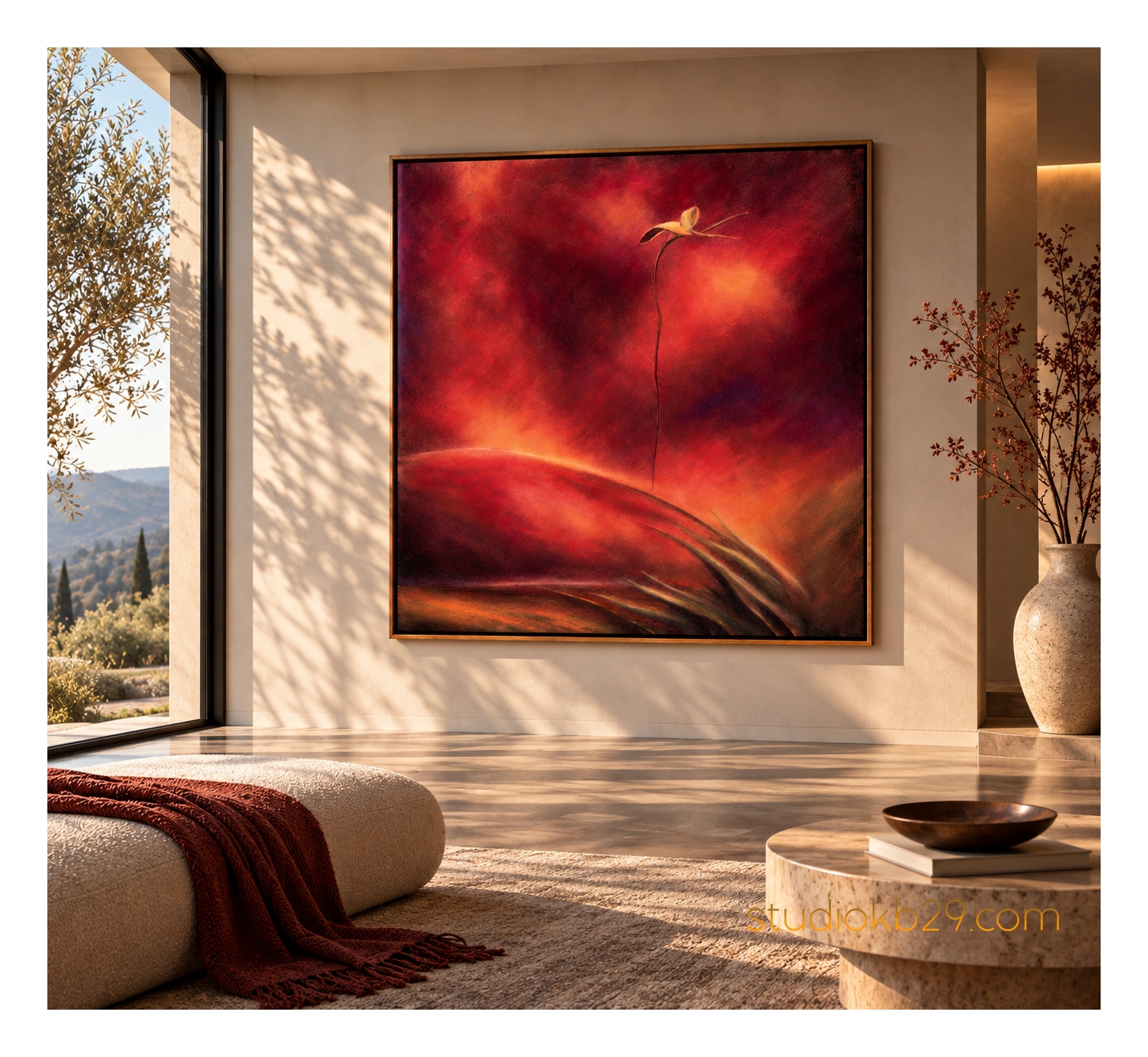
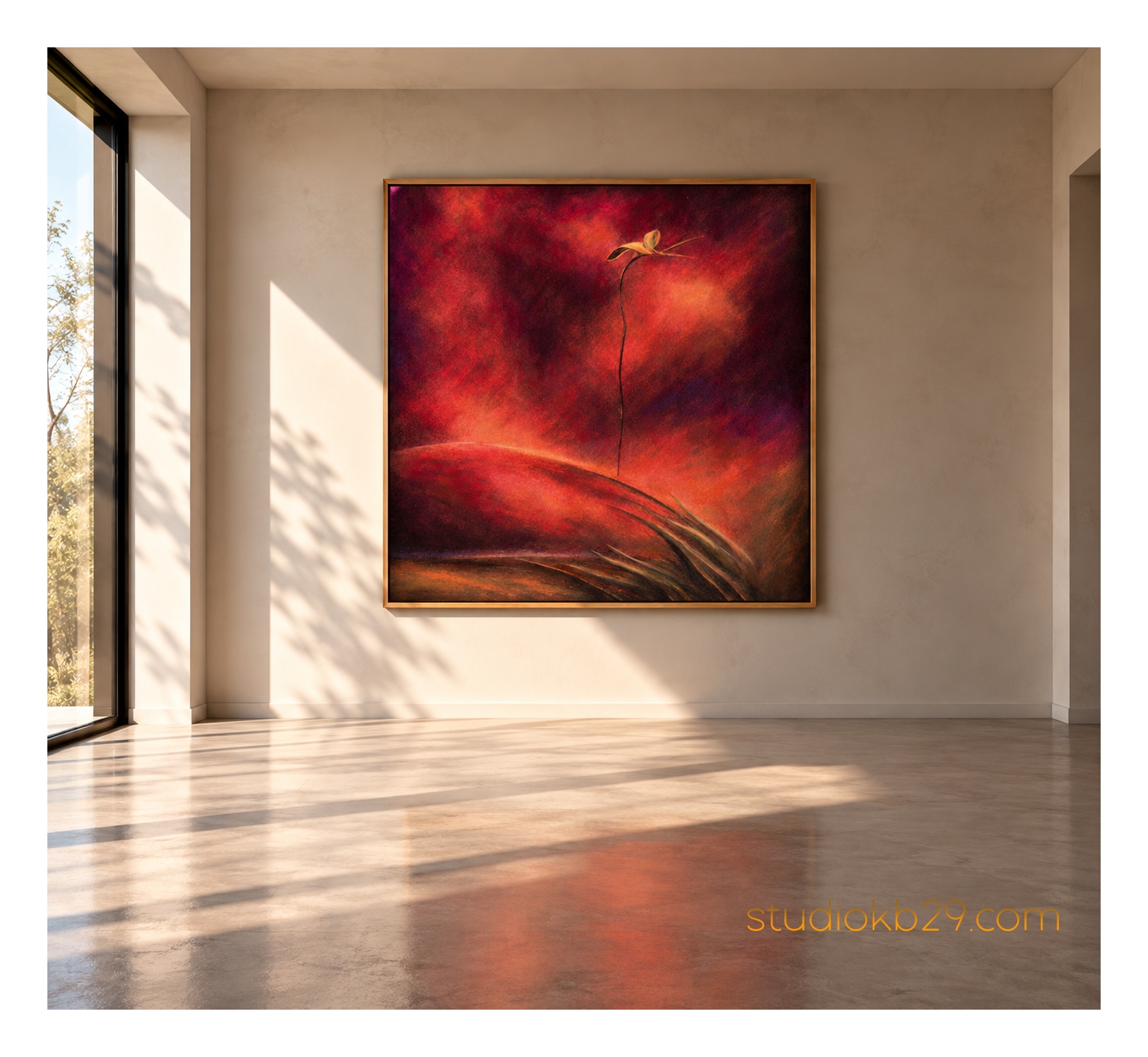
A delicate, almost solitary structure rises above a sweeping organic form, reaching into the atmospheric depths of the composition. Its slender silhouette hints at a stem, a tendril or the fragile beginning of something not yet fully formed. Its ambiguous contours resist definition, as though the image captures a moment in which imagination is slowly giving shape to life.
Across the foreground, broad, undulating forms flow into one another. They evoke the language of leaves and living structures without belonging to any recognisable species. Their curves suggest movement, growth and transformation, creating the impression of an unfamiliar organism emerging from an imagined landscape.
Around them, deep crimson, burgundy and plum dissolve into luminous passages of burnt orange and warm red. Colours drift into shadow and reappear as soft glimmers of light, lending the composition an otherworldly depth. The atmosphere feels at once intimate and expansive, as though these forms exist within a space governed not by physical laws, but by the fluid logic of dreams.
The artwork does not depict nature as it is. Instead, it evokes the moment before recognition, when a shape begins to resemble something familiar but remains open to possibility. Organic forms emerge from abstraction, briefly suggesting a botanical world before dissolving again into colour, movement and imagination.
The result is an enigmatic visual landscape that invites contemplation, allowing each viewer to discover a different meaning within its shifting forms.
The Poetics of Becoming
At the heart of the composition lies a quiet sense of transformation.
Forms appear to grow, bend and unfold, yet their development remains unresolved. A line may suggest a stem; a contour may recall a leaf or an elusive blossom. These associations arise naturally, then slip beyond definition.
This delicate tension between recognition and uncertainty gives the artwork its distinctive surreal quality. It invites the viewer to participate in the act of imagining, discovering personal meanings within shapes that refuse to settle into a single interpretation.
There is a sense of life here, but not life as it can be observed in the natural world. It is an imagined vitality, a suggestion of growth suspended between emergence and disappearance.
The composition becomes a meditation on how we recognise nature, and on how imagination can transform the familiar into something mysterious and entirely new.
Rather than presenting a fixed narrative, the artwork leaves space for individual interpretation. Its forms seem to exist in a state of becoming, as though an unfamiliar world were gradually revealing itself without ever becoming fully defined.
Between Surrealism and Organic Abstraction
The artwork occupies a space between surrealism, organic abstraction and imagined landscape. Its visual language is suggestive rather than descriptive, allowing recognisable natural references to emerge from a composition that remains fundamentally ambiguous.
The slender central structure introduces a delicate vertical movement, while the expansive forms below establish a more substantial, sculptural presence. Their relationship creates a subtle tension between fragility and strength, stillness and movement, the delicate and the monumental.
The surrounding space remains open and atmospheric. There is no clearly defined setting, horizon or conventional sense of scale. Instead, the composition suggests an environment in which familiar natural principles have been transformed into something dreamlike.
This ambiguity is central to the work’s appeal. It can be experienced as an abstract composition, a poetic vision of imaginary nature or an exploration of organic form. Its meaning remains open, allowing the viewer’s interpretation to evolve over time.
For contemporary interiors, this offers an alternative to conventional botanical imagery. Rather than illustrating nature, the artwork creates an imaginative world of its own.
Colour as Atmosphere
Deep crimson, burgundy, muted plum and burnt orange form the emotional foundation of the composition. These colours merge in soft, painterly transitions, shifting between luminous warmth and enveloping darkness.
Warm passages of red and orange seem to emerge from within the image, while darker areas introduce depth, intimacy and a sense of mystery. The colours do not simply define individual forms; they create an atmosphere in which the forms appear to emerge, dissolve and transform.
The palette is expressive yet nuanced. Its richness comes from the interplay of related hues rather than from sharp contrasts, giving the composition a sense of cohesion and visual depth.
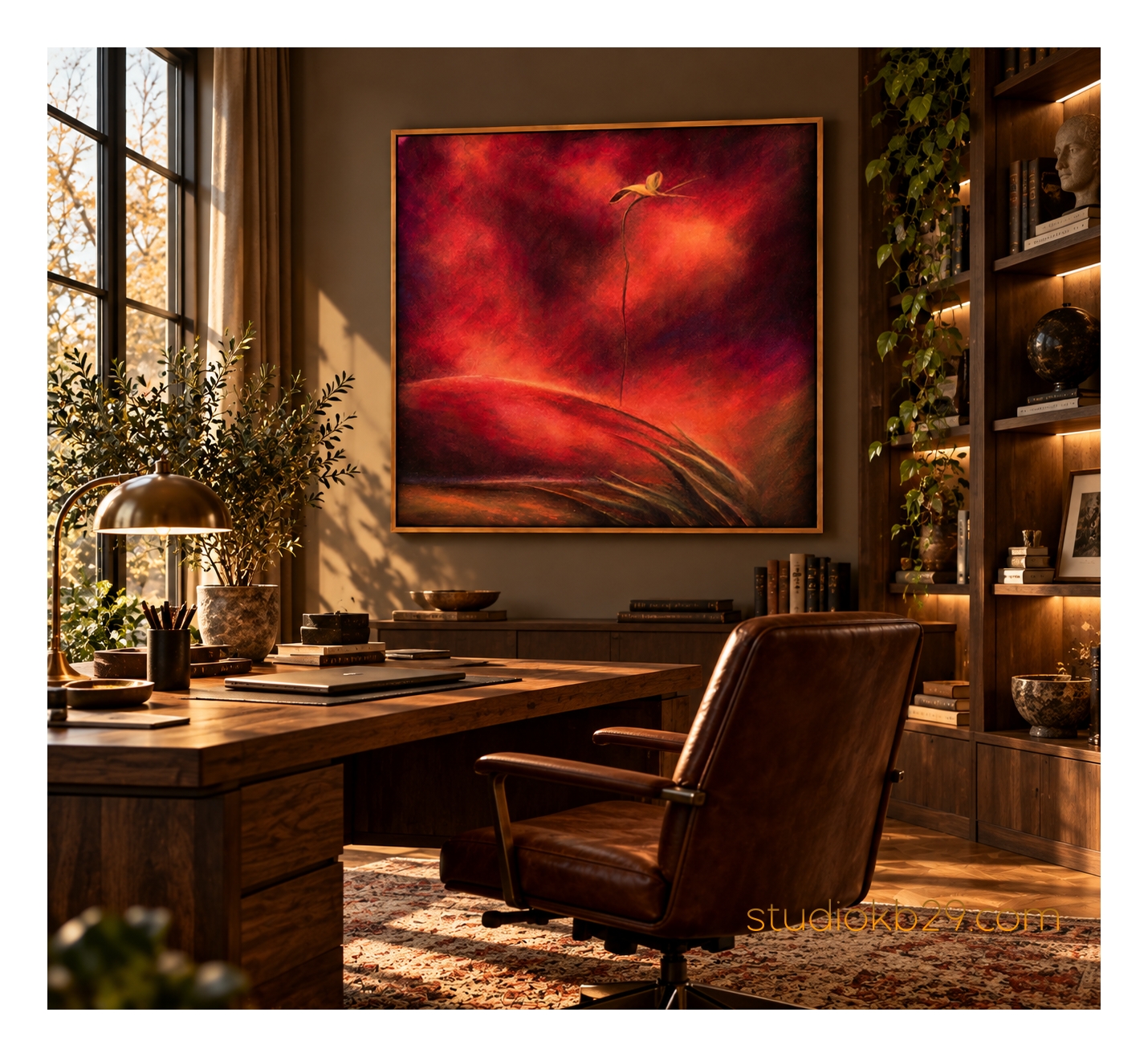
In an interior setting, these tones can introduce a distinctive colour statement while remaining compatible with natural materials and carefully considered finishes.
For a harmonious design scheme, consider pairing the artwork with:
- Burgundy, wine-red and muted plum textiles
- Walnut, smoked oak and other warm timber finishes
- Warm ivory, sand and understated beige tones
- Terracotta, rust and earthy brown accents
- Natural stone and textured plaster
- Linen, wool, velvet and other tactile fabrics
- Olive and muted green details for a subtle connection to the artwork’s organic character
In a restrained interior, the artwork can introduce warmth and expressive colour. In a richer, more layered environment, it can contribute to a cohesive visual language built around texture, tonal depth and sculptural form.
A Distinctive Statement for Considered Interiors
With its atmospheric colour, fluid contours and ambiguous organic forms, this artwork offers interior designers a distinctive alternative to literal floral imagery and conventional landscape art.
Its visual character is contemplative rather than illustrative. Instead of presenting a clearly defined subject, it establishes a mood that unfolds gradually, rewarding closer observation while retaining a strong overall presence.
Particularly suited to:
- Contemporary residential interiors and statement walls
- Boutique hotels and design-led hospitality environments
- Private lounges, libraries and intimate reception areas
- Restaurants, bars and atmospheric dining spaces
- Creative studios, galleries and curated commercial interiors
- Interiors inspired by organic modernism, contemporary eclecticism and expressive minimalism
In minimalist spaces, the composition can introduce fluid movement and a concentrated field of colour against clean architectural lines. In more expressive interiors, it can complement sculptural furniture, curved silhouettes, rich textiles and layered material palettes.
For hospitality projects, the artwork can help establish a distinctive visual identity, contributing to an atmosphere that feels immersive, individual and carefully curated.
Its open-ended imagery makes it particularly valuable in spaces where artwork is intended not merely as decoration, but as an integral part of the interior concept.
Integrating Organic Form into Contemporary Design
One of the artwork’s defining qualities is its ability to connect with natural materials without depicting the natural world literally.
Its sweeping contours resonate with curved furniture and sculptural objects. Its earthy undertones complement timber, stone and tactile surfaces, while its expressive red palette introduces warmth and visual intensity.
This creates opportunities for both contrast and continuity within an interior scheme.
Against restrained architectural finishes, the artwork becomes an expressive focal point. Within a more layered environment, it can contribute to a broader composition of colour, texture and form.
For interior designers and architects, this flexibility makes the piece suitable for projects in which artistic expression, material harmony and atmosphere are equally important.
Multiple Print Materials. One Imaginary World.
Available in a selection of print materials, this surreal abstract artwork can be adapted to different interior concepts and presentation preferences.
Canvas
A painterly presentation that complements the artwork’s atmospheric depth, soft colour transitions and expressive forms. Particularly suitable for spaces where art is intended to create warmth and visual presence.
Metal
A contemporary presentation option for modern interiors, architectural environments and design-led commercial spaces.
Wood
A natural material choice that can complement the artwork’s organic character and warm colour palette, particularly in interiors featuring timber and tactile natural finishes.
Acrylic
A sleek, contemporary presentation suited to refined interiors where a clean finish and modern material aesthetic are desired.
Paper
A classic art-print format offering flexibility through a choice of framing options. Particularly suitable for curated residential interiors, galleries and projects where the frame forms an integral part of the design.
Material availability and finishes may vary by selected format.
Framing to Complement Your Design Vision
The frame can play an important role in determining how the artwork relates to its surroundings.
A dark wood frame can create a grounded, understated presentation, while a slim black frame can emphasise the composition’s contours and reinforce its contemporary character. Natural wood and lighter finishes can provide a softer transition between the artwork and a warm, neutral interior.
For more expressive spaces, a carefully selected frame can connect the artwork’s deep red palette with surrounding textiles, furniture and architectural details without overwhelming the composition.
A choice of framing options and frame styles allows the presentation to be tailored to the aesthetic preferences and requirements of individual projects. This flexibility makes it easier to coordinate the artwork with the wider interior scheme.
Ready to Hang. Ready to Integrate.
Your selected artwork arrives ready to hang, helping simplify installation and the final stages of interior styling.
For interior designers, architects and project specifiers, this offers a practical way to incorporate the artwork into a complete design concept. The selected print material and framing can be coordinated with the surrounding furnishings, architectural details and wider material palette.
Whether specified for a private residence, boutique hotel, restaurant or creative commercial environment, the artwork can become an integral part of a carefully considered interior scheme.
From print material to frame selection, the presentation can be adapted to support the intended atmosphere and visual identity of the space.
Where Imagination Becomes Organic Form
Where Dreams Take Root is an exploration of an imagined nature, suspended between abstraction and recognition.
Fluid structures seem to grow out of colour and shadow, evoking the possibility of leaves, stems and unfamiliar living forms without ever becoming entirely defined. A richly atmospheric palette of crimson, burgundy and burnt orange deepens the sense of mystery, while the composition’s sweeping contours suggest a world in perpetual transformation.
Poetic, enigmatic and open to interpretation, the artwork invites the viewer to look beyond the recognisable and discover the extraordinary within the ambiguous.
Created for interiors that value individuality, expressive colour and artistic depth, it offers a distinctive way to introduce surreal organic abstraction into a considered design scheme.
An imagined world where forms emerge, nature becomes a dream, and abstraction takes on the suggestion of life.