Description
An Imaginary Form Unfolding Beyond Its Origins
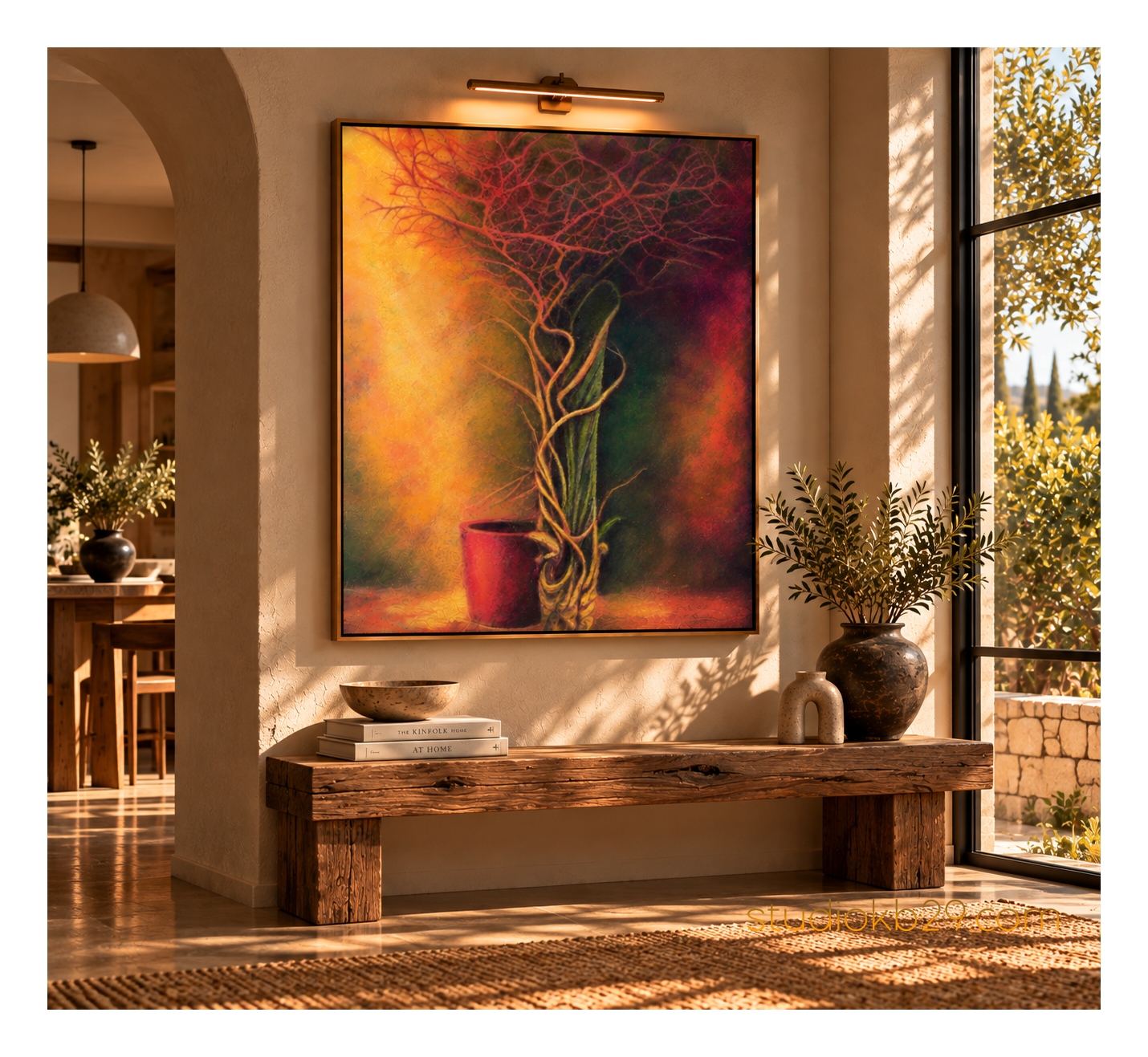
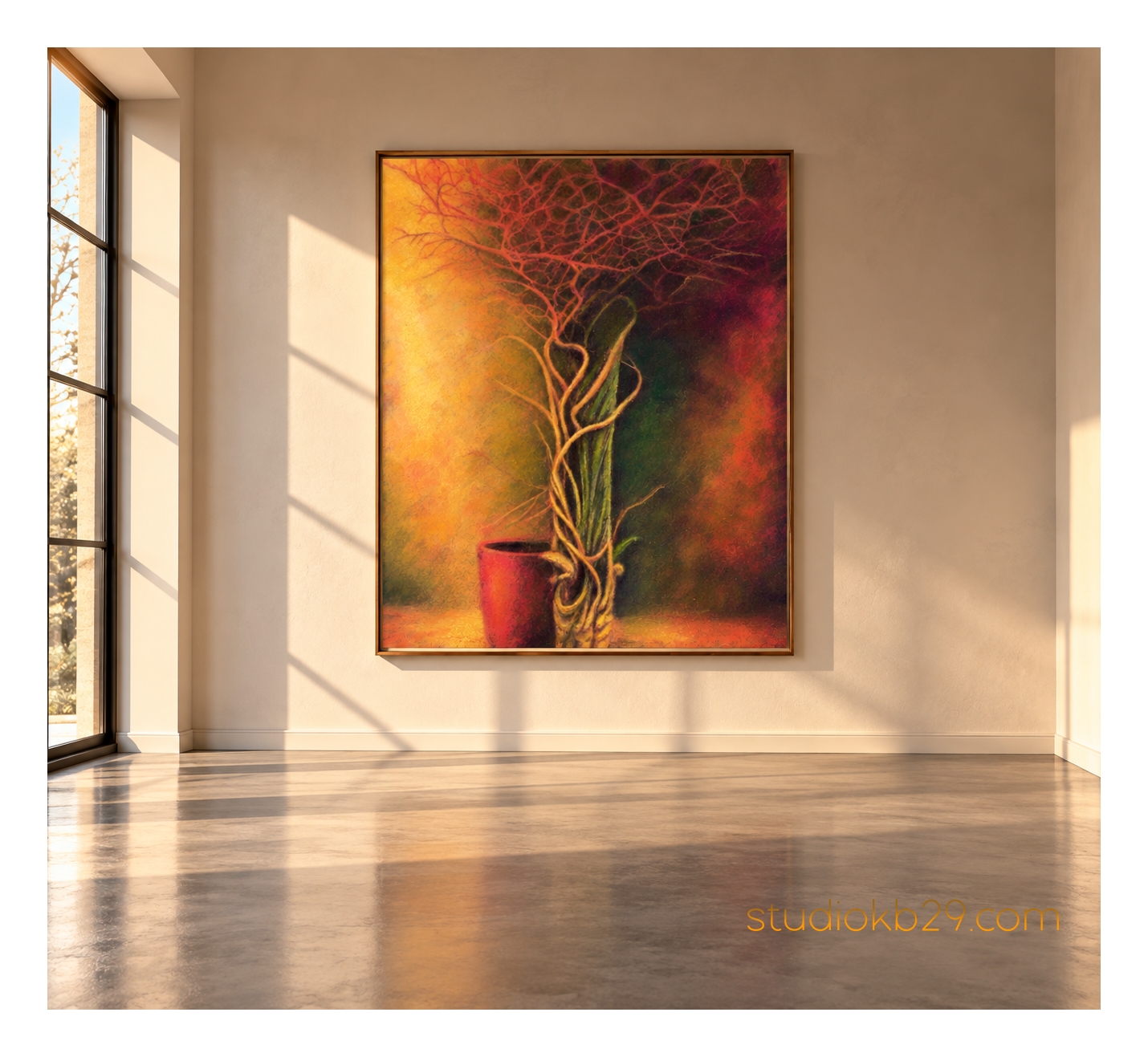
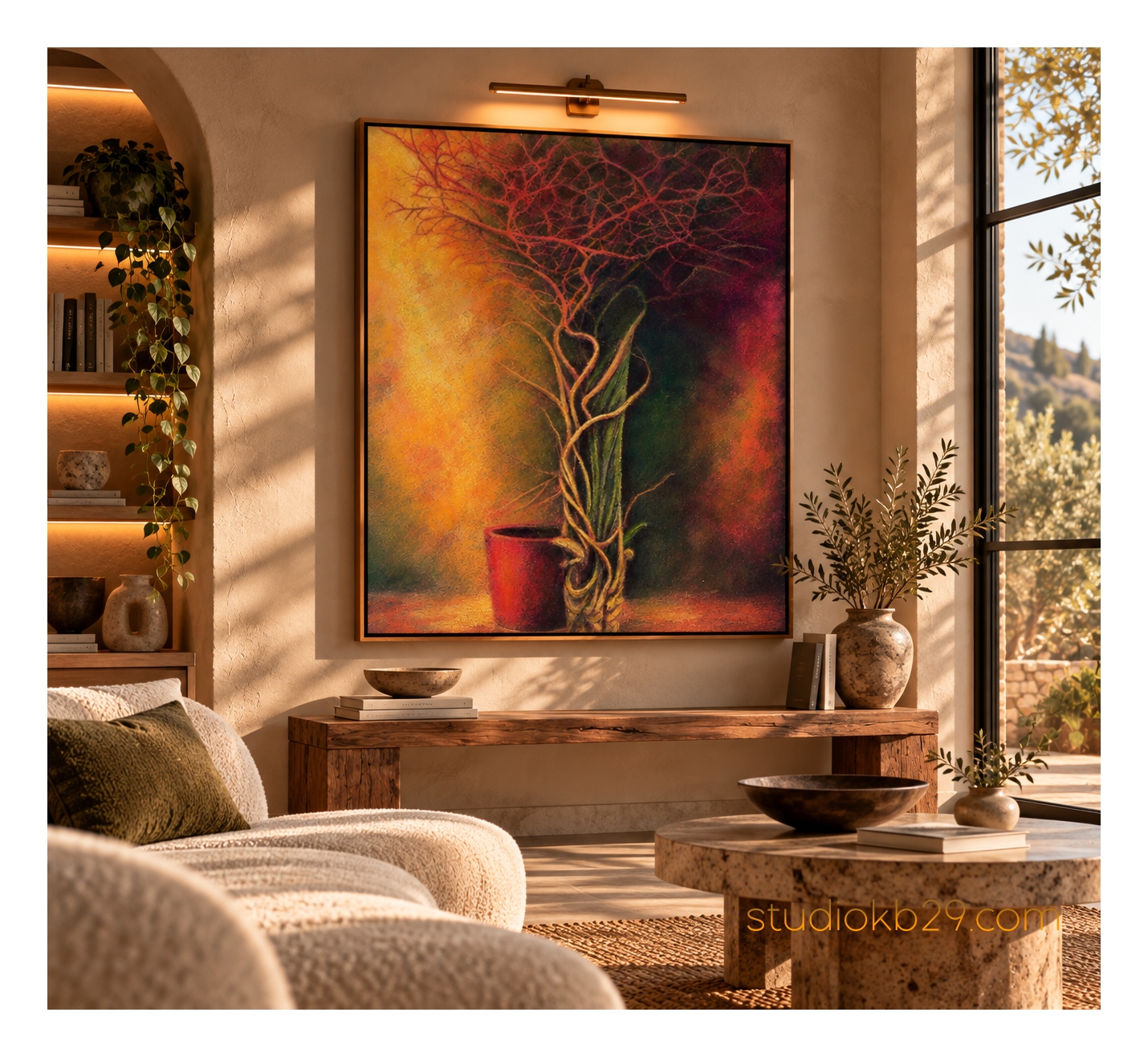
At the centre of this atmospheric composition, an enigmatic structure rises from a small, earthen vessel, unfolding into an intricate network of branching lines. What begins as a concentrated, almost contained form gradually expands into something far more intricate, reaching upward and outward until it seems to exceed the boundaries of the space that holds it.
The structure evokes the suggestion of roots, branches and delicate vascular networks, yet it belongs to no recognisable species or natural system. Its slender lines twist, divide and intertwine, creating an imagined architecture that feels organic in its movement but surreal in its construction.
Near the base, the form appears closely gathered around the vessel, its contours winding and converging before ascending into the composition. Higher up, the branching structure becomes increasingly delicate and expansive, spreading into a fine, interconnected web. This transformation creates a striking contrast between the compactness of the lower section and the seemingly limitless complexity above.
Behind it, a luminous field of warm ochre, amber and soft orange gradually dissolves into deep green, muted teal and shadowed burgundy. The interplay of light and darkness creates an atmospheric depth that gives the branching forms a sense of emergence, as though they were gradually revealing themselves from within an imagined space.
The result is a surreal vision of expansion and transformation: a form that appears to grow beyond its original boundaries, moving between the tangible and the intangible, the contained and the infinite.
The Shape of Becoming
At the heart of the artwork lies the idea of continuous transformation.
The composition suggests a moment in which something is becoming more than it once was. A simple vessel provides a point of origin, while the intricate structure rising from it develops into a complex network that seems to have no definitive endpoint.
The relationship between these elements is deliberately ambiguous. The vessel may suggest containment, origin or material presence, while the branching structure evokes expansion, possibility and the emergence of something beyond its initial form.
Yet the image does not establish a literal narrative. The structure is neither a conventional plant nor a representation of a scientific system. Its associations remain fluid, shifting between the botanical, the anatomical and the entirely imaginary.
This openness gives the work its distinctive surreal character. The viewer is invited to consider the image as a metaphor for growth, thought, interconnectedness or the gradual unfolding of potential, without being directed towards a single interpretation.
The composition becomes a quiet exploration of becoming itself: the moment when a form begins to exceed its apparent limits and opens into something unexpected.
An Imaginary Architecture of Branching Forms
The intricate network at the top of the composition creates a visual language of remarkable delicacy.
Fine, branching lines spread across the upper field, intersecting and dividing in a seemingly endless sequence. Their irregular paths evoke the complexity of natural systems while retaining a dreamlike, almost otherworldly quality.
In contrast, the central structure is more substantial. Its elongated, intertwining forms establish a vertical movement that connects the vessel below with the expansive network above.
This relationship between density and delicacy gives the composition its visual rhythm. The lower forms provide a sense of grounding, while the fine upper branches introduce openness and complexity.
The eye follows these pathways upward, moving from the compact, tangible base towards a network that seems to extend beyond the visible image. The composition therefore creates a subtle tension between the physical and the boundless, between a clearly defined point of origin and an apparently limitless unfolding.
The result is an imagined architecture that feels simultaneously organic, intricate and strangely familiar.
Between Nature and Abstraction
The artwork draws upon associations with natural structures without depicting nature literally.
Its branching lines may evoke the architecture of a tree, the pathways of roots or the delicate complexity of a living network. The central forms suggest stems or tendrils, while the surrounding atmosphere recalls an undefined natural environment.
Yet these references remain suggestive rather than descriptive. The structure does not conform to the recognisable shape of a plant, and the branching network appears to follow an internal logic of its own.
This distinction is central to the work’s artistic identity. Rather than reproducing an existing form, it imagines how organic structures might evolve in a world governed by unfamiliar principles.
The result occupies a space between surrealism and organic abstraction, where recognisable associations emerge from the composition but never fully resolve into a literal subject.
For the viewer, this creates an experience of gradual discovery. The image offers enough familiarity to invite engagement, while its unusual proportions and intricate relationships preserve a sense of mystery.
Colour as a Landscape of Light and Shadow
The composition’s colour palette moves between luminous warmth and deep, atmospheric darkness.
Soft ochre, amber and golden orange illuminate the left side and upper background, creating the impression of light diffusing through an undefined space. These warm tones transition into muted olive, deep green and shadowed burgundy, establishing a darker counterpoint on the right.
The vessel introduces a concentrated accent of muted red and earthy rose, connecting visually with the warmer tones of the background. Meanwhile, the branching structure is defined through subtle contrasts of green, ochre and warm brown.
Rather than separating the elements through sharp outlines, the palette allows the forms to emerge gradually from their surroundings. Light appears to travel through the composition, guiding the eye along the central structure and into the increasingly intricate network above.
The overall atmosphere is contemplative and quietly dramatic. Its warmth prevents the darker areas from feeling severe, while the deep greens and burgundy lend the composition depth and visual restraint.
For interior design, this balance creates opportunities to introduce colour, complexity and atmosphere without relying on an overly bright or decorative palette.
A Distinctive Artwork for Considered Interiors
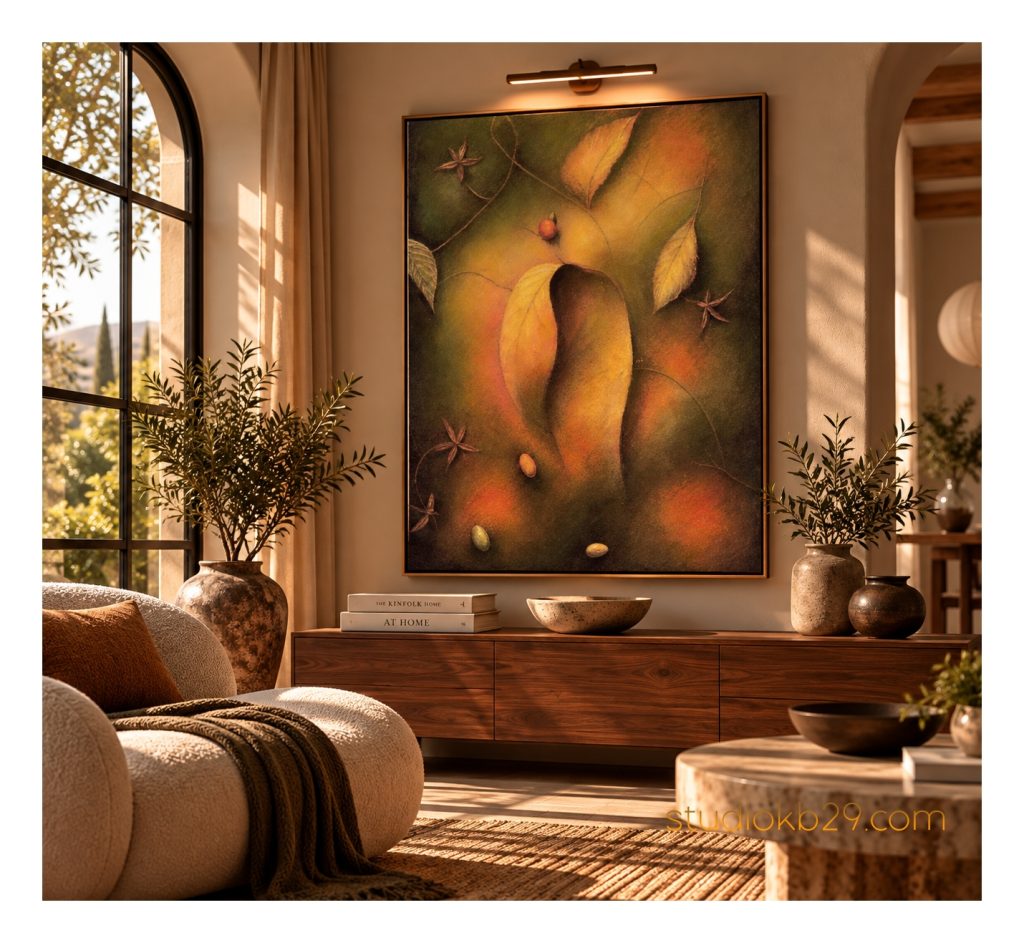
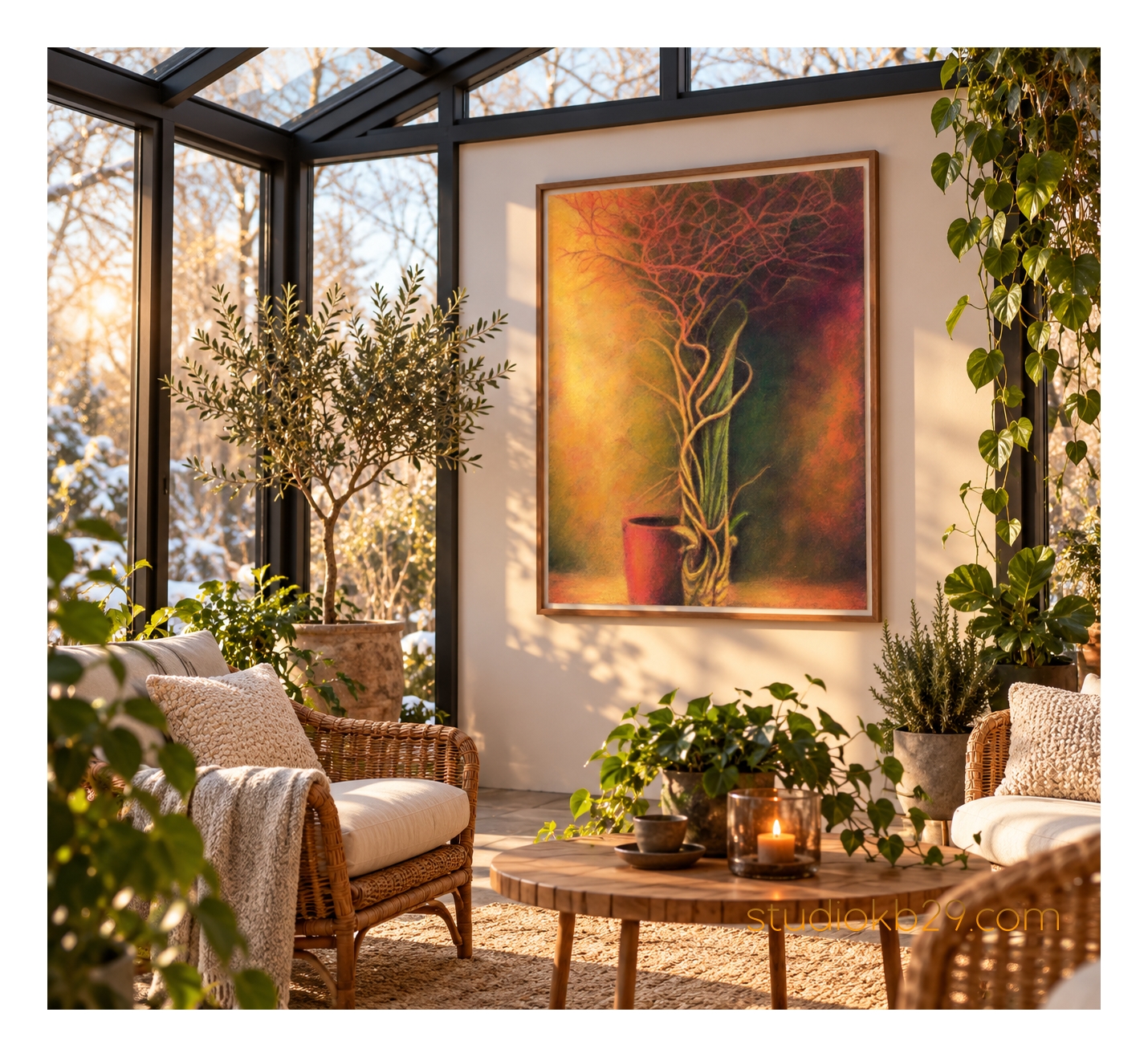
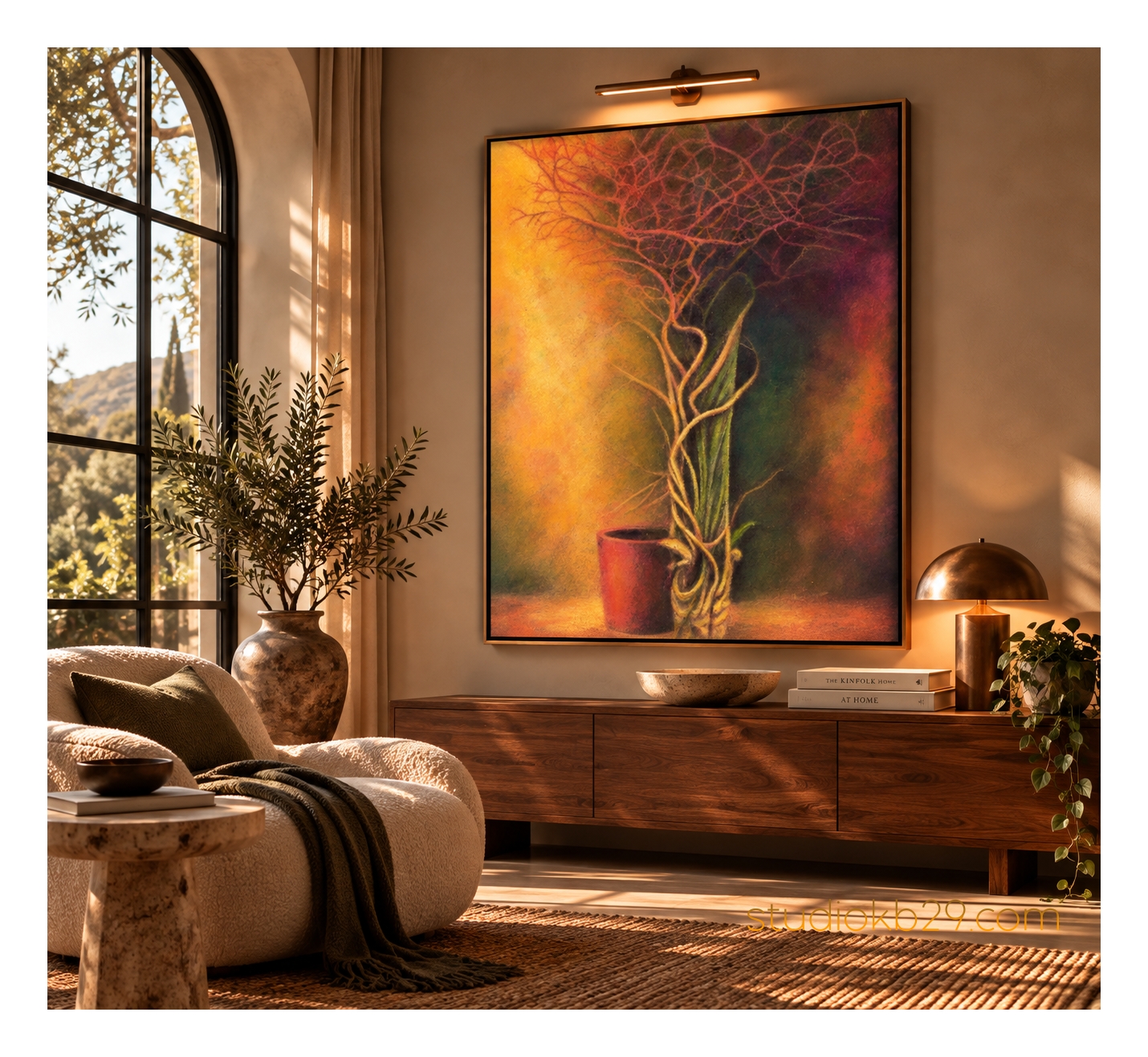
With its vertical composition, intricate branching forms and atmospheric colour transitions, The Shape of Becoming offers a distinctive focal point for contemporary interiors.
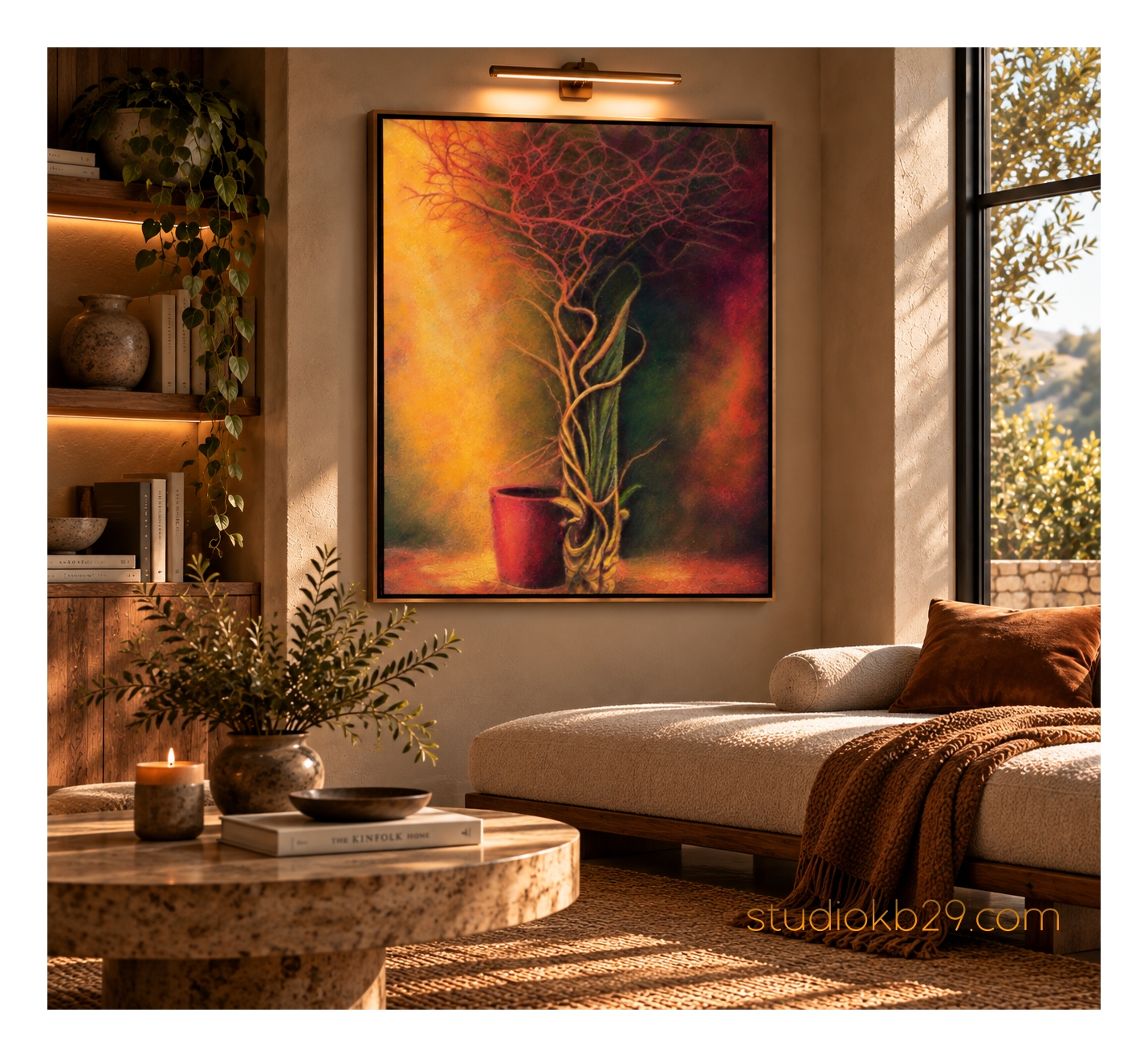
Its visual language combines the organic with the architectural. The branching network can echo sculptural lighting, fine metalwork, botanical silhouettes or intricate architectural details, while the vessel provides a grounded point of reference within the otherwise expansive composition.
The artwork is particularly suited to spaces where art is intended to introduce a sense of contemplation, individuality and visual depth.
Ideal for:
- Contemporary residential interiors and statement walls
- Boutique hotels and design-led hospitality environments
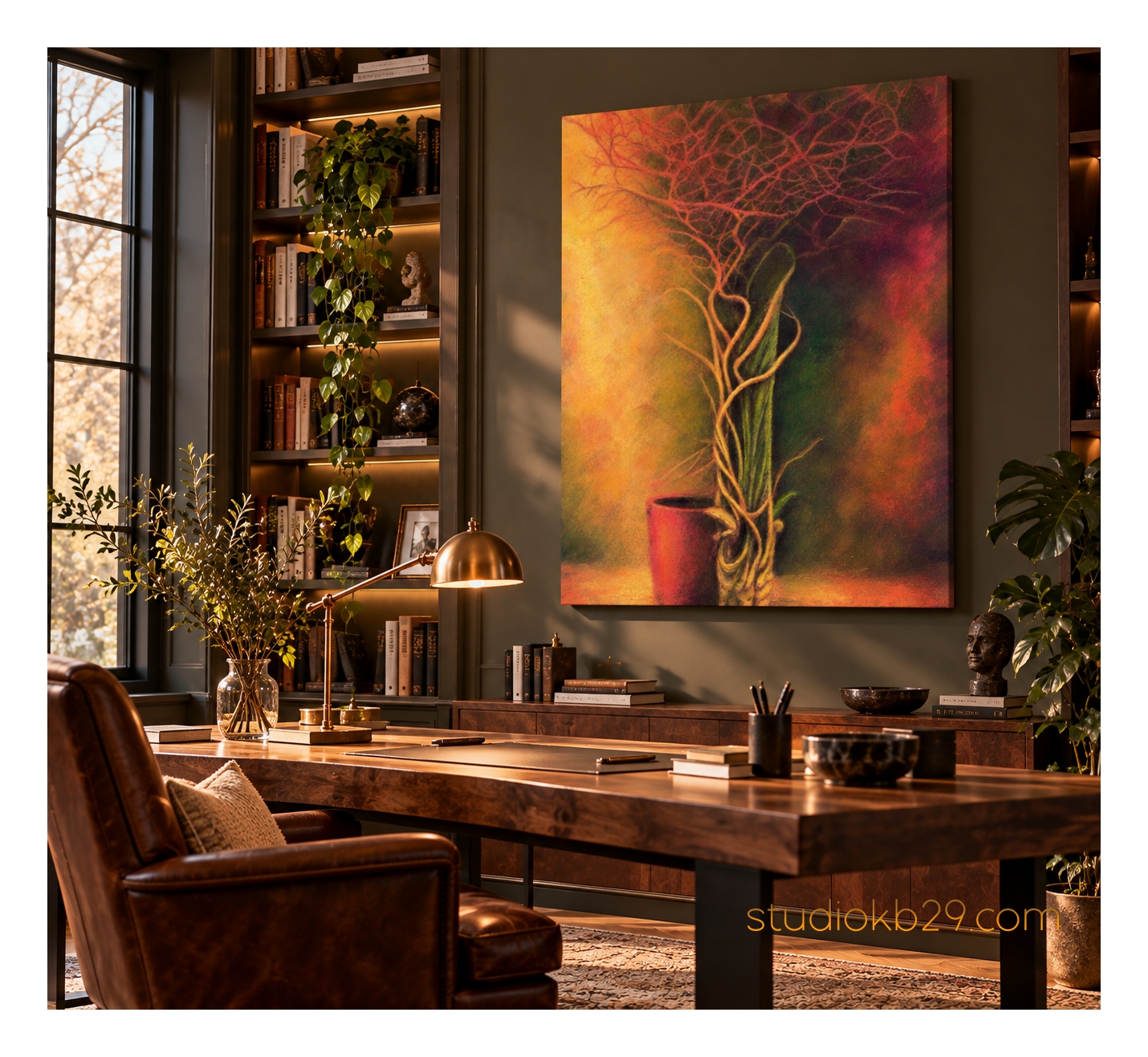
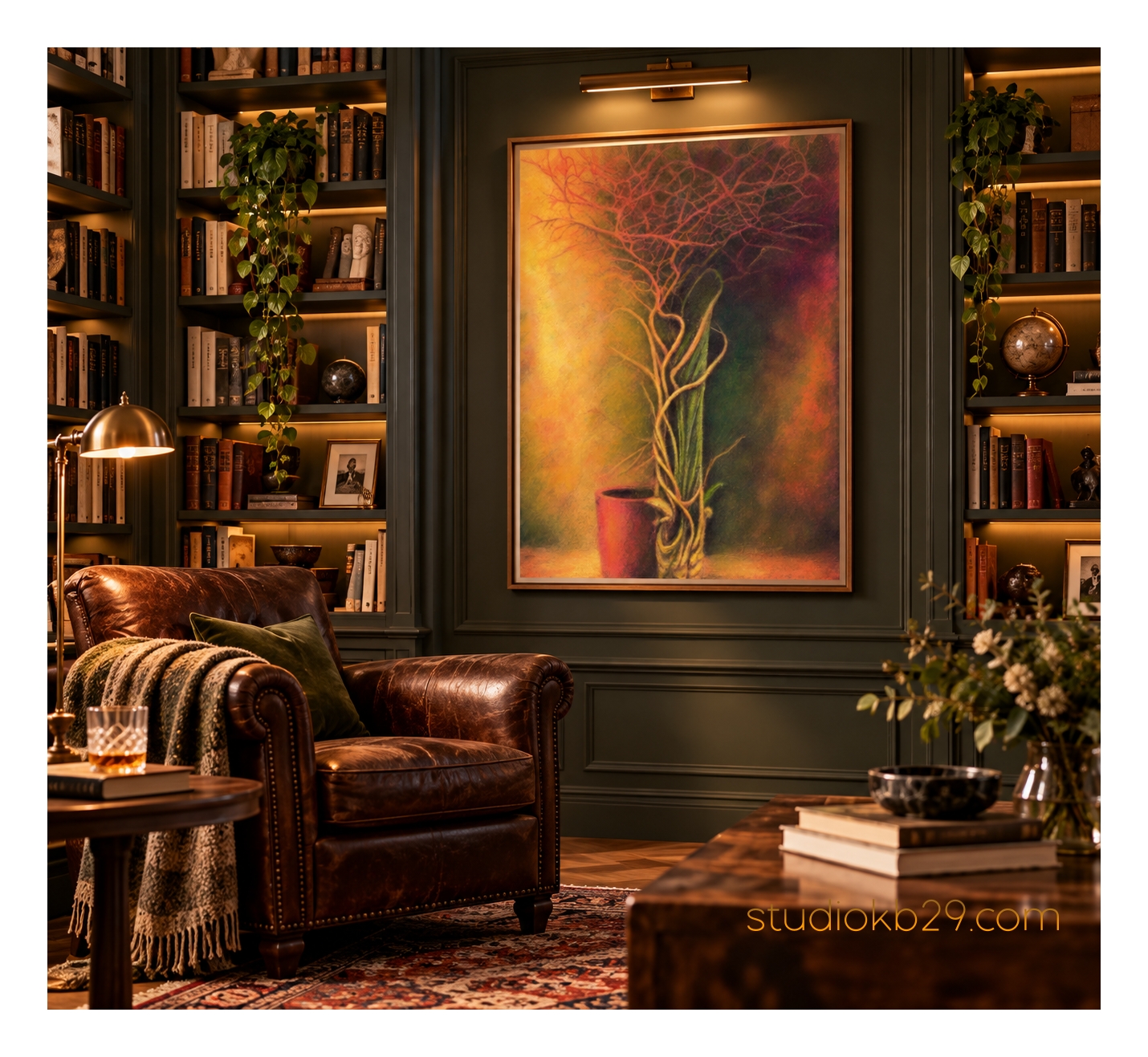
- Private studies, libraries and contemplative living spaces
- Creative studios, galleries and curated commercial interiors
- Reception areas and sophisticated lounge environments
- Interiors combining organic modernism, surrealism and expressive abstraction
In minimalist settings, the intricate structure can provide a rich visual counterpoint to clean architectural lines and restrained furnishings. In more layered interiors, the warm palette and organic forms can complement natural timber, textured surfaces and sculptural objects.
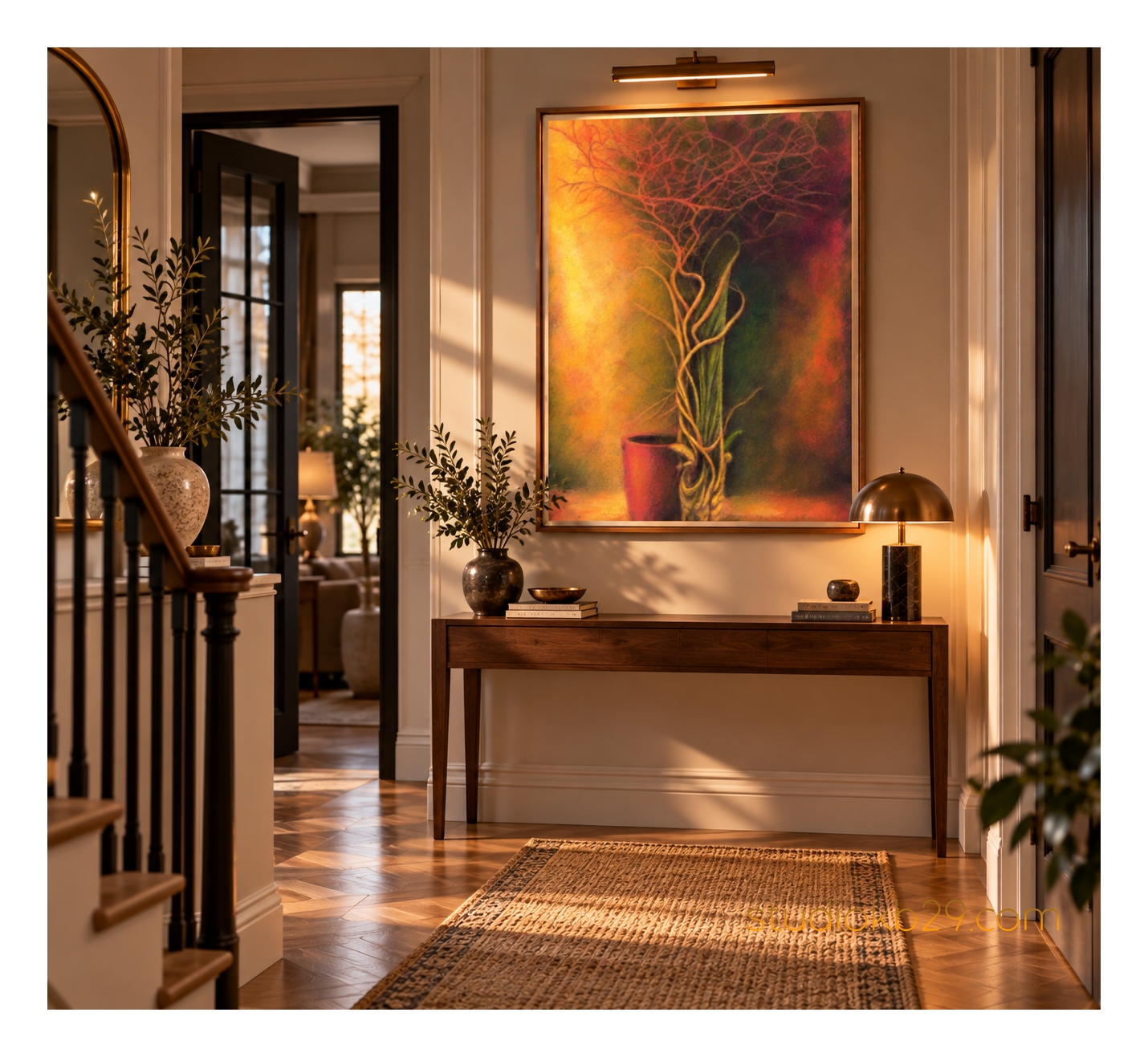
The artwork’s vertical movement also makes it particularly interesting for spaces where height and proportion are important considerations, such as narrow wall sections, entrance areas or interiors with elevated ceilings.
Rather than relying on a clearly identifiable subject, the work establishes its presence through structure, rhythm and atmosphere.
Integrating Organic Complexity into Interior Design
One of the artwork’s defining qualities is the contrast between its concentrated base and expansive upper structure.
This relationship can be echoed through interior elements that combine solidity with delicacy: a sculptural table beneath a fine pendant light, a substantial timber surface alongside intricate metalwork, or rounded furniture set against slender architectural details.
Its warm and earthy palette works particularly well with walnut, smoked oak, olive green, muted terracotta, warm ivory and textured stone.
For a restrained scheme, neutral wall finishes and natural materials can allow the branching structure to remain the principal visual focus. For a more expressive environment, the artwork can be paired with rich textiles, dark timber and carefully selected colour accents.
The combination of organic movement and architectural complexity makes the work adaptable to different design directions while retaining its distinctive character.
Multiple Print Materials. One Imaginary World.
Available in a selection of print materials, this surreal abstract artwork can be adapted to different interior concepts and presentation preferences.
Canvas
A painterly presentation that complements the atmospheric transitions, intricate linework and expressive organic forms.
Metal
A contemporary option for modern interiors, architectural environments and design-led commercial spaces.
Wood
A natural material choice that can complement the earthy palette and the artwork’s organic visual language.
Acrylic
A sleek, contemporary presentation suited to interiors where a clean finish and modern material aesthetic are desired.
Paper
A classic art-print format offering flexibility through a choice of framing options. Particularly suitable for curated residential interiors, galleries and projects where the frame forms an integral part of the design.
Material availability and finishes may vary by selected format.
Framing to Complement Your Design Vision
The frame can subtly influence the relationship between the artwork and its surroundings.
Natural wood can reinforce the earthy warmth of the composition, creating a soft connection with timber furniture and organic materials. Dark wood offers a more grounded presentation, while a slim black frame can emphasise the intricate branching lines and lend the work a contemporary architectural character.
A lighter frame can create a deliberate contrast against the darker areas of the image, allowing the composition to stand out against a warm neutral wall.
A choice of framing options and frame styles allows the presentation to be coordinated with the wider interior concept, whether the artwork is intended for a private residence, a boutique hospitality project or a curated commercial environment.
Ready to Hang. Ready to Integrate.
Your selected artwork arrives ready to hang, helping simplify installation and the final stages of interior styling.
For interior designers, architects and project specifiers, the choice of print material and framing offers flexibility when incorporating the artwork into a complete design concept.
The composition can be specified to complement the surrounding palette, furniture, lighting and architectural finishes, creating a cohesive relationship between artwork and interior.
Whether presented as a focal point in a residential setting or integrated into a carefully curated hospitality environment, the piece offers both a distinctive visual identity and an open-ended artistic narrative.
The Shape of Becoming – An Exploration of Infinite Growth
The Shape of Becoming explores the transformation of an imagined organic structure as it expands beyond its apparent point of origin.
Rising from a small vessel, intertwining forms develop into an intricate network of delicate branches, creating a composition suspended between natural association and surreal abstraction. Warm amber and ochre tones illuminate the surrounding space, while deep greens and burgundy introduce atmosphere, depth and quiet intensity.
The artwork evokes the possibility of growth without depicting a literal plant or recognisable natural system. Its branching forms suggest interconnectedness, emergence and the unfolding of potential, while the fine network above opens into a space of seemingly limitless complexity.
Poetic, intricate and contemplative, the work offers a distinctive expression of surreal organic abstraction for interiors that value individuality, atmosphere and artistic depth.
A form in perpetual becoming, unfolding from a single point of origin into an imagined architecture of endless possibility.